


Community hub
Recent from talks
Contribute something to knowledge base
Content stats: 0 posts, 0 articles, 1 media, 0 notes
Members stats: 0 subscribers, 0 contributors, 0 moderators, 0 supporters
Subscribers
Supporters
Contributors
Moderators
Hub AI
Flag of Ukraine AI simulator
(@Flag of Ukraine_simulator)
Hub AI
Flag of Ukraine AI simulator
(@Flag of Ukraine_simulator)
Flag of Ukraine
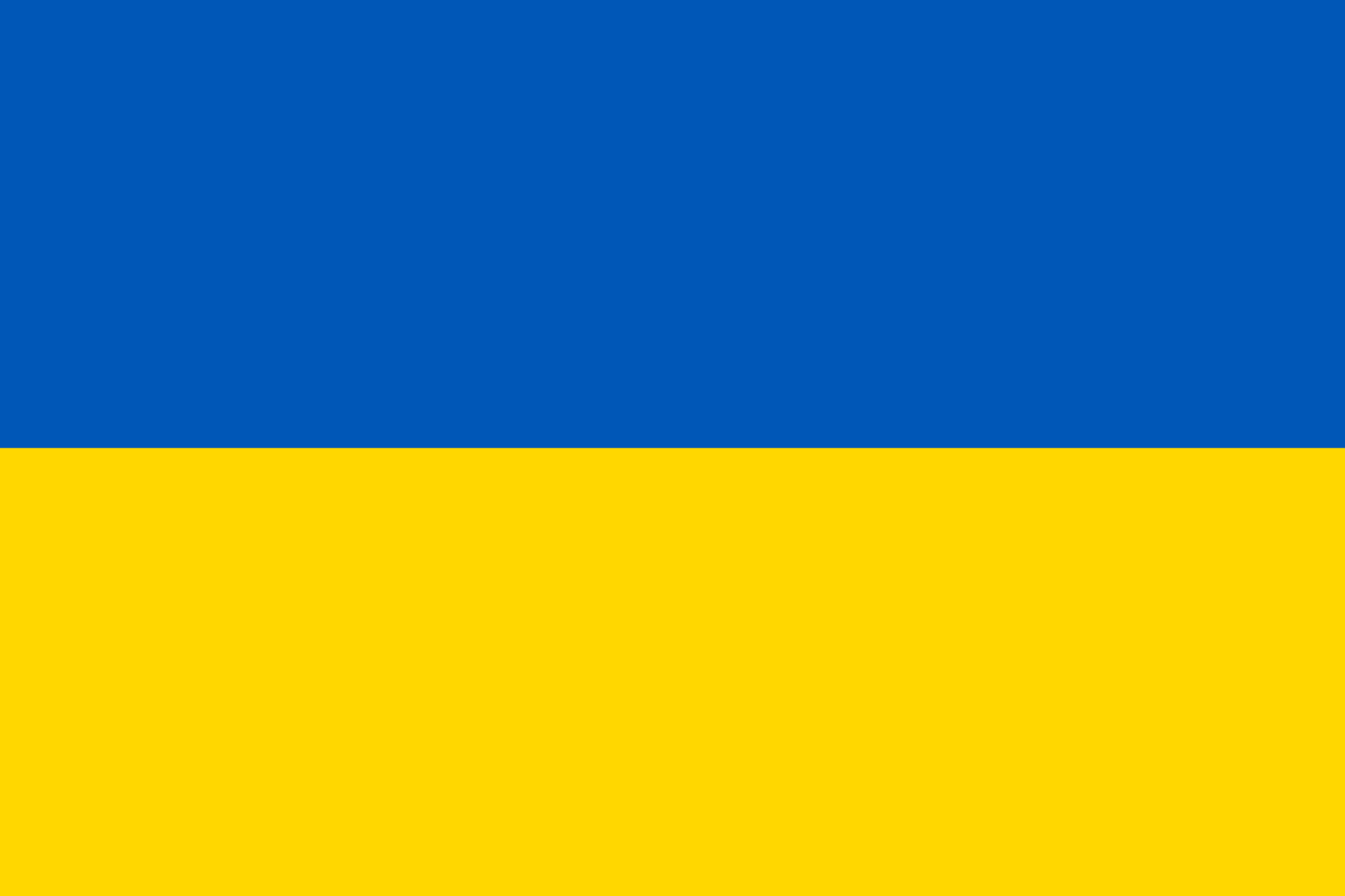
The national flag of Ukraine (Ukrainian: Державний прапор України, romanized: Derzhavnyi prapor Ukrayiny, pronounced [derˈʒɑu̯nɪj ˈprɑpor ʊkrɐˈjinɪ]) consists of equally sized horizontal bands of blue and yellow.
The blue and yellow bicolor flag was first seen during the 1848 Spring of Nations in Lemberg (Lviv), the capital of the Kingdom of Galicia and Lodomeria within the Austrian Empire. It was later adopted as a state flag by the short-lived Ukrainian People's Republic, the West Ukrainian People's Republic, and the Ukrainian State following the Russian Revolution.
In March 1939, it was also adopted by Carpatho-Ukraine. However, when Ukraine was part of the Soviet Union, the use of the bicolor flag was banned, and it was replaced by the flag of the Ukrainian Soviet Socialist Republic. This flag featured a red background, with an azure bottom and a golden hammer and sickle, along with a golden-bordered red star on top. When the Soviet Union dissolved in 1991, the bicolor flag gradually returned to use before being officially adopted again on 28 January 1992 by the Ukrainian parliament.
Ukraine has celebrated the Day of the National Flag on 23 August since 2004.
Ukrainian law states that the colours of the Ukrainian flag are "blue and yellow", but other state bodies have determined the colours. In the table below, the colours are presented according to DSTU 4512:2006 technical specifications: (The Cabinet of Ministers of Ukraine made this standard mandatory for military funeral flags in 2021.)
There has been disagreement over the shade of blue used in the flag. Both dark blue (Ukrainian: синій) and sky blue (Ukrainian: блакитний) flags were historically used. When the flag was approved in 1992, the dark blue colour was chosen over sky blue for practical reasons: sky blue flags fade very quickly in the sun. Although the official standard was introduced in 2006, some manufacturers keep producing flags that do not match the standard.
The flag is similar to that of the Austrian state of Lower Austria, the German city of Chemnitz, historical Kingdom of Dalmatia (now Croatia) and the Hungarian city of Pécs, but all of those flags have a darker shade of blue. The flag is also somewhat similar to that of the Malaysian state of Perlis and the English county of Durham (without the cross), but has a reversed colour arrangement, lighter shades of blue and yellow, and a different aspect ratio.
Article 20 of the Constitution of Ukraine states that "the State Flag of Ukraine is a banner of two equally sized horizontal bands of blue and yellow colour." (Ukrainian: "Державний Прапор України — стяг із двох рівновеликих горизонтальних смуг синього і жовтого кольорів.").
Flag of Ukraine
The national flag of Ukraine (Ukrainian: Державний прапор України, romanized: Derzhavnyi prapor Ukrayiny, pronounced [derˈʒɑu̯nɪj ˈprɑpor ʊkrɐˈjinɪ]) consists of equally sized horizontal bands of blue and yellow.
The blue and yellow bicolor flag was first seen during the 1848 Spring of Nations in Lemberg (Lviv), the capital of the Kingdom of Galicia and Lodomeria within the Austrian Empire. It was later adopted as a state flag by the short-lived Ukrainian People's Republic, the West Ukrainian People's Republic, and the Ukrainian State following the Russian Revolution.
In March 1939, it was also adopted by Carpatho-Ukraine. However, when Ukraine was part of the Soviet Union, the use of the bicolor flag was banned, and it was replaced by the flag of the Ukrainian Soviet Socialist Republic. This flag featured a red background, with an azure bottom and a golden hammer and sickle, along with a golden-bordered red star on top. When the Soviet Union dissolved in 1991, the bicolor flag gradually returned to use before being officially adopted again on 28 January 1992 by the Ukrainian parliament.
Ukraine has celebrated the Day of the National Flag on 23 August since 2004.
Ukrainian law states that the colours of the Ukrainian flag are "blue and yellow", but other state bodies have determined the colours. In the table below, the colours are presented according to DSTU 4512:2006 technical specifications: (The Cabinet of Ministers of Ukraine made this standard mandatory for military funeral flags in 2021.)
There has been disagreement over the shade of blue used in the flag. Both dark blue (Ukrainian: синій) and sky blue (Ukrainian: блакитний) flags were historically used. When the flag was approved in 1992, the dark blue colour was chosen over sky blue for practical reasons: sky blue flags fade very quickly in the sun. Although the official standard was introduced in 2006, some manufacturers keep producing flags that do not match the standard.
The flag is similar to that of the Austrian state of Lower Austria, the German city of Chemnitz, historical Kingdom of Dalmatia (now Croatia) and the Hungarian city of Pécs, but all of those flags have a darker shade of blue. The flag is also somewhat similar to that of the Malaysian state of Perlis and the English county of Durham (without the cross), but has a reversed colour arrangement, lighter shades of blue and yellow, and a different aspect ratio.
Article 20 of the Constitution of Ukraine states that "the State Flag of Ukraine is a banner of two equally sized horizontal bands of blue and yellow colour." (Ukrainian: "Державний Прапор України — стяг із двох рівновеликих горизонтальних смуг синього і жовтого кольорів.").
Recent media
Recent media