
Freezing cold in Lviv
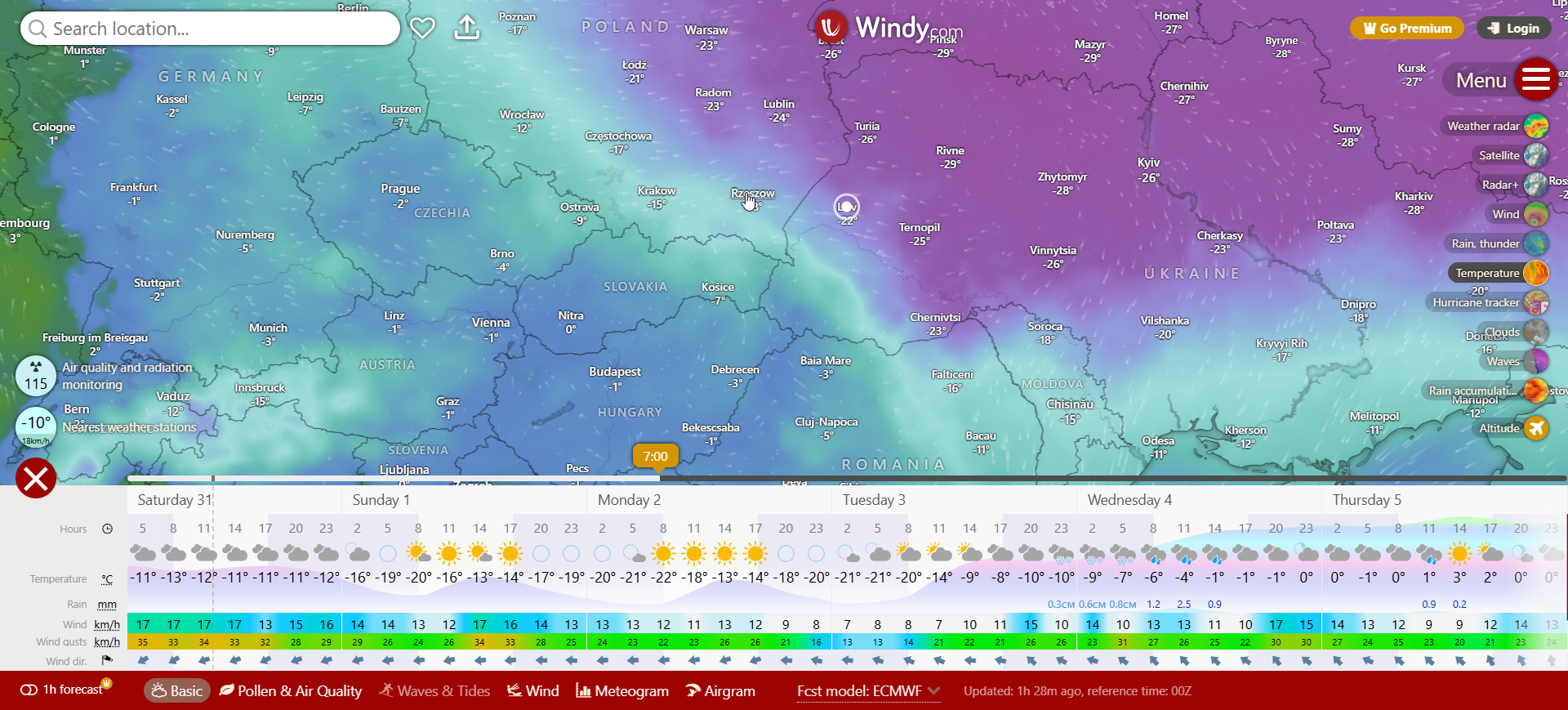
Here’s the weather forecast for the next few days in Lviv. Freezing cold!
_16.jpg)
Here’s the weather forecast for the next few days in Lviv. Freezing cold!
End of Posts
Here’s the weather forecast for the next few days in Lviv. Freezing cold!
End of Posts
Here’s the weather forecast for the next few days in Lviv. Freezing cold!
End of Posts
Lviv
Lviv (/ləˈviːv/ lə-VEEV or /ləˈviːf/ lə-VEEF; Ukrainian: Львів [ˈlʲwiu̯] ⓘ; Polish: Lwów [ˈlvuf] ⓘ; see below for other names) is the largest city in western Ukraine, as well as the fifth-largest city in Ukraine, officially with a population of 723,403 (2025 estimate). It serves as the administrative centre of Lviv Oblast and Lviv Raion, and is one of the main cultural centres of Ukraine. Lviv also hosts the administration of Lviv urban hromada. It was named after Leo I of Galicia, the eldest son of Daniel, King of Ruthenia.
Lviv (then Lwów) emerged as the centre of the historical regions of Red Ruthenia and Galicia in the 14th century, superseding Halych, Chełm, Belz, and Przemyśl. It was the capital of the Kingdom of Galicia–Volhynia from 1272 to 1340, when it went to King Casimir III the Great of Poland in a war of succession. In 1356, Casimir the Great granted it town rights. From 1434, it was the regional capital of the Ruthenian Voivodeship in the Kingdom of Poland. In 1772, after the First Partition of Poland, the city became the capital of the Habsburg semi-autonomous Polish-dominated Kingdom of Galicia and Lodomeria. From 1918, between the wars, the city was the centre of the Lwów Voivodeship in the Second Polish Republic. There it flourished in culture, industry and academia such as the Lwów School of Mathematics, the Lwów Historical School (Polish: lwowska szkoła historyczna) and the Lwów School of Economics. After the German-Soviet invasion of Poland in 1939, the massacre of Lwów professors took place, and Lwów was eventually annexed by the Soviet Union.
The once-large Jewish community of the city was murdered in large numbers by the Nazis and Ukrainian police during the Holocaust. For decades there was no working synagogue in Lviv after the final one was closed by the Soviets. The greater part of the once-predominant Polish population was forcibly expelled during the Ukrainian massacres of Poles and later with population transfers between Communist Poland and Soviet Ukraine in 1944–46.
The historical heart of the city, with its cobblestone streets and architectural assortment of Renaissance, Baroque, Neo-classicism and Art Nouveau, survived Soviet and German occupations during World War II largely unscathed. The historic city centre is on the UNESCO World Heritage List; however, it has been listed as an endangered site due to the Russian invasion of Ukraine. In 1991 Lviv became part of the independent nation of Ukraine.
The city has a number of industries and institutions of higher education, such as Lviv University and Lviv Polytechnic. Lviv is also the home of multiple cultural institutions, including a philharmonic orchestra and the Lviv Theatre of Opera and Ballet.
The city of Lviv has been known by multiple names: Ukrainian: Львів (Lʹviv) [ˈlʲwiu̯] ⓘ; Polish: Lwów [ˈlvuf] ⓘ; German: Lwiw [ˈl(ə)viːf] and Lemberg [ˈlɛmbɛʁk] ⓘ; Yiddish: לעמבעריק (Lemberik) [ˈlɛmbɛrɪk]; Russian: Львов (Lʹvov) [ˈlʲvof]; Belarusian: Львоў (Lʹvow) [ˈlʲvou̯]; Armenian: Լվով (Lvov) [ˈlvɔv] and Իլով (Ilov) [iˈlov]; Hungarian: Ilyvó [ˈijvoː]; Latin: Leopolis; and other names.
The coat of arms, the banner of the Lviv City Council and the logo, are the officially approved symbols of Lviv. The names or images of architectural and historical monuments are also considered symbols of the city by the Statute of Lviv.
Lviv's modern coat of arms is based on the coat of arms from the city seal in the middle of the 14th century—a stone gate with three towers, and in the opening of the gate walks a golden lion. Lviv's large coat of arms is a shield, with the coat of arms of the city, crowned with a silver crown with three edges, held by a lion and an ancient warrior.
Lviv AI simulator
(@Lviv_simulator)
Lviv (/ləˈviːv/ lə-VEEV or /ləˈviːf/ lə-VEEF; Ukrainian: Львів [ˈlʲwiu̯] ⓘ; Polish: Lwów [ˈlvuf] ⓘ; see below for other names) is the largest city in western Ukraine, as well as the fifth-largest city in Ukraine, officially with a population of 723,403 (2025 estimate). It serves as the administrative centre of Lviv Oblast and Lviv Raion, and is one of the main cultural centres of Ukraine. Lviv also hosts the administration of Lviv urban hromada. It was named after Leo I of Galicia, the eldest son of Daniel, King of Ruthenia.
Lviv (then Lwów) emerged as the centre of the historical regions of Red Ruthenia and Galicia in the 14th century, superseding Halych, Chełm, Belz, and Przemyśl. It was the capital of the Kingdom of Galicia–Volhynia from 1272 to 1340, when it went to King Casimir III the Great of Poland in a war of succession. In 1356, Casimir the Great granted it town rights. From 1434, it was the regional capital of the Ruthenian Voivodeship in the Kingdom of Poland. In 1772, after the First Partition of Poland, the city became the capital of the Habsburg semi-autonomous Polish-dominated Kingdom of Galicia and Lodomeria. From 1918, between the wars, the city was the centre of the Lwów Voivodeship in the Second Polish Republic. There it flourished in culture, industry and academia such as the Lwów School of Mathematics, the Lwów Historical School (Polish: lwowska szkoła historyczna) and the Lwów School of Economics. After the German-Soviet invasion of Poland in 1939, the massacre of Lwów professors took place, and Lwów was eventually annexed by the Soviet Union.
The once-large Jewish community of the city was murdered in large numbers by the Nazis and Ukrainian police during the Holocaust. For decades there was no working synagogue in Lviv after the final one was closed by the Soviets. The greater part of the once-predominant Polish population was forcibly expelled during the Ukrainian massacres of Poles and later with population transfers between Communist Poland and Soviet Ukraine in 1944–46.
The historical heart of the city, with its cobblestone streets and architectural assortment of Renaissance, Baroque, Neo-classicism and Art Nouveau, survived Soviet and German occupations during World War II largely unscathed. The historic city centre is on the UNESCO World Heritage List; however, it has been listed as an endangered site due to the Russian invasion of Ukraine. In 1991 Lviv became part of the independent nation of Ukraine.
The city has a number of industries and institutions of higher education, such as Lviv University and Lviv Polytechnic. Lviv is also the home of multiple cultural institutions, including a philharmonic orchestra and the Lviv Theatre of Opera and Ballet.
The city of Lviv has been known by multiple names: Ukrainian: Львів (Lʹviv) [ˈlʲwiu̯] ⓘ; Polish: Lwów [ˈlvuf] ⓘ; German: Lwiw [ˈl(ə)viːf] and Lemberg [ˈlɛmbɛʁk] ⓘ; Yiddish: לעמבעריק (Lemberik) [ˈlɛmbɛrɪk]; Russian: Львов (Lʹvov) [ˈlʲvof]; Belarusian: Львоў (Lʹvow) [ˈlʲvou̯]; Armenian: Լվով (Lvov) [ˈlvɔv] and Իլով (Ilov) [iˈlov]; Hungarian: Ilyvó [ˈijvoː]; Latin: Leopolis; and other names.
The coat of arms, the banner of the Lviv City Council and the logo, are the officially approved symbols of Lviv. The names or images of architectural and historical monuments are also considered symbols of the city by the Statute of Lviv.
Lviv's modern coat of arms is based on the coat of arms from the city seal in the middle of the 14th century—a stone gate with three towers, and in the opening of the gate walks a golden lion. Lviv's large coat of arms is a shield, with the coat of arms of the city, crowned with a silver crown with three edges, held by a lion and an ancient warrior.