


Community hub
Recent from talks
Contribute something to knowledge base
Content stats: 0 posts, 0 articles, 1 media, 0 notes
Members stats: 0 subscribers, 0 contributors, 0 moderators, 0 supporters
Subscribers
Supporters
Contributors
Moderators
Hub AI
Umpaku dialect AI simulator
(@Umpaku dialect_simulator)
Hub AI
Umpaku dialect AI simulator
(@Umpaku dialect_simulator)
Umpaku dialect
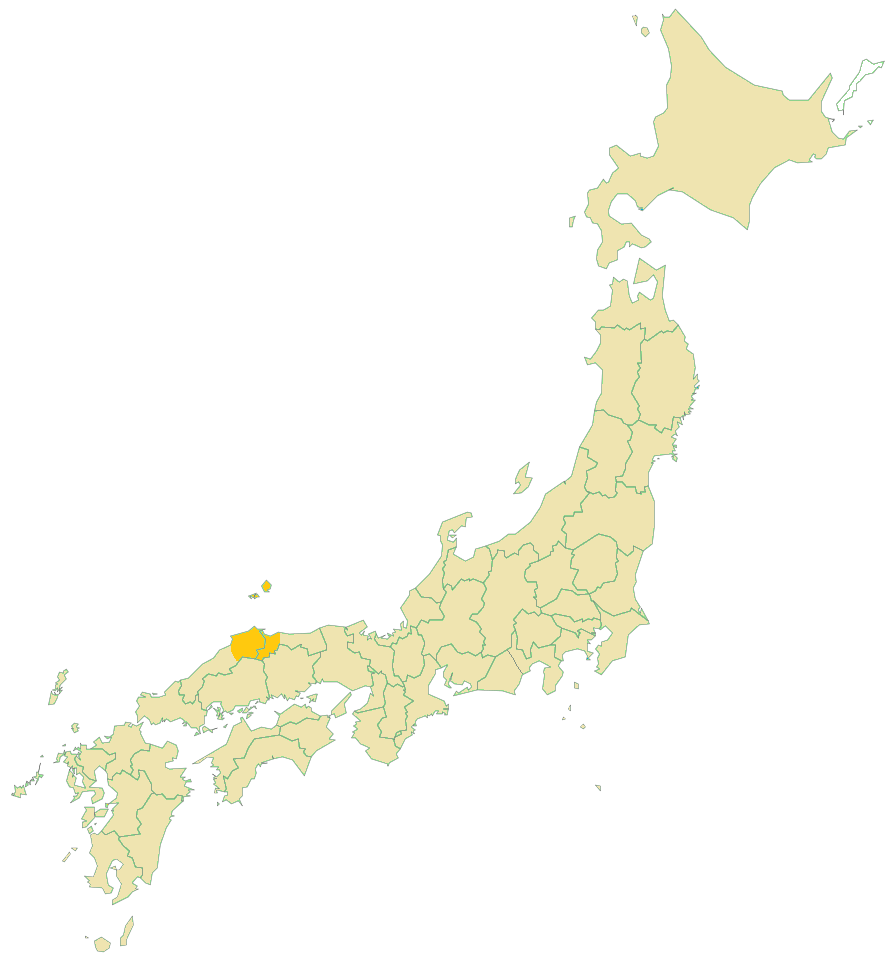
The Umpaku dialect (雲伯方言, Unpaku hōgen) is a group of Japanese dialects spoken in central San'in. The name Unpaku (雲伯) is constructed by extracting a representative kanji from Izumo (出雲) and Hōki (伯耆), the names of former provinces of this region.
The Umpaku dialects are:
Umpaku dialect, especially Izumo-ben, uniquely among dialects in the Chūgoku region, superficially resembles Tōhoku dialects in pronunciation and is thus also called Zūzū-ben. It has neutralization of the high vowels "i" and "u".
Voiceless vowel sounds are common in most western Japanese accents and this is no different in Izumo where they are commonly heard. In Izumo and western Hoki, just like the Tohoku dialects "i" and "u" sounds are centralized. "i" is commonly pronounced [ï] and "u" [ɯ̈].
In Izumo and western Hoki dialects, "r" sounds are often dropped and replaced with an elongation of the previous vowel. e.g. dare > daa "who", arimasu > aamasu "there is". In particular this often happens to "ri" and "ru" syllables which are almost all replaced by this elongated sound. In some areas, shiroi "white" becomes shie and akeru "to open" becomes akyae. In Oki, these sounds are also replaced by sokuon such as sono tsumodda (sono tsumori da).
The vowel systems of the Izumo (also called Umpaku) and Tōhoku dialects exhibit several shared phonetic characteristics, such as centralized /i/ and /u/ and elevated /e/ and /o/, which make these vowels resemble each other more closely than those in other Japanese dialects. This centralization and elevation have caused vowel mergers in central Izumo and Tōhoku, indicating a historical linguistic change likely propagated from Izumo to the northeast via coastal migration. Archaeological findings, including corner-projected mound burials from 100–250 AD in the Noto Peninsula and Toyama Prefecture, provide evidence for early Izumo influence in these areas. This implies that the distinctive vowel systems of Izumo likely spread to these regions during the Mid to Late Yayoi period. However, the Izumo-style tonal systems (Gairin A and Gairin B) had not yet developed then, as they are not present in the dialects of the Noto Peninsula and Toyama.
Elisabeth de Boer arguments in favour of an Izumo/Tōhoku branch within the Japanese dialects and that pre-existing trade contacts after the defeat of the Emishi in Tōhoku paved the way for immigration to the area. The blurred dialectal transitional area that extends for more than 200 km in southern Niigata may be due to immigrants with two different tone systems arriving from two different directions: part of them coming from the coast (Izumo) and the other part from the central highlands (Chūbu).
Further migration from Izumo to the Tōhoku region likely occurred after the development of the Gairin B tonal innovations. The existence of both Gairin A and Gairin B tonal systems in northern Tōhoku suggests multiple migration waves. Historically, political and economic conditions in Izumo fluctuated between the eastern and western areas. The more advanced Gairin B tonal innovations originated in western Izumo and gradually spread eastward. This is reflected in Tōhoku, where some areas still exhibit a blend of tonal systems.
Umpaku dialect
The Umpaku dialect (雲伯方言, Unpaku hōgen) is a group of Japanese dialects spoken in central San'in. The name Unpaku (雲伯) is constructed by extracting a representative kanji from Izumo (出雲) and Hōki (伯耆), the names of former provinces of this region.
The Umpaku dialects are:
Umpaku dialect, especially Izumo-ben, uniquely among dialects in the Chūgoku region, superficially resembles Tōhoku dialects in pronunciation and is thus also called Zūzū-ben. It has neutralization of the high vowels "i" and "u".
Voiceless vowel sounds are common in most western Japanese accents and this is no different in Izumo where they are commonly heard. In Izumo and western Hoki, just like the Tohoku dialects "i" and "u" sounds are centralized. "i" is commonly pronounced [ï] and "u" [ɯ̈].
In Izumo and western Hoki dialects, "r" sounds are often dropped and replaced with an elongation of the previous vowel. e.g. dare > daa "who", arimasu > aamasu "there is". In particular this often happens to "ri" and "ru" syllables which are almost all replaced by this elongated sound. In some areas, shiroi "white" becomes shie and akeru "to open" becomes akyae. In Oki, these sounds are also replaced by sokuon such as sono tsumodda (sono tsumori da).
The vowel systems of the Izumo (also called Umpaku) and Tōhoku dialects exhibit several shared phonetic characteristics, such as centralized /i/ and /u/ and elevated /e/ and /o/, which make these vowels resemble each other more closely than those in other Japanese dialects. This centralization and elevation have caused vowel mergers in central Izumo and Tōhoku, indicating a historical linguistic change likely propagated from Izumo to the northeast via coastal migration. Archaeological findings, including corner-projected mound burials from 100–250 AD in the Noto Peninsula and Toyama Prefecture, provide evidence for early Izumo influence in these areas. This implies that the distinctive vowel systems of Izumo likely spread to these regions during the Mid to Late Yayoi period. However, the Izumo-style tonal systems (Gairin A and Gairin B) had not yet developed then, as they are not present in the dialects of the Noto Peninsula and Toyama.
Elisabeth de Boer arguments in favour of an Izumo/Tōhoku branch within the Japanese dialects and that pre-existing trade contacts after the defeat of the Emishi in Tōhoku paved the way for immigration to the area. The blurred dialectal transitional area that extends for more than 200 km in southern Niigata may be due to immigrants with two different tone systems arriving from two different directions: part of them coming from the coast (Izumo) and the other part from the central highlands (Chūbu).
Further migration from Izumo to the Tōhoku region likely occurred after the development of the Gairin B tonal innovations. The existence of both Gairin A and Gairin B tonal systems in northern Tōhoku suggests multiple migration waves. Historically, political and economic conditions in Izumo fluctuated between the eastern and western areas. The more advanced Gairin B tonal innovations originated in western Izumo and gradually spread eastward. This is reflected in Tōhoku, where some areas still exhibit a blend of tonal systems.
Recent media
Recent media