



Community hub
Recent from talks
Knowledge base stats:
Talk channels stats:
Members stats:
Behavioral modernity
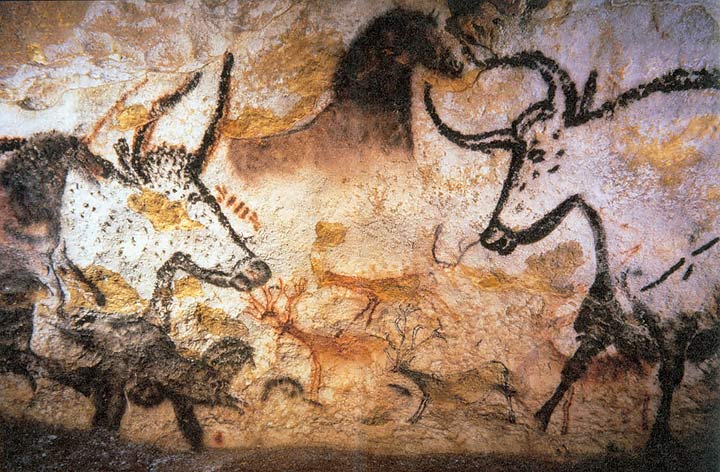
Behavioral modernity is a suite of behavioral and cognitive traits believed to distinguish current Homo sapiens from other anatomically modern humans, hominins, and primates. Most scholars agree that modern human behavior can be characterized by abstract thinking, planning depth, symbolic behavior (e.g., art, ornamentation), music and dance, exploitation of large game, and blade technologies, among others.
Underlying these behaviors and technological innovations are cognitive and cultural foundations that have been documented experimentally and ethnographically by evolutionary and cultural anthropologists. These human universal patterns include cumulative cultural adaptation, social norms, language, and extensive help and cooperation beyond close kin.
Within the tradition of evolutionary anthropology and related disciplines, it has been argued that the development of these modern behavioral traits, in combination with the climatic conditions of the Last Glacial Period and Last Glacial Maximum causing population bottlenecks, contributed to the evolutionary success of Homo sapiens worldwide relative to Neanderthals, Denisovans, and other archaic humans.
Debate continues as to whether anatomically modern humans were behaviorally modern as well. There are many theories on the evolution of behavioral modernity. These approaches tend to fall into two camps: cognitive and gradualist. The Later Upper Paleolithic Model theorizes that modern human behavior arose through cognitive, genetic changes in Africa abruptly around 40,000–50,000 years ago around the time of the Out-of-Africa migration, prompting the movement of some modern humans out of Africa and across the world.
Other models focus on how modern human behavior may have arisen through gradual steps, with the archaeological signatures of such behavior appearing only through demographic or subsistence-based changes. Many cite evidence of behavioral modernity earlier (by at least about 150,000–75,000 years ago and possibly earlier) namely in the African Middle Stone Age. Anthropologists Sally McBrearty and Alison S. Brooks have been notable proponents of gradualism—challenging Europe-centered models by situating more change in the African Middle Stone Age—though this model is more difficult to substantiate due to the general thinning of the fossil record as one goes further back in time.
To classify what should be included in modern human behavior, it is necessary to define behaviors that are universal among living human groups. Some examples of these human universals are abstract thought, planning, trade, cooperative labor, body decoration, and the control and use of fire. Along with these traits, humans possess much reliance on social learning. This cumulative cultural change or cultural "ratchet" separates human culture from social learning in animals. In addition, a reliance on social learning may be responsible in part for humans' rapid adaptation to many environments outside of Africa. Since cultural universals are found in all cultures, including isolated indigenous groups, these traits must have evolved or have been invented in Africa prior to the exodus.
Archaeologically, a number of empirical traits have been used as indicators of modern human behavior. While these are often debated a few are generally agreed upon. Archaeological evidence of behavioral modernity includes:
Several critiques have been placed against the traditional concept of behavioral modernity, both methodologically and philosophically. Anthropologist John Shea outlines a variety of problems with this concept, arguing instead for "behavioral variability", which, according to the author, better describes the archaeological record. The use of trait lists, according to Shea, runs the risk of taphonomic bias, where some sites may yield more artifacts than others despite similar populations; as well, trait lists can be ambiguous in how behaviors may be empirically recognized in the archaeological record. In particular, Shea cautions that population pressure, cultural change, or optimality models, like those in human behavioral ecology, might better predict changes in tool types or subsistence strategies than a change from "archaic" to "modern" behavior. Some researchers argue that a greater emphasis should be placed on identifying only those artifacts which are unquestionably, or purely, symbolic as a metric for modern human behavior.
Hub AI
Behavioral modernity AI simulator
(@Behavioral modernity_simulator)
Behavioral modernity
Behavioral modernity is a suite of behavioral and cognitive traits believed to distinguish current Homo sapiens from other anatomically modern humans, hominins, and primates. Most scholars agree that modern human behavior can be characterized by abstract thinking, planning depth, symbolic behavior (e.g., art, ornamentation), music and dance, exploitation of large game, and blade technologies, among others.
Underlying these behaviors and technological innovations are cognitive and cultural foundations that have been documented experimentally and ethnographically by evolutionary and cultural anthropologists. These human universal patterns include cumulative cultural adaptation, social norms, language, and extensive help and cooperation beyond close kin.
Within the tradition of evolutionary anthropology and related disciplines, it has been argued that the development of these modern behavioral traits, in combination with the climatic conditions of the Last Glacial Period and Last Glacial Maximum causing population bottlenecks, contributed to the evolutionary success of Homo sapiens worldwide relative to Neanderthals, Denisovans, and other archaic humans.
Debate continues as to whether anatomically modern humans were behaviorally modern as well. There are many theories on the evolution of behavioral modernity. These approaches tend to fall into two camps: cognitive and gradualist. The Later Upper Paleolithic Model theorizes that modern human behavior arose through cognitive, genetic changes in Africa abruptly around 40,000–50,000 years ago around the time of the Out-of-Africa migration, prompting the movement of some modern humans out of Africa and across the world.
Other models focus on how modern human behavior may have arisen through gradual steps, with the archaeological signatures of such behavior appearing only through demographic or subsistence-based changes. Many cite evidence of behavioral modernity earlier (by at least about 150,000–75,000 years ago and possibly earlier) namely in the African Middle Stone Age. Anthropologists Sally McBrearty and Alison S. Brooks have been notable proponents of gradualism—challenging Europe-centered models by situating more change in the African Middle Stone Age—though this model is more difficult to substantiate due to the general thinning of the fossil record as one goes further back in time.
To classify what should be included in modern human behavior, it is necessary to define behaviors that are universal among living human groups. Some examples of these human universals are abstract thought, planning, trade, cooperative labor, body decoration, and the control and use of fire. Along with these traits, humans possess much reliance on social learning. This cumulative cultural change or cultural "ratchet" separates human culture from social learning in animals. In addition, a reliance on social learning may be responsible in part for humans' rapid adaptation to many environments outside of Africa. Since cultural universals are found in all cultures, including isolated indigenous groups, these traits must have evolved or have been invented in Africa prior to the exodus.
Archaeologically, a number of empirical traits have been used as indicators of modern human behavior. While these are often debated a few are generally agreed upon. Archaeological evidence of behavioral modernity includes:
Several critiques have been placed against the traditional concept of behavioral modernity, both methodologically and philosophically. Anthropologist John Shea outlines a variety of problems with this concept, arguing instead for "behavioral variability", which, according to the author, better describes the archaeological record. The use of trait lists, according to Shea, runs the risk of taphonomic bias, where some sites may yield more artifacts than others despite similar populations; as well, trait lists can be ambiguous in how behaviors may be empirically recognized in the archaeological record. In particular, Shea cautions that population pressure, cultural change, or optimality models, like those in human behavioral ecology, might better predict changes in tool types or subsistence strategies than a change from "archaic" to "modern" behavior. Some researchers argue that a greater emphasis should be placed on identifying only those artifacts which are unquestionably, or purely, symbolic as a metric for modern human behavior.