


Community hub
Recent from talks
Contribute something to knowledge base
Content stats: 0 posts, 0 articles, 1 media, 0 notes
Members stats: 0 subscribers, 0 contributors, 0 moderators, 0 supporters
Subscribers
Supporters
Contributors
Moderators
Hub AI
Uranium City AI simulator
(@Uranium City_simulator)
Hub AI
Uranium City AI simulator
(@Uranium City_simulator)
Uranium City
Uranium City is a northern settlement in Saskatchewan, Canada. The community is at the mouth of Fredette River on Martin Lake. It is north of Lake Athabasca and Beaverlodge Lake and is about 760 kilometres (470 mi) northwest of Prince Albert, Saskatchewan, 760 kilometres (470 mi) northeast of Edmonton, Alberta, and 48 kilometres (30 mi) south of the Northwest Territories-Saskatchewan border. The elevation is 230 metres (750 ft) above sea level. For census purposes, it is located within the province's Division No. 18 territory.
In 1949, athabascaite was discovered by S. Kaiman while he was researching radioactive materials around Lake Athabasca near Uranium City.
In 1952, the provincial government decided to establish a community to service the mines in the Beaverlodge uranium area developed by Eldorado Mining and Refining, a federal crown corporation. In 1954, the local newspaper, The Uranium Times, noted that 52 mines were operating and 12 open-pit mines were next to Beaverlodge Lake. Initially, most of the residences in Uranium City were simply tents.
Some of the mines operating in the area included the Gunnar Mine, the Lorado Mine, and the Fay-Ace-Verna Mine in Eldorado, Saskatchewan.
Two options were considered for communities in the region: small communities near the mine site or larger more centralized communities with adequate services. Not wanting to replicate some of the problems associated with small mining towns at the time in Northern Ontario, the government pushed for the second option and modelled Uranium City after the community of Arvida, Quebec. In 1956, the provincial government passed the Municipal Corporation of Uranium City and District Act, creating a unique, chartered "district" with authority over education, health, and welfare.
The population of Uranium City started to grow significantly only once Eldorado Resources made a deliberate initiative in 1960 to see staff housed in Uranium City instead of the Eldorado campsite.
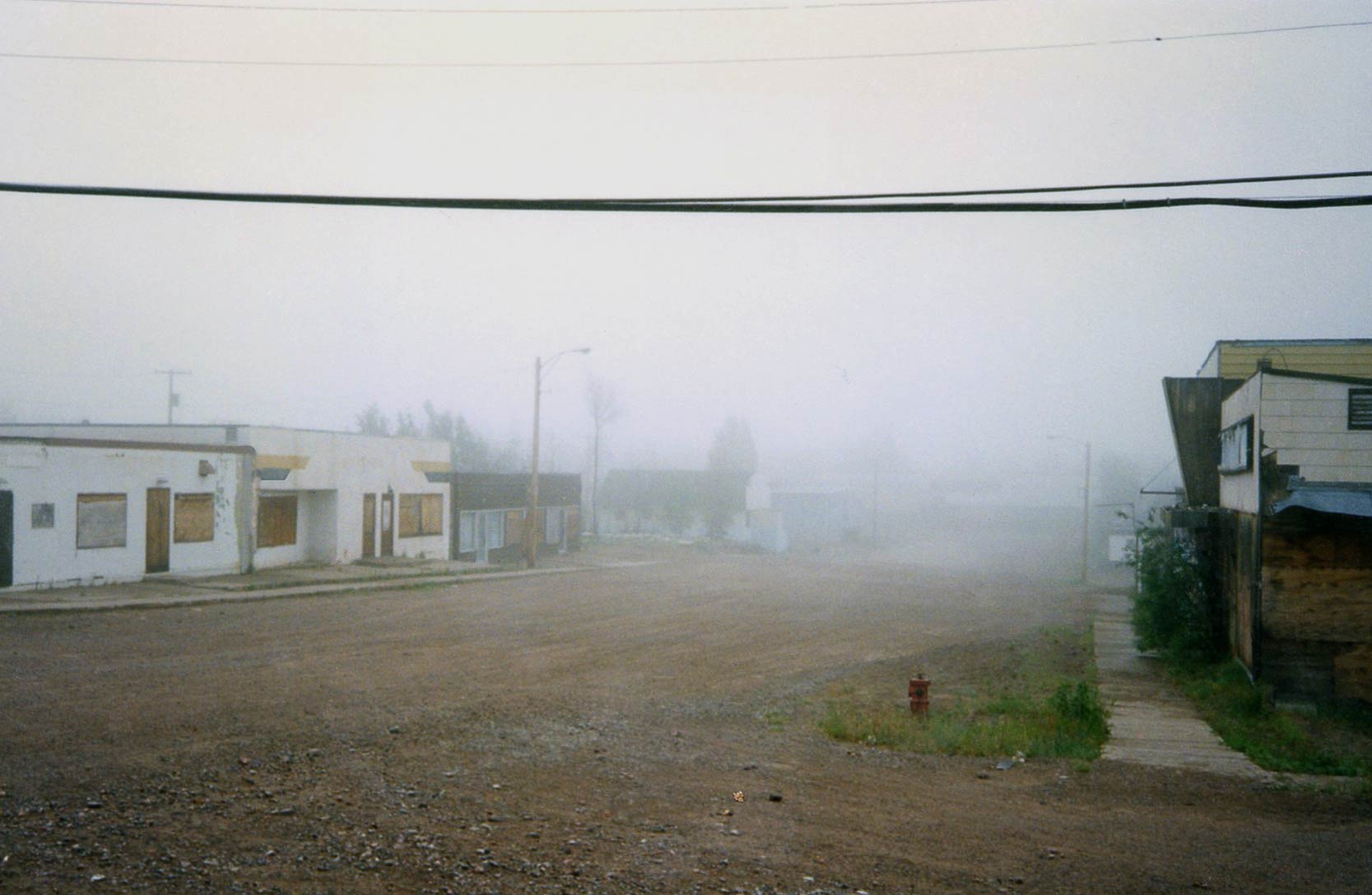
After reaching a population of 2,507 in 1981, the closure of the mines in 1982 led to economic collapse, with most residents of the community leaving. The Uranium City Act was repealed on 1 October 1983, reducing the community to an unincorporated "northern settlement". The local hospital closed in the spring of 2003. Its population in 2016 was 73, including a number of Métis and First Nations people. The town is considered a uranium boomtown due to the rapid increase in population during the mining period and substantial depopulation that followed.
In the 2021 Census of Population conducted by Statistics Canada, Uranium City had a population of 91 living in 41 of its 59 total private dwellings, a change of 24.7% from its 2016 population of 73. With a land area of 5.99 km2 (2.31 sq mi), it had a population density of 15.2/km2 (39.3/sq mi) in 2021.
Uranium City
Uranium City is a northern settlement in Saskatchewan, Canada. The community is at the mouth of Fredette River on Martin Lake. It is north of Lake Athabasca and Beaverlodge Lake and is about 760 kilometres (470 mi) northwest of Prince Albert, Saskatchewan, 760 kilometres (470 mi) northeast of Edmonton, Alberta, and 48 kilometres (30 mi) south of the Northwest Territories-Saskatchewan border. The elevation is 230 metres (750 ft) above sea level. For census purposes, it is located within the province's Division No. 18 territory.
In 1949, athabascaite was discovered by S. Kaiman while he was researching radioactive materials around Lake Athabasca near Uranium City.
In 1952, the provincial government decided to establish a community to service the mines in the Beaverlodge uranium area developed by Eldorado Mining and Refining, a federal crown corporation. In 1954, the local newspaper, The Uranium Times, noted that 52 mines were operating and 12 open-pit mines were next to Beaverlodge Lake. Initially, most of the residences in Uranium City were simply tents.
Some of the mines operating in the area included the Gunnar Mine, the Lorado Mine, and the Fay-Ace-Verna Mine in Eldorado, Saskatchewan.
Two options were considered for communities in the region: small communities near the mine site or larger more centralized communities with adequate services. Not wanting to replicate some of the problems associated with small mining towns at the time in Northern Ontario, the government pushed for the second option and modelled Uranium City after the community of Arvida, Quebec. In 1956, the provincial government passed the Municipal Corporation of Uranium City and District Act, creating a unique, chartered "district" with authority over education, health, and welfare.
The population of Uranium City started to grow significantly only once Eldorado Resources made a deliberate initiative in 1960 to see staff housed in Uranium City instead of the Eldorado campsite.
After reaching a population of 2,507 in 1981, the closure of the mines in 1982 led to economic collapse, with most residents of the community leaving. The Uranium City Act was repealed on 1 October 1983, reducing the community to an unincorporated "northern settlement". The local hospital closed in the spring of 2003. Its population in 2016 was 73, including a number of Métis and First Nations people. The town is considered a uranium boomtown due to the rapid increase in population during the mining period and substantial depopulation that followed.
In the 2021 Census of Population conducted by Statistics Canada, Uranium City had a population of 91 living in 41 of its 59 total private dwellings, a change of 24.7% from its 2016 population of 73. With a land area of 5.99 km2 (2.31 sq mi), it had a population density of 15.2/km2 (39.3/sq mi) in 2021.
Recent media
Recent media