
Recent from talks
Uterine artery embolization
Knowledge base stats:
Talk channels stats:
Members stats:
Uterine artery embolization
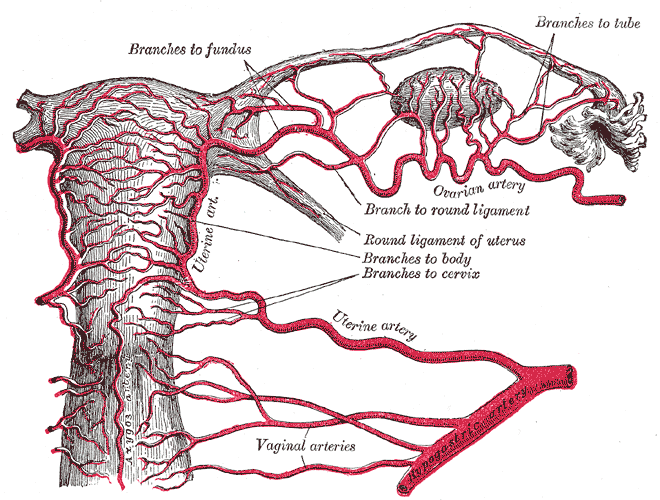
Uterine artery embolization (UAE, uterine fibroid embolization, or UFE) is a procedure in which an interventional radiologist uses a catheter to deliver small particles that block the blood supply to the uterine body. The procedure is primarily done for the treatment of uterine fibroids and adenomyosis. Compared to surgical treatment for fibroids such as a hysterectomy, in which a woman's uterus is removed, uterine artery embolization may be beneficial in women who wish to retain their uterus. Other reasons for uterine artery embolization are postpartum hemorrhage and uterine arteriovenous malformations.
Uterine fibroids are the most common type of benign uterine tumor and are composed of smooth muscle. They often cause bulk-related symptoms, which can be characterized by back pain, heaviness in the pelvic area, abdominal bloating. Uterine artery embolization may be done to treat bothersome bulk-related symptoms as well as abnormal or heavy uterine bleeding due to uterine fibroids. Fibroid size, number, and location are three potential predictors of a successful outcome. Specifically, studies have demonstrated that submucosal (directly underneath the uterine lining) fibroids demonstrated the largest reduction in size while subserosal (outer layer of the uterus) had the smallest reduction.
Uterine artery embolization may also be appropriate for the treatment of adenomyosis, which is when the lining of the uterus aberrantly grows into the muscle of the uterus. Symptoms of adenomyosis include heavy or prolonged menstrual bleeding and painful menstrual periods.
Uterine artery embolization can also be used to control heavy uterine bleeding for reasons other than fibroids, such as postpartum obstetrical hemorrhage. Many women who experience postpartum hemorrhage may be successfully treated with medication or uterine balloon tamponade. However, in cases where women continue to bleed, uterine artery embolization may be an appropriate option.
A less common indication for uterine artery embolization is for the treatment of uterine arteriovenous malformations which can be a cause of abnormal uterine bleeding or life-threatening bleeding. Roughly half of women with uterine arteriovenous malformations are born with them while the remaining form following surgical interventions or may be due to uterine tumors.
Prior to undergoing UAE, the patient should be evaluated for the following absolute contra-indications to the procedure: a viable pregnancy, a current infection that is not being treated, or gynecologic malignancy (except for cases where UAE is being used as a procedure in addition to treatment for the cancer). Relative contra-indications for the procedure include a severe contrast allergy since contrast is necessary to visualize the arteries during the procedure, kidney impairment since contrast may cause damage to the kidneys, or coagulopathy (blood disorder that causes prolonged or excessive bleeding). However, all of the stated relative contra-indications can be managed with appropriate pre-operative planning.
The rate of serious complications is comparable to that of myomectomy or hysterectomy. The advantage of somewhat faster recovery time is offset by a higher rate of minor complications and an increased likelihood of requiring surgical intervention within two to five years of the initial procedure. An analysis of 15,000 women found that those who had myomectomy required fewer additional procedures, including hysterectomies, to treat fibroids over the next five years than those who had uterine artery embolization.
Complications include the following:
Hub AI
Uterine artery embolization AI simulator
(@Uterine artery embolization_simulator)
Uterine artery embolization
Uterine artery embolization (UAE, uterine fibroid embolization, or UFE) is a procedure in which an interventional radiologist uses a catheter to deliver small particles that block the blood supply to the uterine body. The procedure is primarily done for the treatment of uterine fibroids and adenomyosis. Compared to surgical treatment for fibroids such as a hysterectomy, in which a woman's uterus is removed, uterine artery embolization may be beneficial in women who wish to retain their uterus. Other reasons for uterine artery embolization are postpartum hemorrhage and uterine arteriovenous malformations.
Uterine fibroids are the most common type of benign uterine tumor and are composed of smooth muscle. They often cause bulk-related symptoms, which can be characterized by back pain, heaviness in the pelvic area, abdominal bloating. Uterine artery embolization may be done to treat bothersome bulk-related symptoms as well as abnormal or heavy uterine bleeding due to uterine fibroids. Fibroid size, number, and location are three potential predictors of a successful outcome. Specifically, studies have demonstrated that submucosal (directly underneath the uterine lining) fibroids demonstrated the largest reduction in size while subserosal (outer layer of the uterus) had the smallest reduction.
Uterine artery embolization may also be appropriate for the treatment of adenomyosis, which is when the lining of the uterus aberrantly grows into the muscle of the uterus. Symptoms of adenomyosis include heavy or prolonged menstrual bleeding and painful menstrual periods.
Uterine artery embolization can also be used to control heavy uterine bleeding for reasons other than fibroids, such as postpartum obstetrical hemorrhage. Many women who experience postpartum hemorrhage may be successfully treated with medication or uterine balloon tamponade. However, in cases where women continue to bleed, uterine artery embolization may be an appropriate option.
A less common indication for uterine artery embolization is for the treatment of uterine arteriovenous malformations which can be a cause of abnormal uterine bleeding or life-threatening bleeding. Roughly half of women with uterine arteriovenous malformations are born with them while the remaining form following surgical interventions or may be due to uterine tumors.
Prior to undergoing UAE, the patient should be evaluated for the following absolute contra-indications to the procedure: a viable pregnancy, a current infection that is not being treated, or gynecologic malignancy (except for cases where UAE is being used as a procedure in addition to treatment for the cancer). Relative contra-indications for the procedure include a severe contrast allergy since contrast is necessary to visualize the arteries during the procedure, kidney impairment since contrast may cause damage to the kidneys, or coagulopathy (blood disorder that causes prolonged or excessive bleeding). However, all of the stated relative contra-indications can be managed with appropriate pre-operative planning.
The rate of serious complications is comparable to that of myomectomy or hysterectomy. The advantage of somewhat faster recovery time is offset by a higher rate of minor complications and an increased likelihood of requiring surgical intervention within two to five years of the initial procedure. An analysis of 15,000 women found that those who had myomectomy required fewer additional procedures, including hysterectomies, to treat fibroids over the next five years than those who had uterine artery embolization.
Complications include the following:
Recent media