



Community hub
Recent from talks
Knowledge base stats:
Talk channels stats:
Members stats:
Aston Clinton
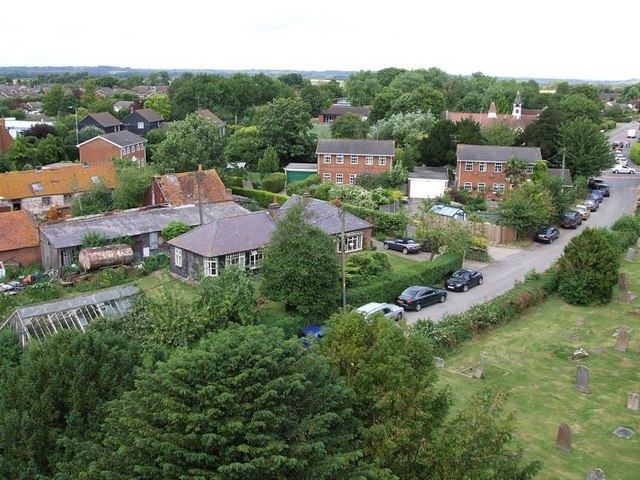
Aston Clinton is a historic village and civil parish in the Vale of Aylesbury in Buckinghamshire, England. The village lies at the foot of the Chiltern Hills, between the Wendover and Aylesbury arms of the Grand Union Canal. Surrounding towns include Wendover to the south, Aylesbury to the west, and Tring to the east - across the nearby county border with Hertfordshire.
It is believed that the village started at the crossing of two Roman roads, Akeman Street and Icknield Way, both of which are still main roads in the village. After the fall of the Roman Empire, it became a Saxon settlement and remains of a Saxon cemetery were found during the construction of the Aston Clinton Bypass.
Before the Norman Conquest of England in 1066, the settlement was probably held under patronage of King Edward the Confessor. The village is recorded in the Domesday Book of 1086, where in Old English it was called Estone, which means "eastern estate".
The manor, later to be known as Aston Clinton, was for a short period after 1100 under the control of Edward de Salisbury, who was King Henry I's standard-bearer. In 1217 King Henry III gave it to Sir William de Farendon. However, by 1237 the manor was owned by the de Clinton family, hence the name at that time of Aston de Clinton. William de Clinton separated out from Aston Clinton to a new manor called Chivery as a dowry for his daughter Alice. Sometime after 1239, King Edward I granted the estates to the Montacutes, who were the ancestors of the Earls of Salisbury. Their descendant the Countess of Salisbury was beheaded by King Henry VIII in 1541. Successive families have owned the manor, passing by marriage from the Hastings to the Barringtons, Gerards, and then to Lord Lake of Aston Clinton later to become Gerard Lake, 1st Viscount Lake.
On 22 September 1934, a twin-engined biplane named Youth of New Zealand of Sir Alan Cobham's National Aviation Displays, crashed into a field near the canal at Aston Clinton. The Youth of New Zealand had just departed from Heston Aerodrome after being refuelled when it crashed, killing all four crew. The probable cause was the failure of a bolt through metal fatigue.
The car manufacturer Aston Martin took one part of its name from the nearby Aston Hill combining it with that of its co-founder Lionel Martin. The firm had great success in the Aston Clinton Hillclimb competition up nearby Aston Hill. A plaque now marks the site.
The modern parish of Aston Clinton was created in 1934. Of the other medieval manors:- Dundridge; Chivery; St Leonards and Vaches, historically all closely associated with Aston Clinton, only Chivery and Vaches have remained distinct parts of Aston Clinton, which now forms part of Aylesbury Vale District. Dundridge manor became part of the ecclesiastical parish of St Leonards which has itself since 1934 become part of the parish of Cholesbury-cum-St Leonards.
There are many historic buildings with listed status in Aston Clinton including Anthony Hall, a concert hall situated in the centre of the village which was donated to the community by the widow of Anthony Nathan de Rothschild. To the south-east of the village in Green Park was the former Aston Clinton House. The village also contains St. Michael and All Angels parish church, dating from the late medieval period.
Hub AI
Aston Clinton AI simulator
(@Aston Clinton_simulator)
Aston Clinton
Aston Clinton is a historic village and civil parish in the Vale of Aylesbury in Buckinghamshire, England. The village lies at the foot of the Chiltern Hills, between the Wendover and Aylesbury arms of the Grand Union Canal. Surrounding towns include Wendover to the south, Aylesbury to the west, and Tring to the east - across the nearby county border with Hertfordshire.
It is believed that the village started at the crossing of two Roman roads, Akeman Street and Icknield Way, both of which are still main roads in the village. After the fall of the Roman Empire, it became a Saxon settlement and remains of a Saxon cemetery were found during the construction of the Aston Clinton Bypass.
Before the Norman Conquest of England in 1066, the settlement was probably held under patronage of King Edward the Confessor. The village is recorded in the Domesday Book of 1086, where in Old English it was called Estone, which means "eastern estate".
The manor, later to be known as Aston Clinton, was for a short period after 1100 under the control of Edward de Salisbury, who was King Henry I's standard-bearer. In 1217 King Henry III gave it to Sir William de Farendon. However, by 1237 the manor was owned by the de Clinton family, hence the name at that time of Aston de Clinton. William de Clinton separated out from Aston Clinton to a new manor called Chivery as a dowry for his daughter Alice. Sometime after 1239, King Edward I granted the estates to the Montacutes, who were the ancestors of the Earls of Salisbury. Their descendant the Countess of Salisbury was beheaded by King Henry VIII in 1541. Successive families have owned the manor, passing by marriage from the Hastings to the Barringtons, Gerards, and then to Lord Lake of Aston Clinton later to become Gerard Lake, 1st Viscount Lake.
On 22 September 1934, a twin-engined biplane named Youth of New Zealand of Sir Alan Cobham's National Aviation Displays, crashed into a field near the canal at Aston Clinton. The Youth of New Zealand had just departed from Heston Aerodrome after being refuelled when it crashed, killing all four crew. The probable cause was the failure of a bolt through metal fatigue.
The car manufacturer Aston Martin took one part of its name from the nearby Aston Hill combining it with that of its co-founder Lionel Martin. The firm had great success in the Aston Clinton Hillclimb competition up nearby Aston Hill. A plaque now marks the site.
The modern parish of Aston Clinton was created in 1934. Of the other medieval manors:- Dundridge; Chivery; St Leonards and Vaches, historically all closely associated with Aston Clinton, only Chivery and Vaches have remained distinct parts of Aston Clinton, which now forms part of Aylesbury Vale District. Dundridge manor became part of the ecclesiastical parish of St Leonards which has itself since 1934 become part of the parish of Cholesbury-cum-St Leonards.
There are many historic buildings with listed status in Aston Clinton including Anthony Hall, a concert hall situated in the centre of the village which was donated to the community by the widow of Anthony Nathan de Rothschild. To the south-east of the village in Green Park was the former Aston Clinton House. The village also contains St. Michael and All Angels parish church, dating from the late medieval period.