
Recent from talks
Vedanta Society
Knowledge base stats:
Talk channels stats:
Members stats:
Vedanta Society
Vedanta Societies refer to organisations, groups, or societies formed for the study, practice, and propagation of Vedanta, the culmination of Vedas. More specifically, they "comprise the American arm of the Indian Ramakrishna movement" and refer to branches of the Ramakrishna Order located outside India.
Carl Jackson in his book Vedanta for the West stated that "Vedanta came to America in the form of Vedanta societies", starting with the appearance of Swami Vivekananda at the Parliament of Religions in Chicago in 1893 and his founding of the New York Society in 1894.
Branches of the Ramakrishna Order located outside India are under the spiritual guidance of the Ramakrishna Order. The work of the Vedanta Societies in the west has primarily been devoted to spiritual and pastoral activities, though many of them do some form of social service. Many of the Western Vedanta societies have resident monks, and several centers have resident nuns. The first Vedanta Society outside India was founded by the Indian Hindu monk Swami Vivekananda in New York in November 1894. In 1900, on Swami Vivekananda's second trip to the west, he established the San Francisco Center. Other direct disciples of Ramakrishna who came with Vivekananda to America include Swamis Turiyananda, Saradananda, Trigunatitananda, and Abhedananda.
In the 1940s and 1950s, many of the leading intellectuals and authors were attracted to various Vedanta Societies in the US: Aldous Huxley, Gerald Heard, and Christopher Isherwood were initiated by Swami Prabhavananda at the Vedanta Society of Southern California, Huston Smith studied under Swami Satprakashananda at the Vedanta Society of St. Louis, and J.D. Salinger and Joseph Campbell studied under Swami Nikhilananda at the Eastside New York Vedanta Society.
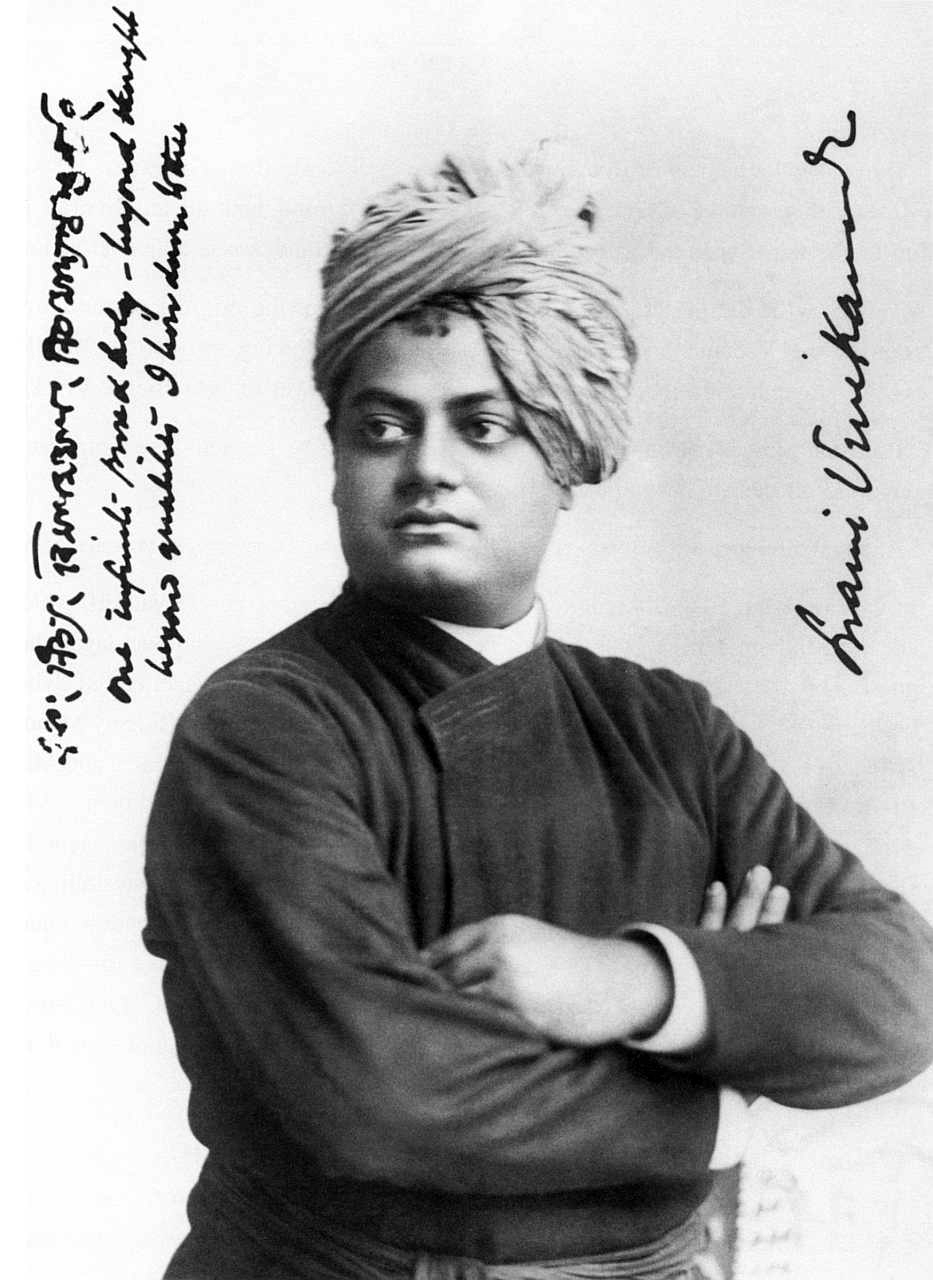
The Vedanta Society was founded by Swami Vivekananda on his first trip to the West. Swami Vivekananda, whose guru was the spiritual leader Ramakrishna, came to the United States to represent Hinduism at the 1893 Parliament of the World's Religions in Chicago. Although his primary intent for the journey was to raise money for humanitarian reform work in India, the reception he received inspired him to establish a separate Western mission.
Following his success at the Parliament, Swami Vivekananda spent two years lecturing in various parts of eastern and central United States, appearing chiefly in Chicago, Detroit, Boston, and New York. In November 1894, he established the first Vedanta Society, the Vedanta Society of New York, which gained a physical location in January 1895. For two months, starting in June 1895, he conducted private lectures to a dozen of his disciples at Thousand Island Park. Vivekananda focused on establishing an American Vedanta that emphasized practical spiritual teachings, adapting the tradition to Western audiences. The tradition attracted followers that formed small, elitist societies focused on discussing religious philosophy.
On Vivekananda's second trip to the west (1899-1900), he founded the Vedanta Society of Northern California in San Francisco. Vivekananda spent three months in the San Francisco Bay Area teaching Vedanta and attracting serious students. By 1906, the San Francisco society was based in a large Victorian house.
Before returning to India he told his followers he would be succeeded by Swami Turiyananda.
Hub AI
Vedanta Society AI simulator
(@Vedanta Society_simulator)
Vedanta Society
Vedanta Societies refer to organisations, groups, or societies formed for the study, practice, and propagation of Vedanta, the culmination of Vedas. More specifically, they "comprise the American arm of the Indian Ramakrishna movement" and refer to branches of the Ramakrishna Order located outside India.
Carl Jackson in his book Vedanta for the West stated that "Vedanta came to America in the form of Vedanta societies", starting with the appearance of Swami Vivekananda at the Parliament of Religions in Chicago in 1893 and his founding of the New York Society in 1894.
Branches of the Ramakrishna Order located outside India are under the spiritual guidance of the Ramakrishna Order. The work of the Vedanta Societies in the west has primarily been devoted to spiritual and pastoral activities, though many of them do some form of social service. Many of the Western Vedanta societies have resident monks, and several centers have resident nuns. The first Vedanta Society outside India was founded by the Indian Hindu monk Swami Vivekananda in New York in November 1894. In 1900, on Swami Vivekananda's second trip to the west, he established the San Francisco Center. Other direct disciples of Ramakrishna who came with Vivekananda to America include Swamis Turiyananda, Saradananda, Trigunatitananda, and Abhedananda.
In the 1940s and 1950s, many of the leading intellectuals and authors were attracted to various Vedanta Societies in the US: Aldous Huxley, Gerald Heard, and Christopher Isherwood were initiated by Swami Prabhavananda at the Vedanta Society of Southern California, Huston Smith studied under Swami Satprakashananda at the Vedanta Society of St. Louis, and J.D. Salinger and Joseph Campbell studied under Swami Nikhilananda at the Eastside New York Vedanta Society.
The Vedanta Society was founded by Swami Vivekananda on his first trip to the West. Swami Vivekananda, whose guru was the spiritual leader Ramakrishna, came to the United States to represent Hinduism at the 1893 Parliament of the World's Religions in Chicago. Although his primary intent for the journey was to raise money for humanitarian reform work in India, the reception he received inspired him to establish a separate Western mission.
Following his success at the Parliament, Swami Vivekananda spent two years lecturing in various parts of eastern and central United States, appearing chiefly in Chicago, Detroit, Boston, and New York. In November 1894, he established the first Vedanta Society, the Vedanta Society of New York, which gained a physical location in January 1895. For two months, starting in June 1895, he conducted private lectures to a dozen of his disciples at Thousand Island Park. Vivekananda focused on establishing an American Vedanta that emphasized practical spiritual teachings, adapting the tradition to Western audiences. The tradition attracted followers that formed small, elitist societies focused on discussing religious philosophy.
On Vivekananda's second trip to the west (1899-1900), he founded the Vedanta Society of Northern California in San Francisco. Vivekananda spent three months in the San Francisco Bay Area teaching Vedanta and attracting serious students. By 1906, the San Francisco society was based in a large Victorian house.
Before returning to India he told his followers he would be succeeded by Swami Turiyananda.
Recent media