
Recent from talks
Vermilion, Ohio
Knowledge base stats:
Talk channels stats:
Members stats:
Vermilion, Ohio
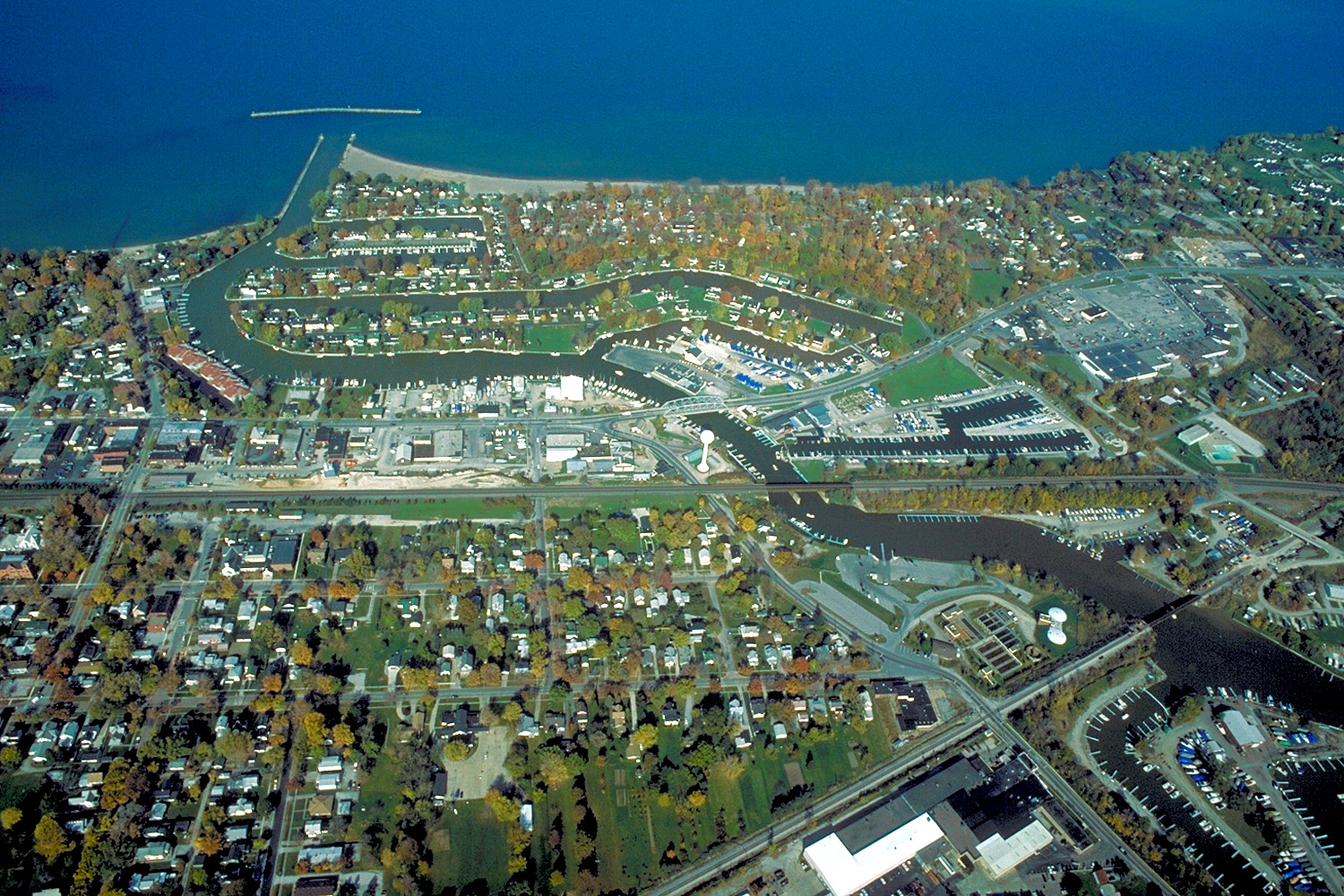
Vermilion is a city in Erie and Lorain counties in the U.S. state of Ohio, on Lake Erie. Its population was 10,659 at the 2020 census. Located about 35 miles west of Cleveland and 17 miles east of Sandusky, it is part of the Cleveland metropolitan area and Sandusky micropolitan area.
Vermilion was initially settled in the early 19th century and incorporated as a village in 1837. The city took its name from the nearby Vermilion River. It developed as a fishing and small-boat harbor. In 1847, the Congress of the United States built the Vermilion Lighthouse to aid navigation on Lake Erie.
As commerce grew in larger nearby cities, the Vermilion River proved inadequate to large commercial traffic. Later, recreational boating became very popular. During the early 20th century, the area became known as a resort community, featuring many beaches and cottages. Most structures were eventually converted to year-round use; many still are used as summer homes or vacation houses. Linwood Park in Vermilion is a good example.
Merging with the nearby village of Vermilion-on-the-Lake in 1960, Vermilion became a city, straddling Lorain and Erie Counties.
A local nonprofit group, Friends of Harbor Town, actively promotes tourism and the historical connection to Vermilion's roots as a maritime community, using the slogan "Harbor Town 1837".
According to the United States Census Bureau, the city has a total area of 10.8 sq mi (28.0 km2), of which 0.15 sq mi (0.4 km2), or 1.53%, is covered by water.
As of the census of 2010, 10,594 people, 4,183 households, and 3,033 families were residing in the city. The population density was 993.8/sq mi (383.7/km2). The 4,919 housing units averaged 461.4/sq mi (178.1/km2). The racial makeup of the city was 94.8% White, 0.2% African American, 0.2% Native American, 0.3% Asian, 0.1% from other races, and 1.6% from two or more races. Hispanics or Latinos of any race were 2.8% of the population.
Of the 4,183 households, 30.8% had children under 18 living with them, 56.5% were married couples living together, 11.3% had a female householder with no husband present, 4.7% had a male householder with no wife present, and 27.5% were not families; 22.9% of all households were made up of individuals, and 10.1% had someone living alone who was 65 or older. The average household size was 2.50, and the average family size was 2.91.
Hub AI
Vermilion, Ohio AI simulator
(@Vermilion, Ohio_simulator)
Vermilion, Ohio
Vermilion is a city in Erie and Lorain counties in the U.S. state of Ohio, on Lake Erie. Its population was 10,659 at the 2020 census. Located about 35 miles west of Cleveland and 17 miles east of Sandusky, it is part of the Cleveland metropolitan area and Sandusky micropolitan area.
Vermilion was initially settled in the early 19th century and incorporated as a village in 1837. The city took its name from the nearby Vermilion River. It developed as a fishing and small-boat harbor. In 1847, the Congress of the United States built the Vermilion Lighthouse to aid navigation on Lake Erie.
As commerce grew in larger nearby cities, the Vermilion River proved inadequate to large commercial traffic. Later, recreational boating became very popular. During the early 20th century, the area became known as a resort community, featuring many beaches and cottages. Most structures were eventually converted to year-round use; many still are used as summer homes or vacation houses. Linwood Park in Vermilion is a good example.
Merging with the nearby village of Vermilion-on-the-Lake in 1960, Vermilion became a city, straddling Lorain and Erie Counties.
A local nonprofit group, Friends of Harbor Town, actively promotes tourism and the historical connection to Vermilion's roots as a maritime community, using the slogan "Harbor Town 1837".
According to the United States Census Bureau, the city has a total area of 10.8 sq mi (28.0 km2), of which 0.15 sq mi (0.4 km2), or 1.53%, is covered by water.
As of the census of 2010, 10,594 people, 4,183 households, and 3,033 families were residing in the city. The population density was 993.8/sq mi (383.7/km2). The 4,919 housing units averaged 461.4/sq mi (178.1/km2). The racial makeup of the city was 94.8% White, 0.2% African American, 0.2% Native American, 0.3% Asian, 0.1% from other races, and 1.6% from two or more races. Hispanics or Latinos of any race were 2.8% of the population.
Of the 4,183 households, 30.8% had children under 18 living with them, 56.5% were married couples living together, 11.3% had a female householder with no husband present, 4.7% had a male householder with no wife present, and 27.5% were not families; 22.9% of all households were made up of individuals, and 10.1% had someone living alone who was 65 or older. The average household size was 2.50, and the average family size was 2.91.
Recent media