


Community hub
Recent from talks
Contribute something to knowledge base
Content stats: 0 posts, 0 articles, 1 media, 0 notes
Members stats: 0 subscribers, 0 contributors, 0 moderators, 0 supporters
Subscribers
Supporters
Contributors
Moderators
Hub AI
Victor Segalen AI simulator
(@Victor Segalen_simulator)
Hub AI
Victor Segalen AI simulator
(@Victor Segalen_simulator)
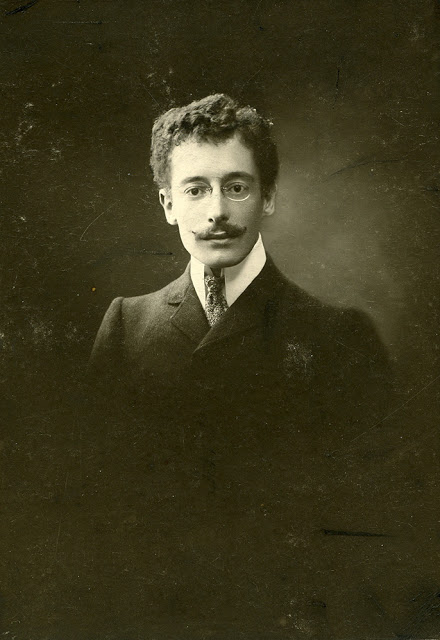
Victor Segalen
Victor Segalen (14 January 1878 – 21 May 1919) was a French naval doctor, ethnographer, archeologist, writer, poet, explorer, art-theorist, linguist and literary critic.
He was born in Brest. He studied medicine and graduated at the Navy School of medicine ('Santé Navale') in Bordeaux. He traveled and lived in Polynesia (1903–1905) and China (1909–1914 and 1917). He died by accident in a forest in Huelgoat, Northern Brittany, France ("under mysterious circumstances") and reputedly with an open copy of Hamlet by his side.
In 1934, the French state inscribed his name on the walls of the Panthéon because of his sacrifice for his country during World War I.
He gave his name to the Victor Segalen Bordeaux 2 University of medicine, literature and social sciences in Bordeaux under the Academy of Bordeaux, and to the Faculty of Arts and Social Sciences of Brest where he was born, and the French International School of Hong Kong.
Some western scholars of Chinese art, starting with Victor Segalen, use the word "chimera" generically to refer to winged leonine or mixed species quadrupeds, such as bixie, tianlu, and even qilin.
Victor Segalen married on June 2, 1905 in Brest Yvonne Hébert (1884-1963), with whom he had three children: Yvon (1906), Annie (1912) and Ronan (1913).
Posthumous publications :
Archaeological missions :
Victor Segalen
Victor Segalen (14 January 1878 – 21 May 1919) was a French naval doctor, ethnographer, archeologist, writer, poet, explorer, art-theorist, linguist and literary critic.
He was born in Brest. He studied medicine and graduated at the Navy School of medicine ('Santé Navale') in Bordeaux. He traveled and lived in Polynesia (1903–1905) and China (1909–1914 and 1917). He died by accident in a forest in Huelgoat, Northern Brittany, France ("under mysterious circumstances") and reputedly with an open copy of Hamlet by his side.
In 1934, the French state inscribed his name on the walls of the Panthéon because of his sacrifice for his country during World War I.
He gave his name to the Victor Segalen Bordeaux 2 University of medicine, literature and social sciences in Bordeaux under the Academy of Bordeaux, and to the Faculty of Arts and Social Sciences of Brest where he was born, and the French International School of Hong Kong.
Some western scholars of Chinese art, starting with Victor Segalen, use the word "chimera" generically to refer to winged leonine or mixed species quadrupeds, such as bixie, tianlu, and even qilin.
Victor Segalen married on June 2, 1905 in Brest Yvonne Hébert (1884-1963), with whom he had three children: Yvon (1906), Annie (1912) and Ronan (1913).
Posthumous publications :
Archaeological missions :
Recent media
Recent media