
Recent from talks
Villa Medici
Knowledge base stats:
Talk channels stats:
Members stats:
Villa Medici
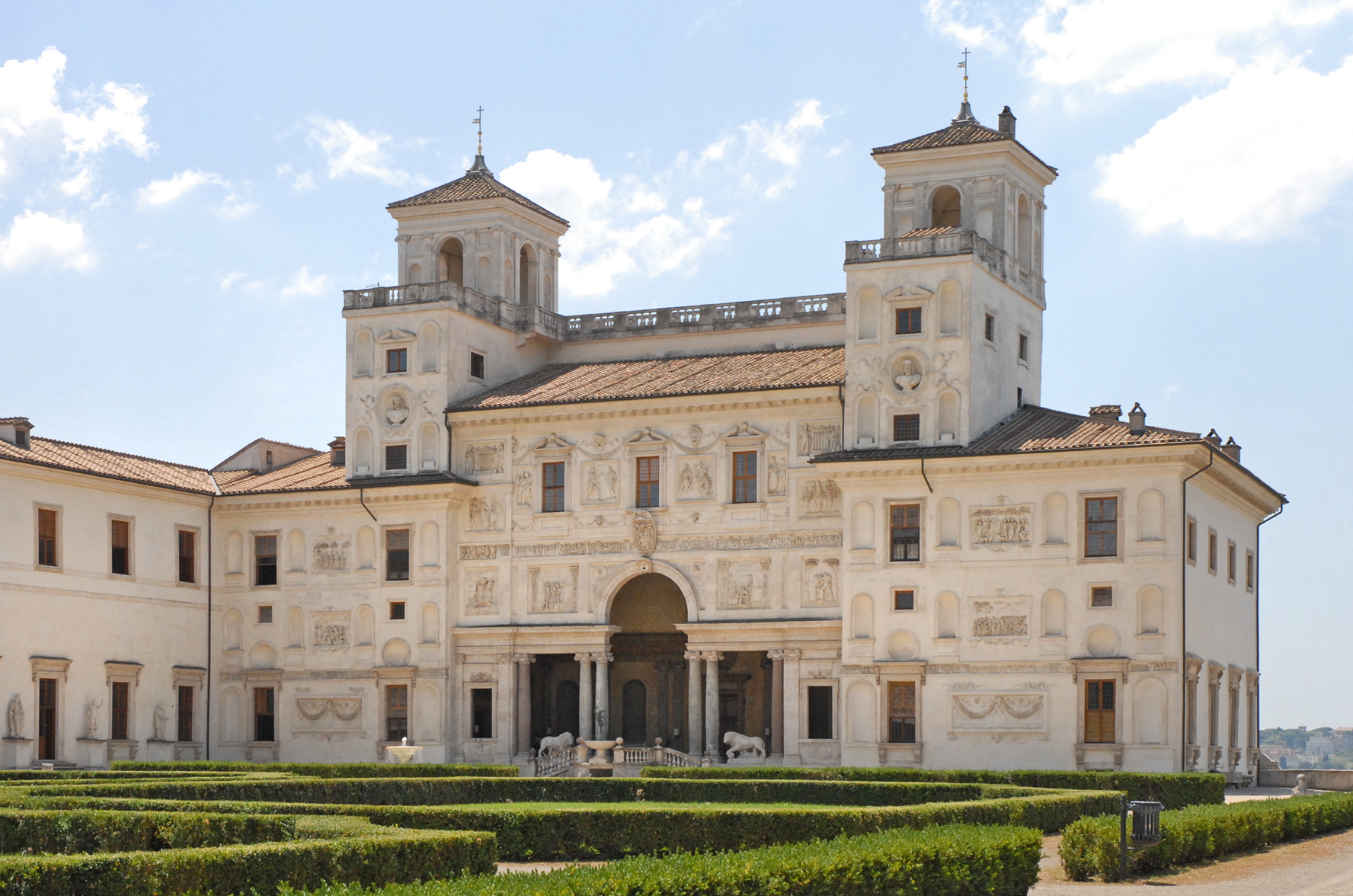
The Villa Medici (Italian pronunciation: [ˈvilla ˈmɛːditʃi]) is a sixteenth-century Italian Mannerist villa and an architectural complex with 7-hectare Italian garden, contiguous with the more extensive Borghese gardens, on the Pincian Hill next to Trinità dei Monti in the historic centre of Rome, Italy.
The Villa Medici, founded by Ferdinando I de' Medici, Grand Duke of Tuscany and now property of the French State,[citation needed] has housed the French Academy in Rome and has welcomed winners of the Rome Prize since 1803, to promote and represent artistic creation in all its fields, an instance being the musical evocation of its garden fountains features in Ottorino Respighi's Fountains of Rome.
The Villa Medici lies within the historic district of Rome, inside the perimeter walls built by Emperor Aurelian in the third century, and the Gianicolense walls built by Pope Urban VIII in 1643, which was declared a World Heritage Site by the United Nations Educational, Scientific and Cultural Organization (UNESCO) in 1980, though it is not specifically identified amongst the mostly Roman-era monuments of that listing, and it is not part of the UNESCO World Heritage Site the "Medici Villas and Gardens in Tuscany," ascribed in 2013.
In ancient times, the site of the Villa Medici was part of the gardens of Lucullus, which passed into the hands of the Imperial family with Messalina, who was murdered in the villa.
In 1564, when the nephews of Cardinal Giovanni Ricci of Montepulciano acquired the property, it had long been abandoned to viticulture. The sole dwelling was the Casina of Cardinale Marcello Crescenzi, who had maintained a vineyard here and had begun improvements to the villa under the direction of the Florentine Nanni Lippi, who had died however before work had proceeded far. The new proprietors commissioned Annibale Lippi, the late architect's son, to continue work, with involvement of Michelangelo that is traditional lore, but undocumented.
In 1576, the property was acquired by Cardinal Ferdinando de' Medici, who finished the structure to designs by Bartolomeo Ammanati. The Villa Medici became the first among Medici properties in Rome, intended to give concrete expression to the ascendancy of the Medici among Italian princes and assert their permanent presence in Rome. Under the Cardinal's insistence, Ammanati incorporated into the design Roman bas-reliefs and statues that were coming to sight with almost every spadeful of earth, with the result that the facades of the Villa Medici, as it now was, became a virtual open-air museum. A series of grand gardens recalled the botanical gardens created at Pisa and at Florence by the Cardinal's father Cosimo I de' Medici, sheltered in plantations of pines, cypresses and oaks. Ferdinando de' Medici had a studiolo, a retreat for study and contemplation, built to the north east of the garden above the Aurelian wall. Now, these rooms look onto Borghese Gardens but would then have had views over the Roman countryside. These two rooms were only uncovered in 1985 by the restorer Geraldine Albers: the concealing whitewash had protected and conserved the superb fresco decoration carried out by Jacopo Zucchi in 1576 and 1577.
Among the striking assemblage of Roman sculptures in the villa were some one hundred seventy pieces bought from two Roman collections that had come together through marriage, the Capranica and the della Valle collections. An engraving detailing the arrangement of statues before 1562 was documented by Galassi Alghisi. Three works that arrived at the Villa Medici under Cardinal Fernando, ranked with the most famous in the city: the Niobe Group and the Wrestlers, both discovered in 1583 and immediately purchased by Cardinal Ferdinando, and the Arrotino. When the Cardinal succeeded as Grand Duke of Tuscany in 1587, his elder brother having died, he satisfied himself with plaster copies of his Niobe Group, in full knowledge of the prestige that accrued to the Medici by keeping such a magnificent collection in the European city whose significance far surpassed that of their capital. The Medici lions were completed in 1598, and the Medici Vase entered the collection at the Villa, followed by the Venus de' Medici by the 1630s; the Medici sculptures were not removed to Florence until the eighteenth century. Then, the antiquities from the Villa Medici formed the nucleus of the collection of antiquities in the Uffizi, and Florence began to figure on the European Grand Tour.
The fountain in front of the Villa Medici is formed from a red granite vase from ancient Rome. It was designed by Annibale Lippi in 1589. The view from the Villa looking over the fountain towards St Peter's in the distance has been much painted, but the trees in the foreground have now obscured the view.
Hub AI
Villa Medici AI simulator
(@Villa Medici_simulator)
Villa Medici
The Villa Medici (Italian pronunciation: [ˈvilla ˈmɛːditʃi]) is a sixteenth-century Italian Mannerist villa and an architectural complex with 7-hectare Italian garden, contiguous with the more extensive Borghese gardens, on the Pincian Hill next to Trinità dei Monti in the historic centre of Rome, Italy.
The Villa Medici, founded by Ferdinando I de' Medici, Grand Duke of Tuscany and now property of the French State,[citation needed] has housed the French Academy in Rome and has welcomed winners of the Rome Prize since 1803, to promote and represent artistic creation in all its fields, an instance being the musical evocation of its garden fountains features in Ottorino Respighi's Fountains of Rome.
The Villa Medici lies within the historic district of Rome, inside the perimeter walls built by Emperor Aurelian in the third century, and the Gianicolense walls built by Pope Urban VIII in 1643, which was declared a World Heritage Site by the United Nations Educational, Scientific and Cultural Organization (UNESCO) in 1980, though it is not specifically identified amongst the mostly Roman-era monuments of that listing, and it is not part of the UNESCO World Heritage Site the "Medici Villas and Gardens in Tuscany," ascribed in 2013.
In ancient times, the site of the Villa Medici was part of the gardens of Lucullus, which passed into the hands of the Imperial family with Messalina, who was murdered in the villa.
In 1564, when the nephews of Cardinal Giovanni Ricci of Montepulciano acquired the property, it had long been abandoned to viticulture. The sole dwelling was the Casina of Cardinale Marcello Crescenzi, who had maintained a vineyard here and had begun improvements to the villa under the direction of the Florentine Nanni Lippi, who had died however before work had proceeded far. The new proprietors commissioned Annibale Lippi, the late architect's son, to continue work, with involvement of Michelangelo that is traditional lore, but undocumented.
In 1576, the property was acquired by Cardinal Ferdinando de' Medici, who finished the structure to designs by Bartolomeo Ammanati. The Villa Medici became the first among Medici properties in Rome, intended to give concrete expression to the ascendancy of the Medici among Italian princes and assert their permanent presence in Rome. Under the Cardinal's insistence, Ammanati incorporated into the design Roman bas-reliefs and statues that were coming to sight with almost every spadeful of earth, with the result that the facades of the Villa Medici, as it now was, became a virtual open-air museum. A series of grand gardens recalled the botanical gardens created at Pisa and at Florence by the Cardinal's father Cosimo I de' Medici, sheltered in plantations of pines, cypresses and oaks. Ferdinando de' Medici had a studiolo, a retreat for study and contemplation, built to the north east of the garden above the Aurelian wall. Now, these rooms look onto Borghese Gardens but would then have had views over the Roman countryside. These two rooms were only uncovered in 1985 by the restorer Geraldine Albers: the concealing whitewash had protected and conserved the superb fresco decoration carried out by Jacopo Zucchi in 1576 and 1577.
Among the striking assemblage of Roman sculptures in the villa were some one hundred seventy pieces bought from two Roman collections that had come together through marriage, the Capranica and the della Valle collections. An engraving detailing the arrangement of statues before 1562 was documented by Galassi Alghisi. Three works that arrived at the Villa Medici under Cardinal Fernando, ranked with the most famous in the city: the Niobe Group and the Wrestlers, both discovered in 1583 and immediately purchased by Cardinal Ferdinando, and the Arrotino. When the Cardinal succeeded as Grand Duke of Tuscany in 1587, his elder brother having died, he satisfied himself with plaster copies of his Niobe Group, in full knowledge of the prestige that accrued to the Medici by keeping such a magnificent collection in the European city whose significance far surpassed that of their capital. The Medici lions were completed in 1598, and the Medici Vase entered the collection at the Villa, followed by the Venus de' Medici by the 1630s; the Medici sculptures were not removed to Florence until the eighteenth century. Then, the antiquities from the Villa Medici formed the nucleus of the collection of antiquities in the Uffizi, and Florence began to figure on the European Grand Tour.
The fountain in front of the Villa Medici is formed from a red granite vase from ancient Rome. It was designed by Annibale Lippi in 1589. The view from the Villa looking over the fountain towards St Peter's in the distance has been much painted, but the trees in the foreground have now obscured the view.
Recent media