
Recent from talks
Vindhya Range
Knowledge base stats:
Talk channels stats:
Members stats:
Vindhya Range
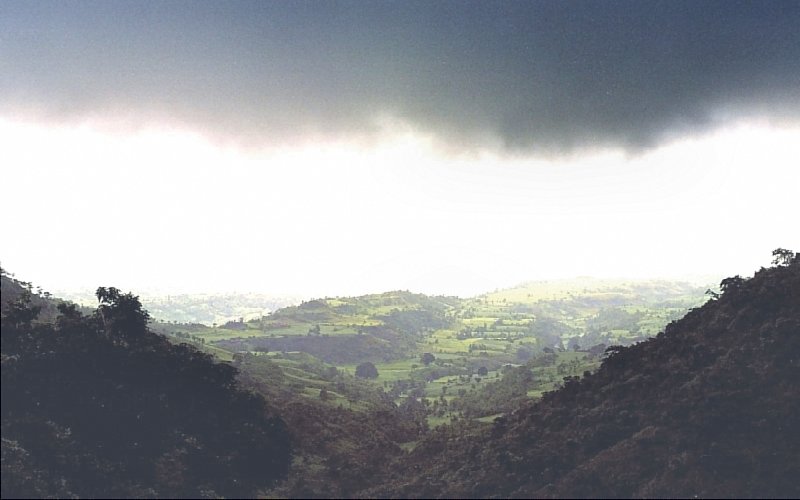
The Vindhya Range (IPA: [ʋɪnd̪ʱjə], also known as Vindhyachal) is a complex, discontinuous chain of mountain ridges, hill ranges, highlands and plateau escarpments in west-central India.
Technically, the Vindhyas are the highest mountain ranges in India. The exact extent of the Vindhyas is loosely defined, and historically, the term covered a number of distinct hill systems in central India, including the one that is now known as the Satpura Range. Today, the term principally refers to the escarpment and its hilly extensions that runs north of and roughly parallel to the Narmada River in Madhya Pradesh. Depending on the definition, the range extends up to Gujarat in the west, Uttar Pradesh and Bihar in the north, and Chhattisgarh in the east. The average elevation of the Vindhyas is also dependent on different sources.
The Vindhyas have a great significance in Indian mythology and history. Several ancient texts mention the Vindhyas as the southern boundary of the Āryāvarta, the territory of the ancient Indo-Aryan peoples. Although today Indo-Aryan languages are also spoken south of the Vindhyas, the range continues to be considered as the traditional boundary between north and south India. The former Vindhya Pradesh was named after the Vindhya Range.
According to the author of a commentary on Amarakosha, the word Vindhya derives from the Sanskrit word vaindh (to obstruct). A mythological story (see below) states that the Vindhyas once obstructed the path of the sun, resulting in this name. The Ramayana states that the great mountain Vindhya that was growing incessantly and obstructing the path of the Sun stopped growing any more in obedience to Agastya's words. According to another theory, the name "Vindhya" means "hunter" in Sanskrit, and may refer to the tribal hunter-gatherers inhabiting the region.
The Vindhya range is also known as "Vindhyachala" or "Vindhyachal"; the suffix achala (Sanskrit) or achal (Hindi) refers to a mountain. In the Mahabharata, the range is also referred to as Vindhyapadaparvata. The Greek geographer Ptolemy called the range Vindius or Ouindion, describing it as the source of Namados (Narmada) and Nanagouna (Tapti) rivers. The "Daksinaparvata" ("Southern Mountain") mentioned in the Kaushitaki Upanishad is also identified with the Vindhyas.
The Vindhyas do not form a single range in the proper geological sense: the hills collectively known as the Vindhyas do not lie along an anticlinal or synclinal ridge. The Vindhya range is actually a group of discontinuous chain of mountain ridges, hill ranges, highlands and plateau escarpments. The term "Vindhyas" is defined by convention, and therefore, the exact definition of the Vindhya range has varied at different times in history.
Earlier, the term "Vindhyas" was used in a wider sense and included a number of hill ranges between the Indo-Gangetic plain and the Deccan Plateau. According to the various definitions mentioned in the older texts, the Vindhyas extend up to the Godavari in the south and the Ganges in the north.
In certain Puranas, the term Vindhya specifically covers the mountain range located between the Narmada and the Tapti rivers; that is, the one which is now known as the Satpura Range. The Varaha Purana uses the name "Vindhya-pada" ("foot of the Vindhyas") for the Satpura range.
Hub AI
Vindhya Range AI simulator
(@Vindhya Range_simulator)
Vindhya Range
The Vindhya Range (IPA: [ʋɪnd̪ʱjə], also known as Vindhyachal) is a complex, discontinuous chain of mountain ridges, hill ranges, highlands and plateau escarpments in west-central India.
Technically, the Vindhyas are the highest mountain ranges in India. The exact extent of the Vindhyas is loosely defined, and historically, the term covered a number of distinct hill systems in central India, including the one that is now known as the Satpura Range. Today, the term principally refers to the escarpment and its hilly extensions that runs north of and roughly parallel to the Narmada River in Madhya Pradesh. Depending on the definition, the range extends up to Gujarat in the west, Uttar Pradesh and Bihar in the north, and Chhattisgarh in the east. The average elevation of the Vindhyas is also dependent on different sources.
The Vindhyas have a great significance in Indian mythology and history. Several ancient texts mention the Vindhyas as the southern boundary of the Āryāvarta, the territory of the ancient Indo-Aryan peoples. Although today Indo-Aryan languages are also spoken south of the Vindhyas, the range continues to be considered as the traditional boundary between north and south India. The former Vindhya Pradesh was named after the Vindhya Range.
According to the author of a commentary on Amarakosha, the word Vindhya derives from the Sanskrit word vaindh (to obstruct). A mythological story (see below) states that the Vindhyas once obstructed the path of the sun, resulting in this name. The Ramayana states that the great mountain Vindhya that was growing incessantly and obstructing the path of the Sun stopped growing any more in obedience to Agastya's words. According to another theory, the name "Vindhya" means "hunter" in Sanskrit, and may refer to the tribal hunter-gatherers inhabiting the region.
The Vindhya range is also known as "Vindhyachala" or "Vindhyachal"; the suffix achala (Sanskrit) or achal (Hindi) refers to a mountain. In the Mahabharata, the range is also referred to as Vindhyapadaparvata. The Greek geographer Ptolemy called the range Vindius or Ouindion, describing it as the source of Namados (Narmada) and Nanagouna (Tapti) rivers. The "Daksinaparvata" ("Southern Mountain") mentioned in the Kaushitaki Upanishad is also identified with the Vindhyas.
The Vindhyas do not form a single range in the proper geological sense: the hills collectively known as the Vindhyas do not lie along an anticlinal or synclinal ridge. The Vindhya range is actually a group of discontinuous chain of mountain ridges, hill ranges, highlands and plateau escarpments. The term "Vindhyas" is defined by convention, and therefore, the exact definition of the Vindhya range has varied at different times in history.
Earlier, the term "Vindhyas" was used in a wider sense and included a number of hill ranges between the Indo-Gangetic plain and the Deccan Plateau. According to the various definitions mentioned in the older texts, the Vindhyas extend up to the Godavari in the south and the Ganges in the north.
In certain Puranas, the term Vindhya specifically covers the mountain range located between the Narmada and the Tapti rivers; that is, the one which is now known as the Satpura Range. The Varaha Purana uses the name "Vindhya-pada" ("foot of the Vindhyas") for the Satpura range.
Recent media