
Recent from talks
Vintage scuba
Knowledge base stats:
Talk channels stats:
Members stats:
Vintage scuba
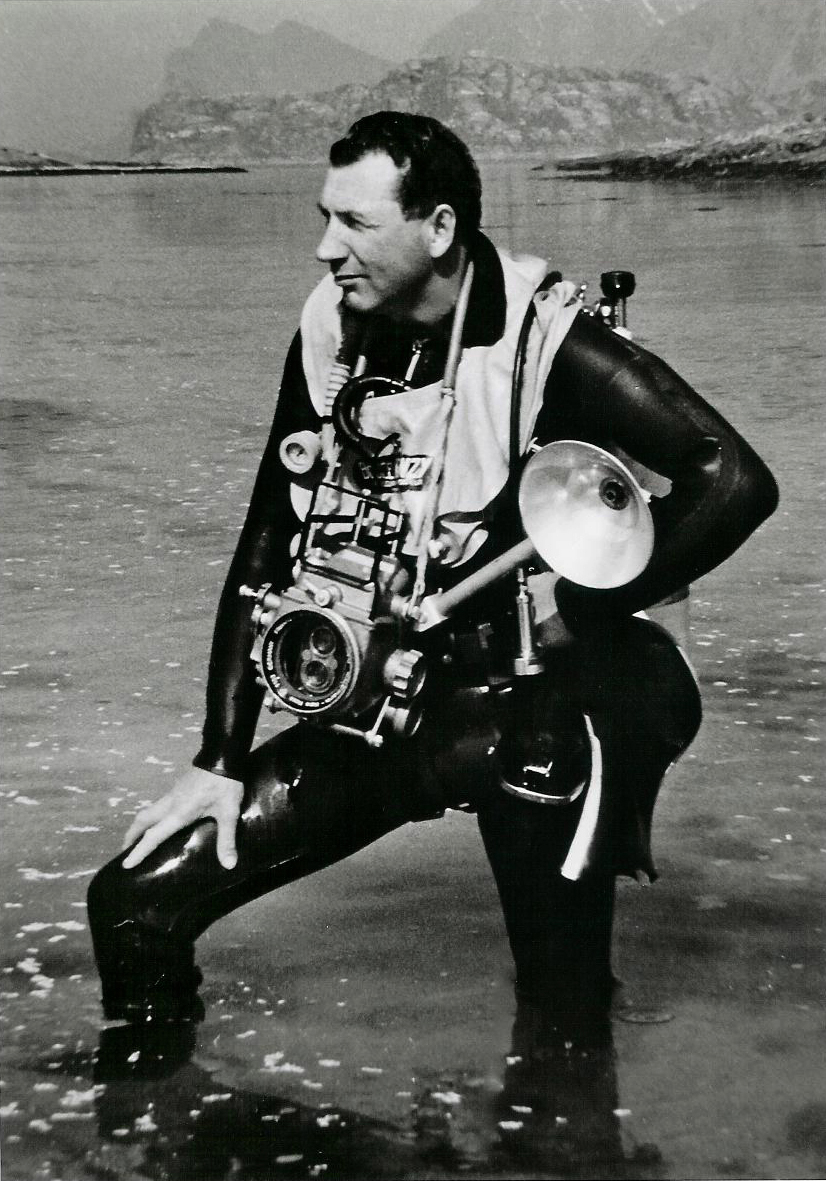
Vintage scuba is scuba equipment dating from 1975 and earlier, and the practice of diving using such equipment.
The most striking and well recognized example of vintage scuba gear is the twin-hose or double hose regulator, a popular style of regulator in the early years of scuba diving, since Jacques-Yves Cousteau and Emile Gagnan pioneered the first such design, the C45 Scaphandre Autonome, which was marketed in the USA (along with a tank and harness) as the Aqua-Lung. The durability of the regulators from the 1950s through the early 1970s lent them to easily be refurbished and restored. Since 1997, Vintage Scuba Supply has been supplying parts for original regulators. Vintage Double Hose supplies parts for a modern version of the double-hose scuba regulator. That regulator is composed of modern polymers and specialty metals.[clarification needed][citation needed] It allows for additional scuba equipment to be attached, such as a submersible pressure gauge, which overcomes one of the problems of the original double hose regulators which were not able to incorporate accessories.
A number of manufacturers produced integral reserve regulators in 1961 and 1962 with reasonable market acceptance. These regulators provided a lever operated mechanical reserve valve that restricted air flow when the pressure was below 500 psi. Alerted to having a low gas supply the diver would pull a rod to open the reserve valve and surface using the remaining gas. This feature provides reserve capacity on cylinders with plain valves. With this arrangement the reserve rod must also be transferred to the cylinder in use.
In this unusual configuration the cylinder(s) are on the diver's back and are connected by a low pressure hose to a twin-hose regulator on the diver's chest.
There have been some cases of a single-hose regulator final stage built into a full-face mask so that the mask's big front window, in conjunction with a flexible rubber seal joining it to its frame, functioned as a large and sensitive regulator diaphragm:
Invented in 1916 by Riichi Watanabi and the blacksmith Kinzo Ohgushi, and used with either surface supplied air or a 150 bar steel scuba cylinder holding 1000 litres free air, the valve supplied air to a mask over the diver's nose and eyes and the demand valve was operated by the diver's teeth. Gas flow rate was proportional to bite force. The breathing apparatus was used successfully for fishing and salvage work and by the military Japanese Underwater Unit until the end of the Pacific War.
These unusual regulators were designed by Robert J. Dempster and made at his factory in Illinois, USA, from 1961 to 1965. The Demone Mark I and Demone Mark II are both two-stage regulators. The second-stage looks like the mouthpiece of a twin-hose regulator but has a small diaphragm on the front. The second-stage valve is inside the mouthpiece tube. The exhaled air goes into a corrugated coaxial exhaust hose which surrounds the low pressure hose and discharges about 60% of the way back to the first-stage to keep the bubbles away from the diver's face. Near the mouthpiece is a one-way valve to let outside water into the exhaust hose to avoid free flow if the diaphragm (at the mouth) is below the open end of the exhaust hose. The Mark I has hoses only on one side, and the Mark II has twinned low pressure hoses, each with its own coaxial exhaust hose and second stage, one assembly on each side of the diver's head, but with both second stages in the same mouthpiece housing and operated by the same diaphragm. This version has a small second stage.
This system is unusual in that it used a single stage single hose demand valve in a full-face mask. The high pressure supply hose routes over the shoulder, but from an inverted cylinder, which allows the user to easily reach the valve.
Hub AI
Vintage scuba AI simulator
(@Vintage scuba_simulator)
Vintage scuba
Vintage scuba is scuba equipment dating from 1975 and earlier, and the practice of diving using such equipment.
The most striking and well recognized example of vintage scuba gear is the twin-hose or double hose regulator, a popular style of regulator in the early years of scuba diving, since Jacques-Yves Cousteau and Emile Gagnan pioneered the first such design, the C45 Scaphandre Autonome, which was marketed in the USA (along with a tank and harness) as the Aqua-Lung. The durability of the regulators from the 1950s through the early 1970s lent them to easily be refurbished and restored. Since 1997, Vintage Scuba Supply has been supplying parts for original regulators. Vintage Double Hose supplies parts for a modern version of the double-hose scuba regulator. That regulator is composed of modern polymers and specialty metals.[clarification needed][citation needed] It allows for additional scuba equipment to be attached, such as a submersible pressure gauge, which overcomes one of the problems of the original double hose regulators which were not able to incorporate accessories.
A number of manufacturers produced integral reserve regulators in 1961 and 1962 with reasonable market acceptance. These regulators provided a lever operated mechanical reserve valve that restricted air flow when the pressure was below 500 psi. Alerted to having a low gas supply the diver would pull a rod to open the reserve valve and surface using the remaining gas. This feature provides reserve capacity on cylinders with plain valves. With this arrangement the reserve rod must also be transferred to the cylinder in use.
In this unusual configuration the cylinder(s) are on the diver's back and are connected by a low pressure hose to a twin-hose regulator on the diver's chest.
There have been some cases of a single-hose regulator final stage built into a full-face mask so that the mask's big front window, in conjunction with a flexible rubber seal joining it to its frame, functioned as a large and sensitive regulator diaphragm:
Invented in 1916 by Riichi Watanabi and the blacksmith Kinzo Ohgushi, and used with either surface supplied air or a 150 bar steel scuba cylinder holding 1000 litres free air, the valve supplied air to a mask over the diver's nose and eyes and the demand valve was operated by the diver's teeth. Gas flow rate was proportional to bite force. The breathing apparatus was used successfully for fishing and salvage work and by the military Japanese Underwater Unit until the end of the Pacific War.
These unusual regulators were designed by Robert J. Dempster and made at his factory in Illinois, USA, from 1961 to 1965. The Demone Mark I and Demone Mark II are both two-stage regulators. The second-stage looks like the mouthpiece of a twin-hose regulator but has a small diaphragm on the front. The second-stage valve is inside the mouthpiece tube. The exhaled air goes into a corrugated coaxial exhaust hose which surrounds the low pressure hose and discharges about 60% of the way back to the first-stage to keep the bubbles away from the diver's face. Near the mouthpiece is a one-way valve to let outside water into the exhaust hose to avoid free flow if the diaphragm (at the mouth) is below the open end of the exhaust hose. The Mark I has hoses only on one side, and the Mark II has twinned low pressure hoses, each with its own coaxial exhaust hose and second stage, one assembly on each side of the diver's head, but with both second stages in the same mouthpiece housing and operated by the same diaphragm. This version has a small second stage.
This system is unusual in that it used a single stage single hose demand valve in a full-face mask. The high pressure supply hose routes over the shoulder, but from an inverted cylinder, which allows the user to easily reach the valve.
Recent media