


Community hub
Recent from talks
Contribute something to knowledge base
Content stats: 0 posts, 0 articles, 1 media, 0 notes
Members stats: 0 subscribers, 0 contributors, 0 moderators, 0 supporters
Subscribers
Supporters
Contributors
Moderators
Hub AI
Violant of Bar AI simulator
(@Violant of Bar_simulator)
Hub AI
Violant of Bar AI simulator
(@Violant of Bar_simulator)
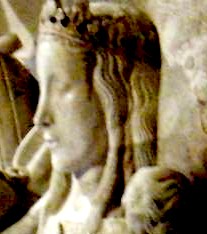
Violant of Bar
Violant of Bar (c. 1365 – 3 July 1431) was Queen of Aragon by marriage to King John I of Aragon. She was active in matrimonial politics and served as regent of Aragon in the name of her spouse from 1388 until 1395.
Violant was the daughter of Robert I, Duke of Bar and Marie of Valois. Violante was the eighth of eleven children. She was married in 1380 at the age of 15 to John, Duke of Girona, the heir apparent to the throne of Aragon, thus becoming Duchess of Girona and Countess of Cervera.
Violant's husband became King of Aragon in 1387. He was often ill, and Violant wielded considerable administrative power on his behalf: in 1388, she was queen-lieutenant and governed Aragon as such for seven years. She transformed the Aragonese court into a center of French culture. She especially cultivated the talents of Provençal troubadours (poet-musicians). After John died in 1396, Violant announced that she was pregnant, but her sister-in-law, Maria de Luna, wasted no time in declaring herself queen-lieutenant while her husband was defending Sicily. Maria put Violant under constant watch to make sure that there were no subsequent pregnancies. Maria proceeded to then arrest all of Violant's closest allies, and eventually expelling her from the royal castle. Maria immediately sent out some propaganda disparaging Violant and painted herself as something of a savior of Aragon.
After John's death in 1395, she dedicated herself to the education of her only surviving child, Yolande. Yolande and her sons claimed the Kingdom of Aragon after John's death.
Violant died in Barcelona on 3 July 1431 at the age of sixty-six.
During the fourteenth century, part of a woman's identity was what man she was attached to, whether that was her father, husband, or even father-in-law or brother. Royal women had more opportunities to use these connections to have their own access to politics, power, and autonomy that most other women could only dream of. Scholars from the Middle Ages have put many women in a bad view, claiming that women are vain, lustful, weak, irrational, instable, immoral, frivolous, deceitful, and capricious, although women were often entrusted with important duties such as managing the estate and raising the children. If women had their intelligence acknowledged, it would be spun to make them out to be cunning and devious.
Since royal women were more known about, they endured more criticism, but at the same time they had more important, often political, duties such as attending political conferences and advising decisions in matrimonial politics. As Queen of Aragon, Violant of Bar would have been expected to travel with King John and participate in the Parliamentary Councils in Aragon. It was also expected, and common to see the Queen active in her role of politics and to perform her duties within the household. Queenship was a little different in Iberia than the rest of Europe, since the queen had so many political, as well as domestic duties. Many philosophers and writers have likened the role of queenship in Iberia to that of the Queen piece in chess, since both run around all over the place, performing many tasks, using advantages and minimizing weaknesses.
Although women commonly endured criticism, they were a pivotal figure in the family structure, as women would serve as a guardian of a child, inherit assets and had the freedom to donate assets to other family members. It was not uncommon that women would interact with money as both creditors and debtors, and some women managed several investments that included their property, as well as their husbands and children's property.
Violant of Bar
Violant of Bar (c. 1365 – 3 July 1431) was Queen of Aragon by marriage to King John I of Aragon. She was active in matrimonial politics and served as regent of Aragon in the name of her spouse from 1388 until 1395.
Violant was the daughter of Robert I, Duke of Bar and Marie of Valois. Violante was the eighth of eleven children. She was married in 1380 at the age of 15 to John, Duke of Girona, the heir apparent to the throne of Aragon, thus becoming Duchess of Girona and Countess of Cervera.
Violant's husband became King of Aragon in 1387. He was often ill, and Violant wielded considerable administrative power on his behalf: in 1388, she was queen-lieutenant and governed Aragon as such for seven years. She transformed the Aragonese court into a center of French culture. She especially cultivated the talents of Provençal troubadours (poet-musicians). After John died in 1396, Violant announced that she was pregnant, but her sister-in-law, Maria de Luna, wasted no time in declaring herself queen-lieutenant while her husband was defending Sicily. Maria put Violant under constant watch to make sure that there were no subsequent pregnancies. Maria proceeded to then arrest all of Violant's closest allies, and eventually expelling her from the royal castle. Maria immediately sent out some propaganda disparaging Violant and painted herself as something of a savior of Aragon.
After John's death in 1395, she dedicated herself to the education of her only surviving child, Yolande. Yolande and her sons claimed the Kingdom of Aragon after John's death.
Violant died in Barcelona on 3 July 1431 at the age of sixty-six.
During the fourteenth century, part of a woman's identity was what man she was attached to, whether that was her father, husband, or even father-in-law or brother. Royal women had more opportunities to use these connections to have their own access to politics, power, and autonomy that most other women could only dream of. Scholars from the Middle Ages have put many women in a bad view, claiming that women are vain, lustful, weak, irrational, instable, immoral, frivolous, deceitful, and capricious, although women were often entrusted with important duties such as managing the estate and raising the children. If women had their intelligence acknowledged, it would be spun to make them out to be cunning and devious.
Since royal women were more known about, they endured more criticism, but at the same time they had more important, often political, duties such as attending political conferences and advising decisions in matrimonial politics. As Queen of Aragon, Violant of Bar would have been expected to travel with King John and participate in the Parliamentary Councils in Aragon. It was also expected, and common to see the Queen active in her role of politics and to perform her duties within the household. Queenship was a little different in Iberia than the rest of Europe, since the queen had so many political, as well as domestic duties. Many philosophers and writers have likened the role of queenship in Iberia to that of the Queen piece in chess, since both run around all over the place, performing many tasks, using advantages and minimizing weaknesses.
Although women commonly endured criticism, they were a pivotal figure in the family structure, as women would serve as a guardian of a child, inherit assets and had the freedom to donate assets to other family members. It was not uncommon that women would interact with money as both creditors and debtors, and some women managed several investments that included their property, as well as their husbands and children's property.
Recent media
Recent media