


Community hub
Recent from talks
Contribute something to knowledge base
Content stats: 0 posts, 0 articles, 1 media, 0 notes
Members stats: 0 subscribers, 0 contributors, 0 moderators, 0 supporters
Subscribers
Supporters
Contributors
Moderators
Hub AI
Völsunga saga AI simulator
(@Völsunga saga_simulator)
Hub AI
Völsunga saga AI simulator
(@Völsunga saga_simulator)
Völsunga saga
The Völsunga saga (often referred to in English as the Volsunga Saga or Saga of the Völsungs) is a legendary saga, a late 13th-century prose rendition in Old Norse of the origin and decline of the Völsung clan (including the story of Sigurd and Brunhild and the destruction of the Burgundians). It is one of the most famous legendary sagas and an example of a "heroic saga" that deals with Germanic heroic legend.
The saga covers topics including the quarrel between Sigi and Skaði, a huge family tree of great kings and powerful conquerors, the quest led by Sigmund and Sinfjǫtli to save princess Signý from the evil king Siggeir, and, most famously, Sigurd killing the serpent/dragon Fáfnir and obtaining the cursed ring Andvaranaut that Fáfnir guarded.
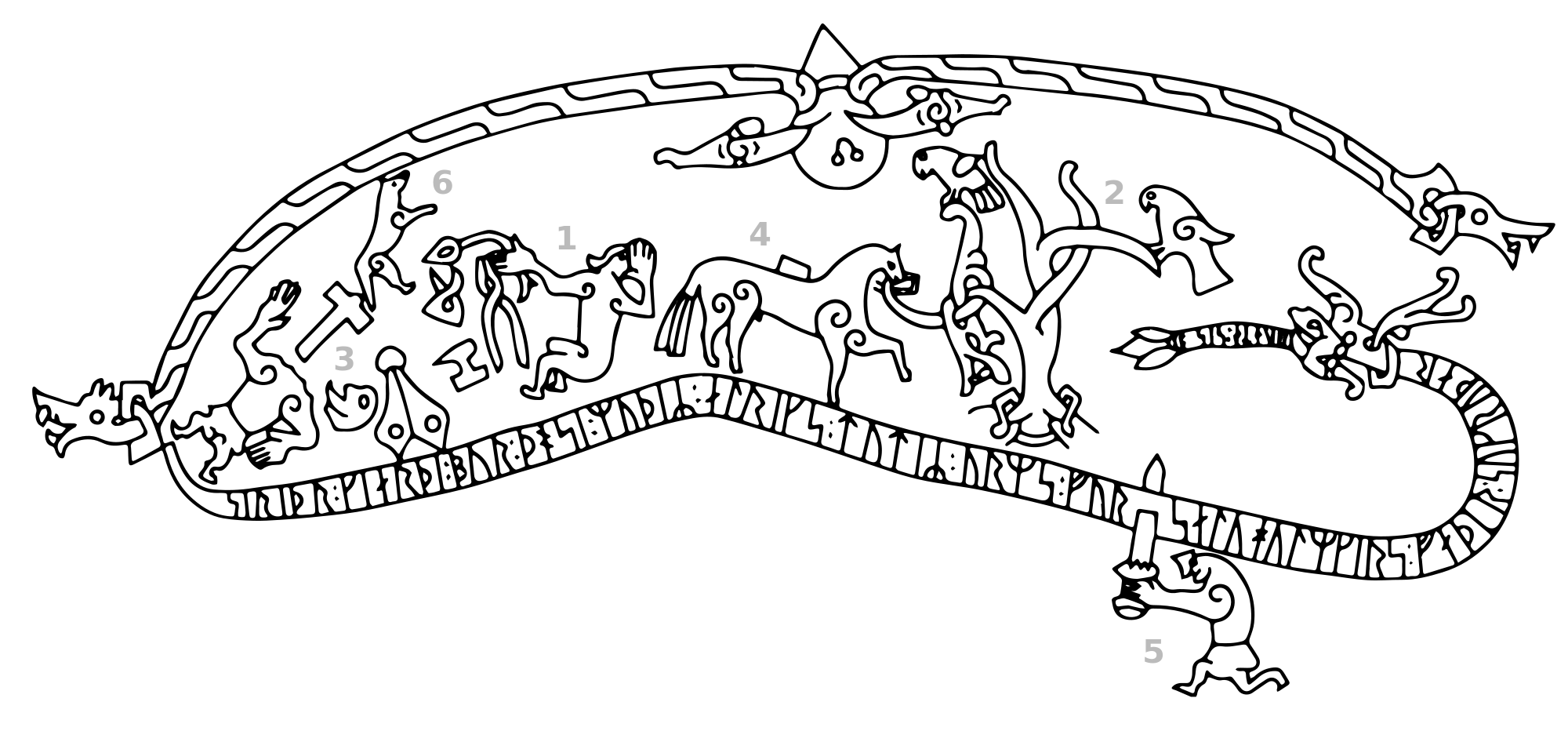
The saga is largely based on the epic poetry of the historic Elder Edda. The earliest known pictorial representation of this tradition is the Ramsund carving in Sweden, which was created c. 1000 CE.
The origins of the material are considerably older, however, and it in part echoes real events in Central Europe during the Migration Period, chiefly the destruction of the Kingdom of the Burgundians by the Huns in the fifth century. Some of the poems contained in the Elder Edda relate episodes from the Völsung legend. On the other hand, the only surviving medieval manuscript of the saga, Ny kgl. Saml. 1824 b 4to, which is held by the Royal Library of Denmark, dates to about 1400. In this manuscript, the saga leads straight in to Ragnars saga loðbrókar.
The saga can be divided into five phases: the preliminary generations, Sigurd and his foster family, Sigurd and the Gjukingar, Gudrun and the Budlingar, and Gudrun's last marriage.
The Völsunga saga begins with Sigi, the ancestor of the Völsung lineage, and Skaði. Sigi was more important since he was richer and more powerful and was said to be a son of Odin. In the saga, Skaði owns a thrall named Breði whom Sigi takes on a hunting trip all day and evening. When they compare their skills, Breði's outshine Sigi's. Enraged, Sigi murders Breði and hides his body in a snowdrift. When Sigi returns, he lies to Skaði that Breði rode away into the forest. But Skaði, suspecting something amiss, goes off with his men in search of Breði and discovers his body in the snowdrift. Skaði declares the drift "Breði's drift", and soon every large drift comes to be called "Breði's drift" in his honor. Skaði casts Sigi out, leaving him "a wolf in hallowed places".
After much adventuring, Odin leads Sigi to a land where some longships lay. He and his troops (that his unnamed father gave him) take up raiding. Sigi becomes a successful raider and warlord before seizing a kingdom called Hunaland to rule. His wife's brothers eventually become envious of Sigi's power and wealth and raise an army against him. In the following battle, Sigi is killed and his enemies take over the kingdom. Later, Sigi's son Rerir avenges his father's death, killing his uncles and taking his father's throne. However, he and his wife have no heir, so they turn to Odin and Frigg to pray for one. In response, Odin and Frigg send one of their wish maidens to take the form of a crow and place a magical apple on Rerir's lap. When Rerir shares it with the queen, she conceives and endures an extraordinarily long pregnancy. While awaiting the birth of his heir, Rerir goes on a campaign to pacify the land, but he catches sick and dies before returning. Since the queen knows that she has not long left before the pregnancy kills her, she orders her baby to be cut from her. She dies in the process, but the male child survives and is named Völsung.
Völsung marries Hljod, the daughter of a jötunn and the maiden who gave the queen the golden apple. Völsung and Hljod have ten sons and one daughter, the two eldest and strongest being the boy and girl twins Sigmund and Signý. King Völsung has a grand palace built for him, with the great hall built around a massive tree known as Barnstokkr (lit. 'child trunk') to stand proudly over Völsung's guests. One day, Siggeir, the king of Gautland, comes to visit Völsung and ask for Signý's hand in marriage. Völsung is pleased at the idea of Signý marrying Siggeir, but Signý despises him. King Völsung arranges the marriage anyway. On the wedding day, as everyone is celebrating, a hooded man with one eye comes into the hall, draws a sword, and thrusts it into Barnstokkr. The mysterious figure says that whoever can pull the sword from Barnstokkr will receive it as a gift, then abruptly leaves. Although the saga does not explicitly say who the man is, his hood and missing eye suggest he is Odin. Indeed, later in the saga it is made clear that such a man could be no one but the All-father, as the figure returns to set more formidable challenges, and the sword later demonstrates its divine powers. Many people attempt to draw the sword from the tree, but no one can make it budge until Sigmund Völsungson comes and pulls the sword out with ease. King Siggeir offers to buy the sword, but Sigmund refuses. That night Siggeir and Signý sleep together, and by the next day she is pressuring King Völsung to allow them to divorce. Although his daughter is in distress, he reluctantly refuses, so as to maintain their alliance with Gautland.
Völsunga saga
The Völsunga saga (often referred to in English as the Volsunga Saga or Saga of the Völsungs) is a legendary saga, a late 13th-century prose rendition in Old Norse of the origin and decline of the Völsung clan (including the story of Sigurd and Brunhild and the destruction of the Burgundians). It is one of the most famous legendary sagas and an example of a "heroic saga" that deals with Germanic heroic legend.
The saga covers topics including the quarrel between Sigi and Skaði, a huge family tree of great kings and powerful conquerors, the quest led by Sigmund and Sinfjǫtli to save princess Signý from the evil king Siggeir, and, most famously, Sigurd killing the serpent/dragon Fáfnir and obtaining the cursed ring Andvaranaut that Fáfnir guarded.
The saga is largely based on the epic poetry of the historic Elder Edda. The earliest known pictorial representation of this tradition is the Ramsund carving in Sweden, which was created c. 1000 CE.
The origins of the material are considerably older, however, and it in part echoes real events in Central Europe during the Migration Period, chiefly the destruction of the Kingdom of the Burgundians by the Huns in the fifth century. Some of the poems contained in the Elder Edda relate episodes from the Völsung legend. On the other hand, the only surviving medieval manuscript of the saga, Ny kgl. Saml. 1824 b 4to, which is held by the Royal Library of Denmark, dates to about 1400. In this manuscript, the saga leads straight in to Ragnars saga loðbrókar.
The saga can be divided into five phases: the preliminary generations, Sigurd and his foster family, Sigurd and the Gjukingar, Gudrun and the Budlingar, and Gudrun's last marriage.
The Völsunga saga begins with Sigi, the ancestor of the Völsung lineage, and Skaði. Sigi was more important since he was richer and more powerful and was said to be a son of Odin. In the saga, Skaði owns a thrall named Breði whom Sigi takes on a hunting trip all day and evening. When they compare their skills, Breði's outshine Sigi's. Enraged, Sigi murders Breði and hides his body in a snowdrift. When Sigi returns, he lies to Skaði that Breði rode away into the forest. But Skaði, suspecting something amiss, goes off with his men in search of Breði and discovers his body in the snowdrift. Skaði declares the drift "Breði's drift", and soon every large drift comes to be called "Breði's drift" in his honor. Skaði casts Sigi out, leaving him "a wolf in hallowed places".
After much adventuring, Odin leads Sigi to a land where some longships lay. He and his troops (that his unnamed father gave him) take up raiding. Sigi becomes a successful raider and warlord before seizing a kingdom called Hunaland to rule. His wife's brothers eventually become envious of Sigi's power and wealth and raise an army against him. In the following battle, Sigi is killed and his enemies take over the kingdom. Later, Sigi's son Rerir avenges his father's death, killing his uncles and taking his father's throne. However, he and his wife have no heir, so they turn to Odin and Frigg to pray for one. In response, Odin and Frigg send one of their wish maidens to take the form of a crow and place a magical apple on Rerir's lap. When Rerir shares it with the queen, she conceives and endures an extraordinarily long pregnancy. While awaiting the birth of his heir, Rerir goes on a campaign to pacify the land, but he catches sick and dies before returning. Since the queen knows that she has not long left before the pregnancy kills her, she orders her baby to be cut from her. She dies in the process, but the male child survives and is named Völsung.
Völsung marries Hljod, the daughter of a jötunn and the maiden who gave the queen the golden apple. Völsung and Hljod have ten sons and one daughter, the two eldest and strongest being the boy and girl twins Sigmund and Signý. King Völsung has a grand palace built for him, with the great hall built around a massive tree known as Barnstokkr (lit. 'child trunk') to stand proudly over Völsung's guests. One day, Siggeir, the king of Gautland, comes to visit Völsung and ask for Signý's hand in marriage. Völsung is pleased at the idea of Signý marrying Siggeir, but Signý despises him. King Völsung arranges the marriage anyway. On the wedding day, as everyone is celebrating, a hooded man with one eye comes into the hall, draws a sword, and thrusts it into Barnstokkr. The mysterious figure says that whoever can pull the sword from Barnstokkr will receive it as a gift, then abruptly leaves. Although the saga does not explicitly say who the man is, his hood and missing eye suggest he is Odin. Indeed, later in the saga it is made clear that such a man could be no one but the All-father, as the figure returns to set more formidable challenges, and the sword later demonstrates its divine powers. Many people attempt to draw the sword from the tree, but no one can make it budge until Sigmund Völsungson comes and pulls the sword out with ease. King Siggeir offers to buy the sword, but Sigmund refuses. That night Siggeir and Signý sleep together, and by the next day she is pressuring King Völsung to allow them to divorce. Although his daughter is in distress, he reluctantly refuses, so as to maintain their alliance with Gautland.
Recent media
Recent media