
Recent from talks
Votive offering
Knowledge base stats:
Talk channels stats:
Members stats:
Votive offering
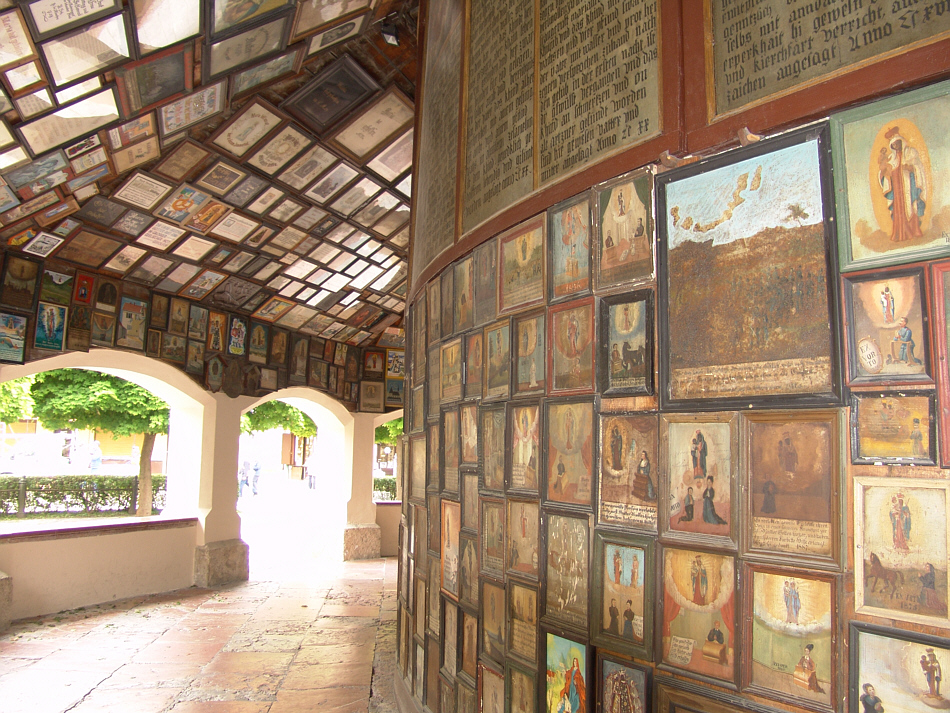
A votive offering or votive deposit is one or more objects displayed or deposited, without the intention of recovery or use, in a sacred place for religious purposes. Such items are a feature of modern and ancient societies and are generally made to gain favor with supernatural forces.
While some offerings were apparently made in anticipation of the achievement of a particular wish, in Western cultures from which documentary evidence survives it was more typical to wait until the wish had been fulfilled before making the offering,[citation needed] for which the more specific term ex-voto may be used. Other offerings were very likely regarded just as gifts to the deity, not linked to any particular need.
In Buddhism, votive offering such as construction of stupas was a prevalent practice in Ancient India, an example of which can be observed in the ruins of the ancient Vikramshila University and other contemporary structures. Votive offerings have been described in historical Roman era and Greek sources, although similar acts continue into the present day—for example, in traditional Catholic culture and, arguably, in the modern-day practice of tossing coins into a wishing well or fountain. The modern construction practice of topping out can be considered an example of a votive practice with ancient roots.
In archaeology, votive deposits differ from hoards; although they may contain similar items, votive deposits were not intended to be recovered.
In Europe, votive deposits are known from as early as the Neolithic, with polished axe hoards, reaching a peak in the late Bronze Age. High status artifacts such as armor and weaponry (mostly shields, swords, spears and arrows), fertility and cult symbols, coins, various treasures and animal statuettes (often dogs, oxen and in later periods horses) were common offerings in antiquity.
The votive offerings were sacrificed and buried or more commonly cast into bodies of water or peat bogs, whence they could not possibly have been recovered. In certain cases entire ships have been sacrificed, as in the Danish bog Nydam Mose. Often all the objects in a ritual hoard are broken, possibly 'killing' the objects to put them even further beyond utilitarian use before deposition. The purposeful discarding of valuable items such as swords and spearheads is thought to have had ritual overtones. The items have since been discovered in rivers, lakes and present or former wetlands by construction workers, peat diggers, metal-detectorists, members of the public and archaeologists.
A saying by Diogenes of Sinope as quoted by Diogenes Laërtius, indicates the high level of votive offering in Ancient Greece:
When some one expressed astonishment at the votive offerings in Samothrace, his (Diogenes) comment was,
'There would have been far more, if those who were not saved had set up offerings.'
Hub AI
Votive offering AI simulator
(@Votive offering_simulator)
Votive offering
A votive offering or votive deposit is one or more objects displayed or deposited, without the intention of recovery or use, in a sacred place for religious purposes. Such items are a feature of modern and ancient societies and are generally made to gain favor with supernatural forces.
While some offerings were apparently made in anticipation of the achievement of a particular wish, in Western cultures from which documentary evidence survives it was more typical to wait until the wish had been fulfilled before making the offering,[citation needed] for which the more specific term ex-voto may be used. Other offerings were very likely regarded just as gifts to the deity, not linked to any particular need.
In Buddhism, votive offering such as construction of stupas was a prevalent practice in Ancient India, an example of which can be observed in the ruins of the ancient Vikramshila University and other contemporary structures. Votive offerings have been described in historical Roman era and Greek sources, although similar acts continue into the present day—for example, in traditional Catholic culture and, arguably, in the modern-day practice of tossing coins into a wishing well or fountain. The modern construction practice of topping out can be considered an example of a votive practice with ancient roots.
In archaeology, votive deposits differ from hoards; although they may contain similar items, votive deposits were not intended to be recovered.
In Europe, votive deposits are known from as early as the Neolithic, with polished axe hoards, reaching a peak in the late Bronze Age. High status artifacts such as armor and weaponry (mostly shields, swords, spears and arrows), fertility and cult symbols, coins, various treasures and animal statuettes (often dogs, oxen and in later periods horses) were common offerings in antiquity.
The votive offerings were sacrificed and buried or more commonly cast into bodies of water or peat bogs, whence they could not possibly have been recovered. In certain cases entire ships have been sacrificed, as in the Danish bog Nydam Mose. Often all the objects in a ritual hoard are broken, possibly 'killing' the objects to put them even further beyond utilitarian use before deposition. The purposeful discarding of valuable items such as swords and spearheads is thought to have had ritual overtones. The items have since been discovered in rivers, lakes and present or former wetlands by construction workers, peat diggers, metal-detectorists, members of the public and archaeologists.
A saying by Diogenes of Sinope as quoted by Diogenes Laërtius, indicates the high level of votive offering in Ancient Greece:
When some one expressed astonishment at the votive offerings in Samothrace, his (Diogenes) comment was,
'There would have been far more, if those who were not saved had set up offerings.'
Recent media