
Recent from talks
Walter Rauschenbusch
Knowledge base stats:
Talk channels stats:
Members stats:
Walter Rauschenbusch
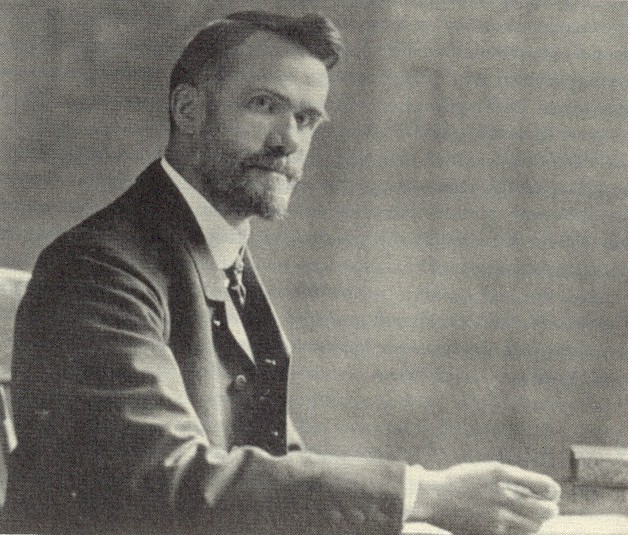
Walter Rauschenbusch (1861–1918) was an American theologian and Baptist pastor who taught at the Rochester Theological Seminary. Rauschenbusch was a key figure in the Social Gospel and single tax movements that flourished in the United States during the late 19th and early 20th centuries. He was also the maternal grandfather of the influential philosopher Richard Rorty and the great-grandfather of Paul Raushenbush.
Walter Rauschenbusch was born October 4, 1861, in Rochester, New York, to Germans Augustus Rauschenbusch and the former Caroline Rump.
Though he went through a youthful rebellious period, at age 17 he experienced a personal religious conversion which "influenced [his] soul down to its depths." Like the Prodigal Son, he wrote, "I came to my Father, and I began to pray for help and got it." But he later felt that this experience was incomplete, focused on repentance from personal sins but not from social sins.
After high school, he went to study in a gymnasium (equivalent to a preparatory school) in Gütersloh in Germany. Thereafter, he returned to the United States and studied at the University of Rochester where he obtained a Bachelor of Arts in 1884. Then, he studied theology at the Rochester Theological Seminary of the American Baptist Churches USA and obtained a Bachelor of Divinity in 1886.
When he attended Rochester Theological Seminary, his early teachings were challenged. He learned of higher criticism, which led him to comment later that his "inherited ideas about the inerrancy of the Bible became untenable." He also began to doubt the substitutionary atonement; in his words, "it was not taught by Jesus; it makes salvation dependent upon a trinitarian transaction that is remote from human experience; and it implies a concept of divine justice that is repugnant to human sensitivity." But rather than shaking his faith, these challenges reinforced it.
In 1886, Rauschenbusch began his pastorate in the Second German Baptist Church in "Hell's Kitchen", New York. Urban poverty and funerals for children led him to social activism. For him, the Church had an essential role in the fight against systemic injustices among all groups and for each person.
In 1892, Rauschenbusch and some friends formed a group called the Brotherhood of the Kingdom. Pastors and leaders joined the organization to debate and implement the social gospel.
In 1897, he began teaching the New Testament at Rochester Theological Seminary in Rochester, New York, until 1902, where he taught Church history.
Hub AI
Walter Rauschenbusch AI simulator
(@Walter Rauschenbusch_simulator)
Walter Rauschenbusch
Walter Rauschenbusch (1861–1918) was an American theologian and Baptist pastor who taught at the Rochester Theological Seminary. Rauschenbusch was a key figure in the Social Gospel and single tax movements that flourished in the United States during the late 19th and early 20th centuries. He was also the maternal grandfather of the influential philosopher Richard Rorty and the great-grandfather of Paul Raushenbush.
Walter Rauschenbusch was born October 4, 1861, in Rochester, New York, to Germans Augustus Rauschenbusch and the former Caroline Rump.
Though he went through a youthful rebellious period, at age 17 he experienced a personal religious conversion which "influenced [his] soul down to its depths." Like the Prodigal Son, he wrote, "I came to my Father, and I began to pray for help and got it." But he later felt that this experience was incomplete, focused on repentance from personal sins but not from social sins.
After high school, he went to study in a gymnasium (equivalent to a preparatory school) in Gütersloh in Germany. Thereafter, he returned to the United States and studied at the University of Rochester where he obtained a Bachelor of Arts in 1884. Then, he studied theology at the Rochester Theological Seminary of the American Baptist Churches USA and obtained a Bachelor of Divinity in 1886.
When he attended Rochester Theological Seminary, his early teachings were challenged. He learned of higher criticism, which led him to comment later that his "inherited ideas about the inerrancy of the Bible became untenable." He also began to doubt the substitutionary atonement; in his words, "it was not taught by Jesus; it makes salvation dependent upon a trinitarian transaction that is remote from human experience; and it implies a concept of divine justice that is repugnant to human sensitivity." But rather than shaking his faith, these challenges reinforced it.
In 1886, Rauschenbusch began his pastorate in the Second German Baptist Church in "Hell's Kitchen", New York. Urban poverty and funerals for children led him to social activism. For him, the Church had an essential role in the fight against systemic injustices among all groups and for each person.
In 1892, Rauschenbusch and some friends formed a group called the Brotherhood of the Kingdom. Pastors and leaders joined the organization to debate and implement the social gospel.
In 1897, he began teaching the New Testament at Rochester Theological Seminary in Rochester, New York, until 1902, where he taught Church history.
Recent media