


Community hub
Recent from talks
Contribute something to knowledge base
Content stats: 0 posts, 0 articles, 1 media, 0 notes
Members stats: 0 subscribers, 0 contributors, 0 moderators, 0 supporters
Subscribers
Supporters
Contributors
Moderators
Hub AI
Walter Weyl AI simulator
(@Walter Weyl_simulator)
Hub AI
Walter Weyl AI simulator
(@Walter Weyl_simulator)
Walter Weyl
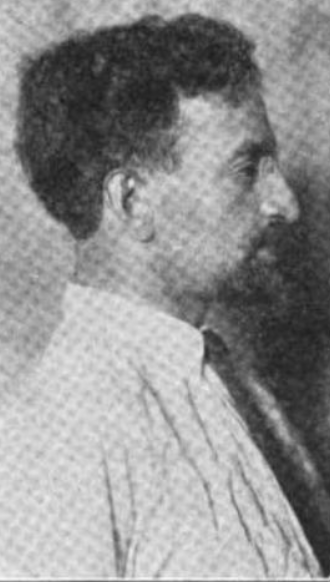
Walter Edward Weyl (March 11, 1873 – November 9, 1919) was a writer and speaker, an intellectual leader of the Progressive movement in the United States. As a strong nationalist, his goal was to remedy the relatively weak American national institutions with a strong state. Weyl wrote widely on issues of economics, labor, public policy, and international affairs in numerous books, articles, and editorials; he was a coeditor of the highly influential The New Republic magazine, 1914–1916. His most influential book, The New Democracy (1912) was a classic statement of democratic meliorism, revealing his path to a future of progress and modernization based on middle class values, aspirations and brain work. It articulated the general mood:
His father, Nathan Weyl, had emigrated from the German Palatinate, but his death, when Walter was seven, left the boy in the care of five brothers and sisters at the home of his maternal grandmother, the widow of Philadelphia merchant Julius Stern.
Weyl started young (at 13) at Philadelphia Central High School and received a scholarship to the Wharton School of the University of Pennsylvania, entering as a junior and graduating (with distinction) two years later (at 19) after studies under economist Simon Patten. He studied law briefly and then went abroad for graduate work in economics at the universities of Halle, Paris, and Berlin. In 1896, he returned to Wharton to complete a doctorate; his dissertation was published a year later, as The Passenger Traffic of Railways.
In 1899, he left academia and drifted for several years. He worked at a settlement house in New York. He searched for mineral deposits in Mexico. He performed statistical surveys for the Bureau of Labor and the United States Department of the Treasury. He helped John Mitchell, leader of the United Mine Workers, write Organized Labor: Its Problems, Purposes, and Ideals (1903).
Weyl started writing about the lives of new immigrants in popular magazine articles. Over time, he wrote increasingly about national resources and social policy. His book, The New Democracy (1912), came to serve as a statement for the US Progressive Movement and its economic reforms.
In 1914, Weyl joined Herbert Croly and Walter Lippmann as a founding editors of The New Republic magazine, where he worked from 1914 to 1916.
In 1915, during World War I, he traveled in Germany and Russia, publishing his observations in American World Policies (1917) and The End of the War (1918).
American World Policies (1917), published before the outcome of the war was known, examined the profound changes that it caused in the American psyche:
Walter Weyl
Walter Edward Weyl (March 11, 1873 – November 9, 1919) was a writer and speaker, an intellectual leader of the Progressive movement in the United States. As a strong nationalist, his goal was to remedy the relatively weak American national institutions with a strong state. Weyl wrote widely on issues of economics, labor, public policy, and international affairs in numerous books, articles, and editorials; he was a coeditor of the highly influential The New Republic magazine, 1914–1916. His most influential book, The New Democracy (1912) was a classic statement of democratic meliorism, revealing his path to a future of progress and modernization based on middle class values, aspirations and brain work. It articulated the general mood:
His father, Nathan Weyl, had emigrated from the German Palatinate, but his death, when Walter was seven, left the boy in the care of five brothers and sisters at the home of his maternal grandmother, the widow of Philadelphia merchant Julius Stern.
Weyl started young (at 13) at Philadelphia Central High School and received a scholarship to the Wharton School of the University of Pennsylvania, entering as a junior and graduating (with distinction) two years later (at 19) after studies under economist Simon Patten. He studied law briefly and then went abroad for graduate work in economics at the universities of Halle, Paris, and Berlin. In 1896, he returned to Wharton to complete a doctorate; his dissertation was published a year later, as The Passenger Traffic of Railways.
In 1899, he left academia and drifted for several years. He worked at a settlement house in New York. He searched for mineral deposits in Mexico. He performed statistical surveys for the Bureau of Labor and the United States Department of the Treasury. He helped John Mitchell, leader of the United Mine Workers, write Organized Labor: Its Problems, Purposes, and Ideals (1903).
Weyl started writing about the lives of new immigrants in popular magazine articles. Over time, he wrote increasingly about national resources and social policy. His book, The New Democracy (1912), came to serve as a statement for the US Progressive Movement and its economic reforms.
In 1914, Weyl joined Herbert Croly and Walter Lippmann as a founding editors of The New Republic magazine, where he worked from 1914 to 1916.
In 1915, during World War I, he traveled in Germany and Russia, publishing his observations in American World Policies (1917) and The End of the War (1918).
American World Policies (1917), published before the outcome of the war was known, examined the profound changes that it caused in the American psyche:
Recent media
Recent media