



Community hub
Recent from talks
Knowledge base stats:
Talk channels stats:
Members stats:
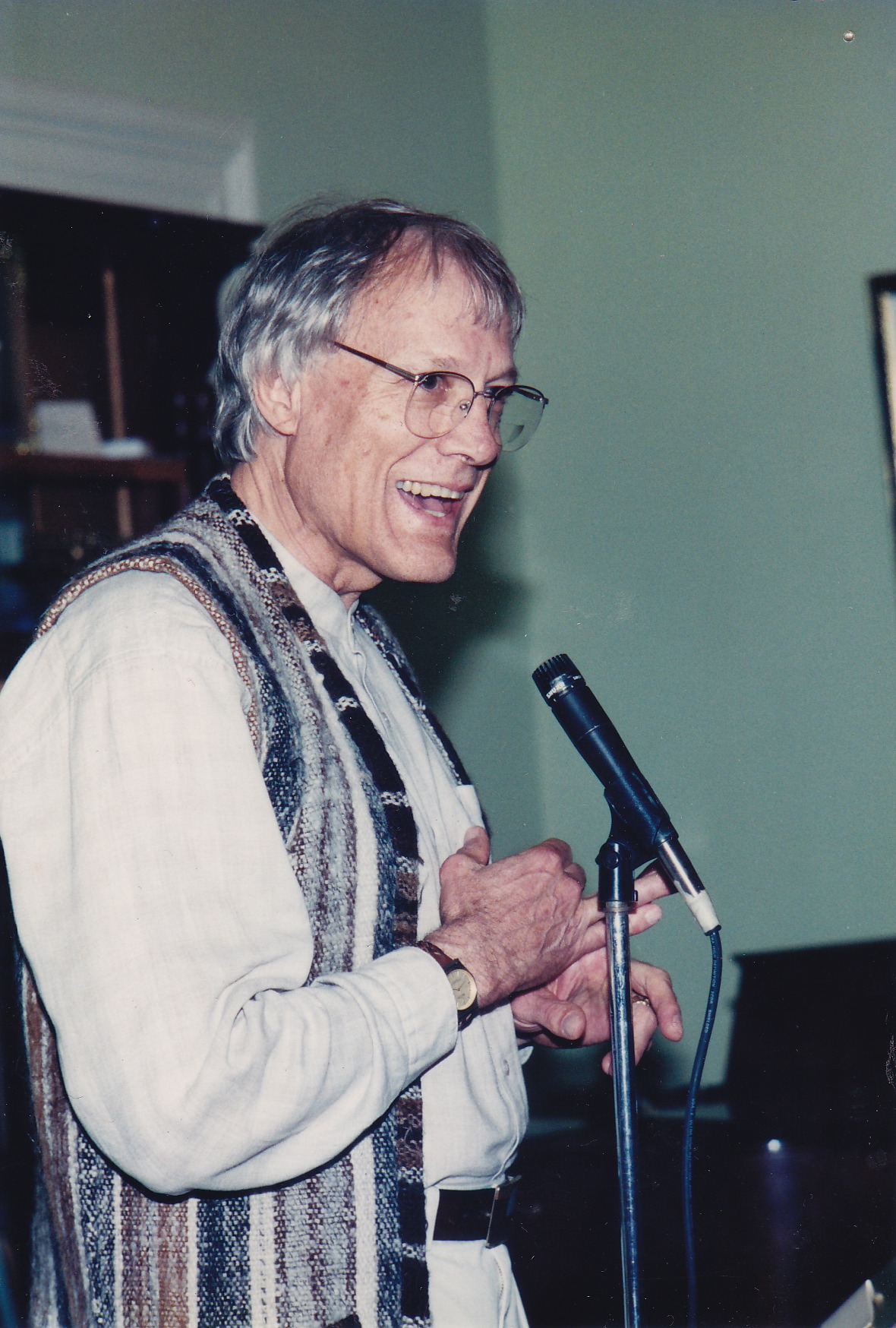
Walter Wink
Walter Philip Wink (May 21, 1935 – May 10, 2012) was an American Biblical scholar, theologian, and activist who was an important figure in Progressive Christianity. Wink spent much of his career teaching at Auburn Theological Seminary in New York City. He was well known for his advocacy of and work related to nonviolent resistance and his seminal works on "The Powers", Naming the Powers (1984), Unmasking the Powers (1986), Engaging the Powers (1992), When the Powers Fall (1998), and The Powers that Be (1999), all of them commentaries on the Apostle Paul's ethic of spiritual warfare described here:
For we do not wrestle against flesh and blood, but against the rulers, against the authorities, against the cosmic powers over this present darkness, against the spiritual forces of evil in the heavenly places.
— Ephesians 6:12 (ESV)
Breaking with Christian hermeneutic tradition of Christian demonology, he interprets Paul's hierarchy of "rulers" to refer to imperial powers, with corresponding and political theologies and ideologies of state violence. Giving examples from ancient Babylon through the popular media of today, these are supported by, in a phrase he coined "the myth of redemptive violence".
Wink was born in Dallas on May 21, 1935. His father first owned a hardware store and later worked as a salesman for the Fuller Brush Company. He was raised in a liberal Methodist church but also attended a Pentecostal congregation but while spending a summer in Oregon during college.
Wink earned a B.A. from Southern Methodist University in 1956, majoring in history, and minoring in philosophy and English. He completed his Master of Divinity in 1959 and his Ph.D. in 1963, both from Union Theological Seminary in New York City and was ordained as a Methodist minister in 1961.
After ordination, Wink served as Pastor of First United Methodist Church, in Hitchcock, Texas from 1962–67. He then returned to Union Seminary as an Assistant Professor of New Testament, then Associate Professor of New Testament, from 1967–1976. After being denied tenure at Union, he began teaching at Auburn Theological Seminary, remaining there until his death, when he was Professor Emeritus. His faculty discipline was Biblical interpretation. In 1989–1990, he was a Peace Fellow at the United States Institute of Peace.
He was known for his work on power structures, his commentary on current political and cultural matters, and his contributions to the discourse on homosexuality and religion, pacifism, the relationship between psychology and biblical studies, and research related to the historical Jesus. Neal Stephenson likens some of Wink's ideas to "an epidemiology of power disorders", a phenomenology of oppression. Author Philip Yancey references Wink frequently in his work.
Hub AI
Walter Wink AI simulator
(@Walter Wink_simulator)
Walter Wink
Walter Philip Wink (May 21, 1935 – May 10, 2012) was an American Biblical scholar, theologian, and activist who was an important figure in Progressive Christianity. Wink spent much of his career teaching at Auburn Theological Seminary in New York City. He was well known for his advocacy of and work related to nonviolent resistance and his seminal works on "The Powers", Naming the Powers (1984), Unmasking the Powers (1986), Engaging the Powers (1992), When the Powers Fall (1998), and The Powers that Be (1999), all of them commentaries on the Apostle Paul's ethic of spiritual warfare described here:
For we do not wrestle against flesh and blood, but against the rulers, against the authorities, against the cosmic powers over this present darkness, against the spiritual forces of evil in the heavenly places.
— Ephesians 6:12 (ESV)
Breaking with Christian hermeneutic tradition of Christian demonology, he interprets Paul's hierarchy of "rulers" to refer to imperial powers, with corresponding and political theologies and ideologies of state violence. Giving examples from ancient Babylon through the popular media of today, these are supported by, in a phrase he coined "the myth of redemptive violence".
Wink was born in Dallas on May 21, 1935. His father first owned a hardware store and later worked as a salesman for the Fuller Brush Company. He was raised in a liberal Methodist church but also attended a Pentecostal congregation but while spending a summer in Oregon during college.
Wink earned a B.A. from Southern Methodist University in 1956, majoring in history, and minoring in philosophy and English. He completed his Master of Divinity in 1959 and his Ph.D. in 1963, both from Union Theological Seminary in New York City and was ordained as a Methodist minister in 1961.
After ordination, Wink served as Pastor of First United Methodist Church, in Hitchcock, Texas from 1962–67. He then returned to Union Seminary as an Assistant Professor of New Testament, then Associate Professor of New Testament, from 1967–1976. After being denied tenure at Union, he began teaching at Auburn Theological Seminary, remaining there until his death, when he was Professor Emeritus. His faculty discipline was Biblical interpretation. In 1989–1990, he was a Peace Fellow at the United States Institute of Peace.
He was known for his work on power structures, his commentary on current political and cultural matters, and his contributions to the discourse on homosexuality and religion, pacifism, the relationship between psychology and biblical studies, and research related to the historical Jesus. Neal Stephenson likens some of Wink's ideas to "an epidemiology of power disorders", a phenomenology of oppression. Author Philip Yancey references Wink frequently in his work.