



Community hub
Recent from talks
Contribute something to knowledge base
Content stats: 0 posts, 0 articles, 1 media, 0 notes
Members stats: 0 subscribers, 0 contributors, 0 moderators, 0 supporters
Subscribers
Supporters
Contributors
Moderators
Orphan
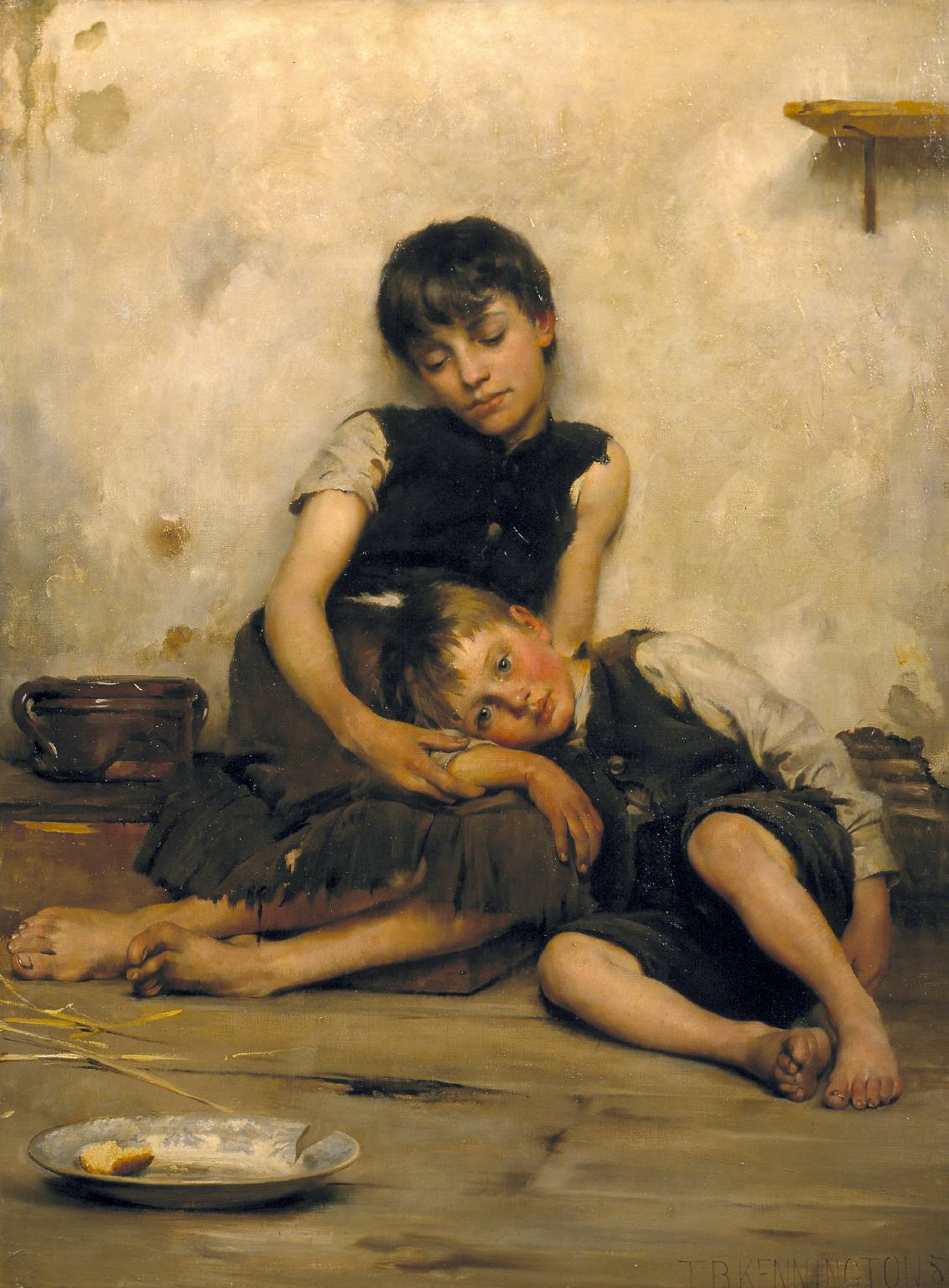
An orphan is a child whose parents have died, are unknown, or have permanently abandoned them. It can also refer to a child who has lost only one parent, as the Hebrew translation, for example, is "fatherless". In some languages, such as Swedish, the term is "parentless" and more ambiguous about whether the parents are dead, unknown or absconded, but typically refers to a child or younger adult.[citation needed]
In common usage, only a child who has lost both parents due to death is called an orphan. When referring to animals, only the mother's condition is usually relevant (i.e., if the female parent has gone, the offspring is an orphan, regardless of the father's condition).
Various groups use different definitions to identify orphans. One legal definition used in the United States is a minor bereft through "death or disappearance of, abandonment or desertion by, or separation or loss from, both parents".
In everyday use, an orphan does not have any surviving parent to care for them. However, the United Nations Children's Fund (UNICEF), Joint United Nations Programme on HIV and AIDS (UNAIDS), and other groups label any child who has lost one parent as an orphan. In this approach, a maternal orphan is a child whose mother has died, a paternal orphan is a child whose father has died, and a double orphan is a child who has lost both parents. This contrasts with the older use of half-orphan to describe children who had lost only one parent.
Wars, epidemics (such as AIDS), pandemics, and poverty have led to many children becoming orphans. The Second World War (1939–1945), with its massive numbers of deaths and vast population movements, left large numbers of orphans in many countries—with estimates for Europe ranging from 1,000,000 to 13,000,000. Judt (2006) estimates there were 9,000 orphaned children in Czechoslovakia, 60,000 in the Netherlands, 300,000 in Poland and 200,000 in Yugoslavia, plus many more in the Soviet Union, Germany, Italy, China and elsewhere.
Orphans are relatively rare in developed countries because most children can expect both of their parents to survive their childhood. Much higher numbers of orphans exist in war-torn nations such as Afghanistan.
Famous orphans include world leaders such as Aaron Burr, Andrew Jackson, and Pedro II of Brazil; writers such as Edgar Allan Poe and Leo Tolstoy; and athletes such as Aaron Hernandez. The American orphan Henry Darger portrayed the horrible conditions of his orphanage in his artwork. Other notable orphans include entertainment greats such as Louis Armstrong, Marilyn Monroe, Babe Ruth, Ray Charles and Frances McDormand.
Orphaned characters are prevalent as literary protagonists, especially in children's and fantasy literature. The lack of parents leaves the characters to pursue more exciting and adventurous lives, by freeing them from familial obligations and controls, and depriving them of more prosaic lives. It creates characters that are self-contained and introspective and who strive for affection. Orphans can metaphorically search for self-understanding by attempting to know their roots. Parents can also be allies and sources of aid for children, and removing the parents makes the character's difficulties more severe. Parents, furthermore, can be irrelevant to the theme a writer is trying to develop, and orphaning the character frees the writer from depicting such an irrelevant relationship; if one parent-child relationship is important, removing the other parent prevents complicating the necessary relationship. All these characteristics make orphans attractive characters for authors.
Orphan
An orphan is a child whose parents have died, are unknown, or have permanently abandoned them. It can also refer to a child who has lost only one parent, as the Hebrew translation, for example, is "fatherless". In some languages, such as Swedish, the term is "parentless" and more ambiguous about whether the parents are dead, unknown or absconded, but typically refers to a child or younger adult.[citation needed]
In common usage, only a child who has lost both parents due to death is called an orphan. When referring to animals, only the mother's condition is usually relevant (i.e., if the female parent has gone, the offspring is an orphan, regardless of the father's condition).
Various groups use different definitions to identify orphans. One legal definition used in the United States is a minor bereft through "death or disappearance of, abandonment or desertion by, or separation or loss from, both parents".
In everyday use, an orphan does not have any surviving parent to care for them. However, the United Nations Children's Fund (UNICEF), Joint United Nations Programme on HIV and AIDS (UNAIDS), and other groups label any child who has lost one parent as an orphan. In this approach, a maternal orphan is a child whose mother has died, a paternal orphan is a child whose father has died, and a double orphan is a child who has lost both parents. This contrasts with the older use of half-orphan to describe children who had lost only one parent.
Wars, epidemics (such as AIDS), pandemics, and poverty have led to many children becoming orphans. The Second World War (1939–1945), with its massive numbers of deaths and vast population movements, left large numbers of orphans in many countries—with estimates for Europe ranging from 1,000,000 to 13,000,000. Judt (2006) estimates there were 9,000 orphaned children in Czechoslovakia, 60,000 in the Netherlands, 300,000 in Poland and 200,000 in Yugoslavia, plus many more in the Soviet Union, Germany, Italy, China and elsewhere.
Orphans are relatively rare in developed countries because most children can expect both of their parents to survive their childhood. Much higher numbers of orphans exist in war-torn nations such as Afghanistan.
Famous orphans include world leaders such as Aaron Burr, Andrew Jackson, and Pedro II of Brazil; writers such as Edgar Allan Poe and Leo Tolstoy; and athletes such as Aaron Hernandez. The American orphan Henry Darger portrayed the horrible conditions of his orphanage in his artwork. Other notable orphans include entertainment greats such as Louis Armstrong, Marilyn Monroe, Babe Ruth, Ray Charles and Frances McDormand.
Orphaned characters are prevalent as literary protagonists, especially in children's and fantasy literature. The lack of parents leaves the characters to pursue more exciting and adventurous lives, by freeing them from familial obligations and controls, and depriving them of more prosaic lives. It creates characters that are self-contained and introspective and who strive for affection. Orphans can metaphorically search for self-understanding by attempting to know their roots. Parents can also be allies and sources of aid for children, and removing the parents makes the character's difficulties more severe. Parents, furthermore, can be irrelevant to the theme a writer is trying to develop, and orphaning the character frees the writer from depicting such an irrelevant relationship; if one parent-child relationship is important, removing the other parent prevents complicating the necessary relationship. All these characteristics make orphans attractive characters for authors.
Recent media
Recent media