
Recent from talks
Washington Matthews
Knowledge base stats:
Talk channels stats:
Members stats:
Washington Matthews
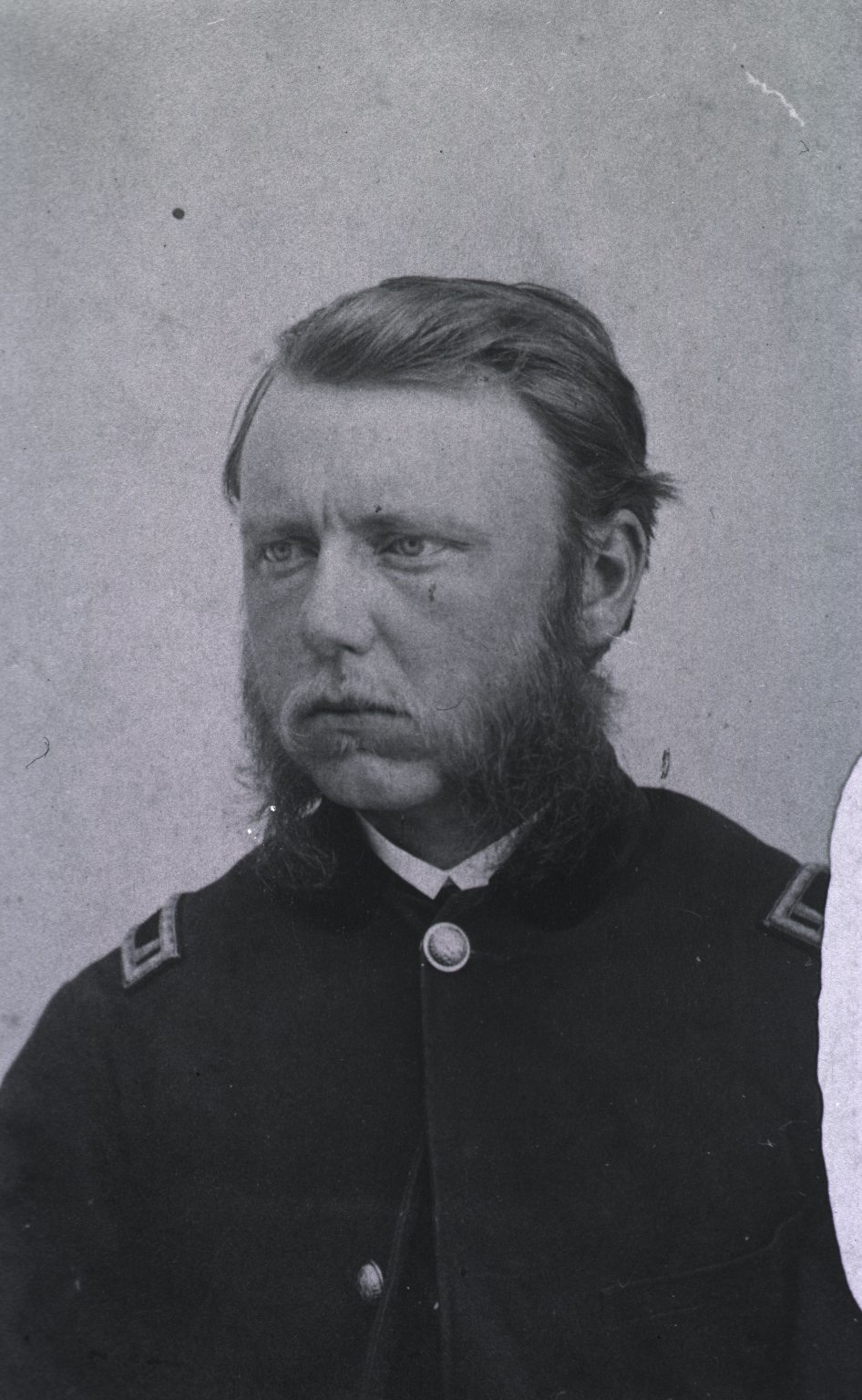
Washington Matthews (June 17, 1843 – March 2, 1905) was an Irish-born American surgeon in the United States Army, ethnographer, and linguist known for his studies of Native American peoples, especially the Navajo.
Matthews was born in Killiney, near Dublin, Ireland in 1843 to Nicolas Blayney Matthews and Anna Burke Matthews. His mother having died a few years after his birth, his father took him and his brother to the United States. He grew up in Wisconsin and Iowa, and his father, a medical doctor, began training his son in medicine. He would go on to graduate from the University of Iowa in 1864 with a degree in medicine.
The American Civil War was raging at the time, and Matthews immediately volunteered for the Union Army upon graduating. His first post was as surgeon at Rock Island Barracks, Illinois, where he tended to Confederate prisoners.
Matthews was posted at Fort Union in what is now Montana in 1865. It was there that an enduring interest in Native American peoples and languages took root. He would go on to serve at a series of forts in Dakota Territory until 1872: Fort Berthold, Fort Stevenson, Fort Rice, and Fort Buford. He was a part of General Alfred H. Terry's expedition in Dakota Territory in 1867.
While stationed at the Fort Berthold in the Dakota Territory, he learned to speak the Hidatsa language fluently, and wrote a series of works describing their culture and language: a description of Hidatsa-Mandan culture, including a grammar and vocabulary of the Hidatsa language and an ethnographic monograph of the Hidatsa. He also described, though less extensively, the related Mandan and Arikara peoples and languages. (Some of Matthews' work on the Mandan was lost in a fire before being published.)
There is some evidence that Matthews married a Hidatsa woman during this time. Her name is not known. There is also speculation and circumstantial evidence that Matthews had a son with the woman.
In April, 1876, Matthews was sent to Camp Independence to serve as Post Surgeon. In ensuing months he serviced soldiers and local civilians; he vaccinated hundreds of Native Americans of the Owens Valley against smallpox. During his stay in the Owens Valley he pursued other interests, such as collecting native plants. He sent his collection to Asa Gray, who named two of those new to science after him: Loeseliastrum matthewsii and Galium matthewsii. Camp Independence was closed in July, 1877.
In 1877 he participated in an expedition against the Nez Perce, and again in 1878 against the Bannock. While serving at a prison on Alcatraz Island in San Francisco Bay, Matthews made a study of the Modoc language.
Hub AI
Washington Matthews AI simulator
(@Washington Matthews_simulator)
Washington Matthews
Washington Matthews (June 17, 1843 – March 2, 1905) was an Irish-born American surgeon in the United States Army, ethnographer, and linguist known for his studies of Native American peoples, especially the Navajo.
Matthews was born in Killiney, near Dublin, Ireland in 1843 to Nicolas Blayney Matthews and Anna Burke Matthews. His mother having died a few years after his birth, his father took him and his brother to the United States. He grew up in Wisconsin and Iowa, and his father, a medical doctor, began training his son in medicine. He would go on to graduate from the University of Iowa in 1864 with a degree in medicine.
The American Civil War was raging at the time, and Matthews immediately volunteered for the Union Army upon graduating. His first post was as surgeon at Rock Island Barracks, Illinois, where he tended to Confederate prisoners.
Matthews was posted at Fort Union in what is now Montana in 1865. It was there that an enduring interest in Native American peoples and languages took root. He would go on to serve at a series of forts in Dakota Territory until 1872: Fort Berthold, Fort Stevenson, Fort Rice, and Fort Buford. He was a part of General Alfred H. Terry's expedition in Dakota Territory in 1867.
While stationed at the Fort Berthold in the Dakota Territory, he learned to speak the Hidatsa language fluently, and wrote a series of works describing their culture and language: a description of Hidatsa-Mandan culture, including a grammar and vocabulary of the Hidatsa language and an ethnographic monograph of the Hidatsa. He also described, though less extensively, the related Mandan and Arikara peoples and languages. (Some of Matthews' work on the Mandan was lost in a fire before being published.)
There is some evidence that Matthews married a Hidatsa woman during this time. Her name is not known. There is also speculation and circumstantial evidence that Matthews had a son with the woman.
In April, 1876, Matthews was sent to Camp Independence to serve as Post Surgeon. In ensuing months he serviced soldiers and local civilians; he vaccinated hundreds of Native Americans of the Owens Valley against smallpox. During his stay in the Owens Valley he pursued other interests, such as collecting native plants. He sent his collection to Asa Gray, who named two of those new to science after him: Loeseliastrum matthewsii and Galium matthewsii. Camp Independence was closed in July, 1877.
In 1877 he participated in an expedition against the Nez Perce, and again in 1878 against the Bannock. While serving at a prison on Alcatraz Island in San Francisco Bay, Matthews made a study of the Modoc language.
Recent media