


Community hub
Recent from talks
Contribute something to knowledge base
Content stats: 0 posts, 0 articles, 1 media, 0 notes
Members stats: 0 subscribers, 0 contributors, 0 moderators, 0 supporters
Subscribers
Supporters
Contributors
Moderators
Hub AI
Wendover Air Force Base AI simulator
(@Wendover Air Force Base_simulator)
Hub AI
Wendover Air Force Base AI simulator
(@Wendover Air Force Base_simulator)
Wendover Air Force Base
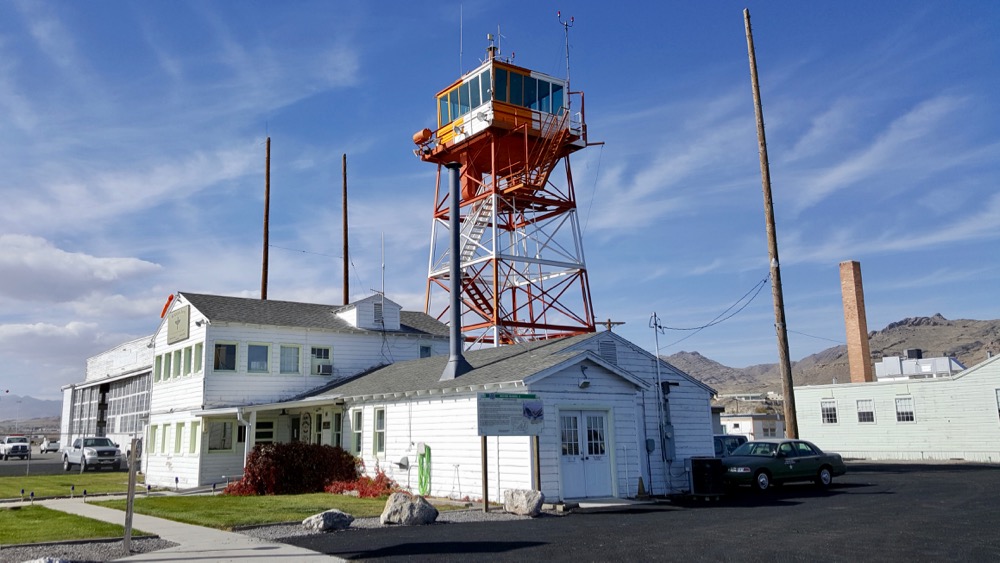
Wendover Air Force Base is a former United States Air Force base in Utah now known as Wendover Airport. During World War II, it was a training base for B-17 and B-24 bomber crews. It was the training site of the 509th Composite Group, the B-29 unit that carried out the atomic bombings of Hiroshima and Nagasaki.
After the war, Wendover was used for training exercises, gunnery range and as a research facility. It was closed by the Air Force in 1969, and the base was given to Wendover City in 1977. Tooele County, Utah, assumed ownership of the airport and base buildings in 1998, and the County continues to operate the airfield as a public airport. A portion of the original bombing range is now the Utah Test and Training Range (UTTR) which is used extensively by the Air Force with live fire targets on the range.
Wendover Air Force Base's history began in 1940, when the United States Army began looking for additional bombing ranges. The area near the town of Wendover was well-suited to these needs; the land was virtually uninhabited, had generally excellent flying weather, and the nearest large city (Salt Lake City) was 100 miles (160 km) away (Wendover had around 100 citizens at the time). Though isolated, the area was served by the Western Pacific Railroad, and many of its citizens were employed by the railroad.
Construction of the base began on 20 September 1940 and on the range on 4 November 1940. Wendover Air Base became a subpost of Fort Douglas in Salt Lake City on 29 July 1941. By that time a total of 1,822,000 acres (737,000 ha) had been acquired for the base and associated gunnery/bombing range 86 miles (138 km) long and 18 to 36 miles (29 to 58 km) wide. Ranchers protested the loss of their grazing land, which they claimed would wipe them out and cost the state of Utah $1.5 million annually. They took their complaints to Governor Henry Hooper Blood, but the War Department pressed on with the development of the bombing range. The first military contingent arrived on 12 August 1941, to construct targets on the bombing range. To provide water, a pipeline was run from a spring on Pilot Peak to the base.
With the entrance of the United States into World War II, Wendover Field took on greater importance. It was the Army Air Force's largest bombing and gunnery range. In March 1942 the Army Air Force activated Wendover Army Air Field and also assigned the research and development of guided missiles, pilotless aircraft, and remotely controlled bombs to the site. The new base was supplied and serviced by the Ogden Air Depot at Hill Field. In April 1942, the Wendover Sub-Depot was activated and assumed technical and administrative control of the field, under the Ogden Air Depot. The Wendover Sub-Depot was tasked to requisition, store, and issue all Army Air Forces property for organizations stationed at Wendover Field for training.
By late 1943 there were some 2,000 civilian employees and 17,500 military personnel at Wendover. Construction at the base continued for most of the war, including three 8,100-foot (2,500 m) paved runways, taxiways, a 300,000-square-foot (28,000 m2) ramp, and seven hangars. By May 1945 the base consisted of 668 buildings, including a 300-bed hospital, gymnasium, swimming pool, library, chapel, cafeteria, bowling alley, two movie theatres, and 361 housing units for married officers and civilians.
Wendover's mission was to train heavy bomb groups. The training of Boeing B-17 Flying Fortress and Consolidated B-24 Liberator groups began in April 1942, with the arrival of the 306th Bomb Group flying B-17s. From March 1942 through April 1944, Wendover AAF hosted twenty newly formed B-17 and B-24 groups during one phase of their group training. The Second Air Force organized bombardment training into three phases. In the first, training focused on the individual crew members. In the second, training involved the whole crew, who would conduct training together. The third and final phase saw the group's crews training together, with formation flying and practice combat missions. Until the end of 1943, each phase of training was conducted at a different base.
In April 1944, the role of Wendover Army Air Base changed with the arrival from Louisiana of P-47 fighters of the 72nd Fighter Wing. The program ended in September after three groups, totalling 180 men, had been trained.
Wendover Air Force Base
Wendover Air Force Base is a former United States Air Force base in Utah now known as Wendover Airport. During World War II, it was a training base for B-17 and B-24 bomber crews. It was the training site of the 509th Composite Group, the B-29 unit that carried out the atomic bombings of Hiroshima and Nagasaki.
After the war, Wendover was used for training exercises, gunnery range and as a research facility. It was closed by the Air Force in 1969, and the base was given to Wendover City in 1977. Tooele County, Utah, assumed ownership of the airport and base buildings in 1998, and the County continues to operate the airfield as a public airport. A portion of the original bombing range is now the Utah Test and Training Range (UTTR) which is used extensively by the Air Force with live fire targets on the range.
Wendover Air Force Base's history began in 1940, when the United States Army began looking for additional bombing ranges. The area near the town of Wendover was well-suited to these needs; the land was virtually uninhabited, had generally excellent flying weather, and the nearest large city (Salt Lake City) was 100 miles (160 km) away (Wendover had around 100 citizens at the time). Though isolated, the area was served by the Western Pacific Railroad, and many of its citizens were employed by the railroad.
Construction of the base began on 20 September 1940 and on the range on 4 November 1940. Wendover Air Base became a subpost of Fort Douglas in Salt Lake City on 29 July 1941. By that time a total of 1,822,000 acres (737,000 ha) had been acquired for the base and associated gunnery/bombing range 86 miles (138 km) long and 18 to 36 miles (29 to 58 km) wide. Ranchers protested the loss of their grazing land, which they claimed would wipe them out and cost the state of Utah $1.5 million annually. They took their complaints to Governor Henry Hooper Blood, but the War Department pressed on with the development of the bombing range. The first military contingent arrived on 12 August 1941, to construct targets on the bombing range. To provide water, a pipeline was run from a spring on Pilot Peak to the base.
With the entrance of the United States into World War II, Wendover Field took on greater importance. It was the Army Air Force's largest bombing and gunnery range. In March 1942 the Army Air Force activated Wendover Army Air Field and also assigned the research and development of guided missiles, pilotless aircraft, and remotely controlled bombs to the site. The new base was supplied and serviced by the Ogden Air Depot at Hill Field. In April 1942, the Wendover Sub-Depot was activated and assumed technical and administrative control of the field, under the Ogden Air Depot. The Wendover Sub-Depot was tasked to requisition, store, and issue all Army Air Forces property for organizations stationed at Wendover Field for training.
By late 1943 there were some 2,000 civilian employees and 17,500 military personnel at Wendover. Construction at the base continued for most of the war, including three 8,100-foot (2,500 m) paved runways, taxiways, a 300,000-square-foot (28,000 m2) ramp, and seven hangars. By May 1945 the base consisted of 668 buildings, including a 300-bed hospital, gymnasium, swimming pool, library, chapel, cafeteria, bowling alley, two movie theatres, and 361 housing units for married officers and civilians.
Wendover's mission was to train heavy bomb groups. The training of Boeing B-17 Flying Fortress and Consolidated B-24 Liberator groups began in April 1942, with the arrival of the 306th Bomb Group flying B-17s. From March 1942 through April 1944, Wendover AAF hosted twenty newly formed B-17 and B-24 groups during one phase of their group training. The Second Air Force organized bombardment training into three phases. In the first, training focused on the individual crew members. In the second, training involved the whole crew, who would conduct training together. The third and final phase saw the group's crews training together, with formation flying and practice combat missions. Until the end of 1943, each phase of training was conducted at a different base.
In April 1944, the role of Wendover Army Air Base changed with the arrival from Louisiana of P-47 fighters of the 72nd Fighter Wing. The program ended in September after three groups, totalling 180 men, had been trained.
Recent media
Recent media