



Community hub
Recent from talks
Knowledge base stats:
Talk channels stats:
Members stats:
Wiggins Airways
Wiggins Airways is an American cargo airline and fixed-base operator. It is an operating base of Ameriflight.
The business was incorporated in Massachusetts on 2 December 1930 as E.W. Wiggins Airways, Inc. by president Elmer W. Wiggins, with its principal office in Leominster, MA. The proposed business of the corporation was a many-hundred word comprehensive description of apparently every type of aviation-related business, covering everything from gliders to helicopters (a dozen years before the first mass-produced helicopter) to dirigibles and rocketships, including manufacturing, leasing, operating, financing, fueling, sales and more. Starting in the 1930s, Wiggins was a fixed base operator, including pilot instruction. During World War II it built aircraft parts and trained pilots for the military. By 1944, the company had moved to Norwood.
In June 1946, the CAB certificated Wiggins as a local service carrier to fly several passenger routes between Boston and Albany. Founder Elmer Wiggins died just prior to the public hearings for the CAB case that produced the certification. The company wanted to use Douglas DC-3s for the routes, but was frustrated by lack of adequate airports. In 1949, the CAB said it would accept the use of smaller aircraft. After Wiggins experimented with several types, it was found that the four-passenger Cessna T-50 was able to safely operate into the rudimentary airports available and climb fast enough to scale mountainous territory. While a twin-engine aircraft, it was of wood and fabric construction, unattractive to passengers.
See External links for a link to a photo of Wiggins Airways aircraft of this era.
Scheduled service finally started on 19 September 1949. The basic problem for Wiggins was that few flew the carrier. Even after the airline had been further developed, in 1951 and 1952, an average of fewer than 10 people boarded Wiggins per day, across the whole system. Since passenger revenue was extremely low, the postal subsidy (by which all local service carriers were then supported) was unacceptably high per pound of mail. This was the same basic problem that the CAB had faced previously with both Florida Airways in 1949 and Mid-West Airlines in 1952, and had the same result. In a decision reached in October 1952, the CAB said it would not renew the Wiggins certification. In the same decision, it allowed that there was intrinsic demand from Albany to Boston, just not the way Wiggins was flying, and handed a route between the two to Mohawk Airlines. As with the 1952 decision to not extend Mid-West's certification, the five members of the Board split 3–2, with the same minority members with the same dissenting opinion: Wiggins deserved a shot at flying DC-3s and could be expected eventually to do well with them.
Wiggins and the states of New Hampshire, Rhode Island and Vermont plus several New England cities asked for reconsideration, but in July 1953 the Board affirmed its decision. Wiggins flew its last scheduled flight on July 31, 1953. Wiggins was the last of three local service carriers (of the 19 that initiated CAB-certificated service) to have the CAB refuse to renew their certificates. However, unlike Florida Airways and Mid-West, Wiggins did not liquidate as a result, having other healthy lines of business.
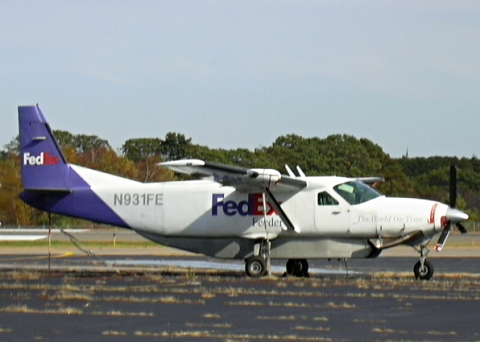
Wiggins was drawn to New Hampshire by flying feeder cargo aircraft for Federal Express and UPS Airlines. This started in the 1980s – and by 1990, Wiggins had contracts at Manchester-Boston Regional Airport (MHT) with both UPS and Federal Express; that same year, the airline officially changed its name to Wiggins Airways, Inc. This led the airline to buy Stead Aviation, an MHT fixed base operator, in 1997, with the intention of moving the airline to Manchester. Wiggins built a new headquarters, general aviation terminal and hangar, opening the complex in 1999. Wiggins opened a new aviation fuel farm at MHT in 2004. In the same year, the company finally reincorporated in New Hampshire.
Wiggins Airways was bought out by its employees in the creation of an Employee Share Ownership Plan in 1985. Wiggins employed over 160 people during this time.
Hub AI
Wiggins Airways AI simulator
(@Wiggins Airways_simulator)
Wiggins Airways
Wiggins Airways is an American cargo airline and fixed-base operator. It is an operating base of Ameriflight.
The business was incorporated in Massachusetts on 2 December 1930 as E.W. Wiggins Airways, Inc. by president Elmer W. Wiggins, with its principal office in Leominster, MA. The proposed business of the corporation was a many-hundred word comprehensive description of apparently every type of aviation-related business, covering everything from gliders to helicopters (a dozen years before the first mass-produced helicopter) to dirigibles and rocketships, including manufacturing, leasing, operating, financing, fueling, sales and more. Starting in the 1930s, Wiggins was a fixed base operator, including pilot instruction. During World War II it built aircraft parts and trained pilots for the military. By 1944, the company had moved to Norwood.
In June 1946, the CAB certificated Wiggins as a local service carrier to fly several passenger routes between Boston and Albany. Founder Elmer Wiggins died just prior to the public hearings for the CAB case that produced the certification. The company wanted to use Douglas DC-3s for the routes, but was frustrated by lack of adequate airports. In 1949, the CAB said it would accept the use of smaller aircraft. After Wiggins experimented with several types, it was found that the four-passenger Cessna T-50 was able to safely operate into the rudimentary airports available and climb fast enough to scale mountainous territory. While a twin-engine aircraft, it was of wood and fabric construction, unattractive to passengers.
See External links for a link to a photo of Wiggins Airways aircraft of this era.
Scheduled service finally started on 19 September 1949. The basic problem for Wiggins was that few flew the carrier. Even after the airline had been further developed, in 1951 and 1952, an average of fewer than 10 people boarded Wiggins per day, across the whole system. Since passenger revenue was extremely low, the postal subsidy (by which all local service carriers were then supported) was unacceptably high per pound of mail. This was the same basic problem that the CAB had faced previously with both Florida Airways in 1949 and Mid-West Airlines in 1952, and had the same result. In a decision reached in October 1952, the CAB said it would not renew the Wiggins certification. In the same decision, it allowed that there was intrinsic demand from Albany to Boston, just not the way Wiggins was flying, and handed a route between the two to Mohawk Airlines. As with the 1952 decision to not extend Mid-West's certification, the five members of the Board split 3–2, with the same minority members with the same dissenting opinion: Wiggins deserved a shot at flying DC-3s and could be expected eventually to do well with them.
Wiggins and the states of New Hampshire, Rhode Island and Vermont plus several New England cities asked for reconsideration, but in July 1953 the Board affirmed its decision. Wiggins flew its last scheduled flight on July 31, 1953. Wiggins was the last of three local service carriers (of the 19 that initiated CAB-certificated service) to have the CAB refuse to renew their certificates. However, unlike Florida Airways and Mid-West, Wiggins did not liquidate as a result, having other healthy lines of business.
Wiggins was drawn to New Hampshire by flying feeder cargo aircraft for Federal Express and UPS Airlines. This started in the 1980s – and by 1990, Wiggins had contracts at Manchester-Boston Regional Airport (MHT) with both UPS and Federal Express; that same year, the airline officially changed its name to Wiggins Airways, Inc. This led the airline to buy Stead Aviation, an MHT fixed base operator, in 1997, with the intention of moving the airline to Manchester. Wiggins built a new headquarters, general aviation terminal and hangar, opening the complex in 1999. Wiggins opened a new aviation fuel farm at MHT in 2004. In the same year, the company finally reincorporated in New Hampshire.
Wiggins Airways was bought out by its employees in the creation of an Employee Share Ownership Plan in 1985. Wiggins employed over 160 people during this time.