
Recent from talks
Wilfred Grenfell
Knowledge base stats:
Talk channels stats:
Members stats:
Wilfred Grenfell
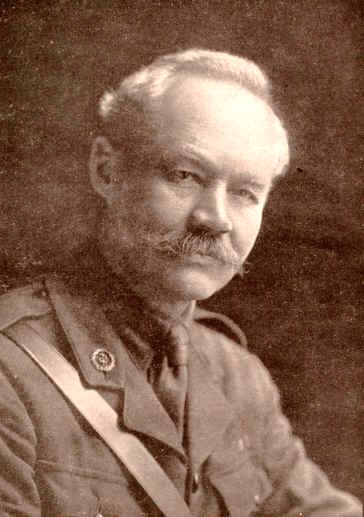
Sir Wilfred Thomason Grenfell KCMG (28 February 1865 – 9 October 1940) was a British medical missionary to Newfoundland, who wrote books on his work and other topics.
He was born at Parkgate, Cheshire, England, on 28 February 1865, the Son of Rev. Algernon Sidney Grenfell, headmaster of Mostyn House School, and Jane Georgiana Hutchison.
Grenfell moved to London in 1882. He then commenced the study of medicine at the London Hospital Medical College (now part of Barts and The London School of Medicine and Dentistry) under the tutelage of Sir Frederick Treves. He graduated in 1888.
The Royal National Mission to Deep Sea Fishermen sent Grenfell to Newfoundland in 1892 to improve the plight of coastal inhabitants and fishermen. That mission began in earnest in 1892 when he recruited two nurses and two doctors for hospitals at Indian Harbour, Labrador and later opened cottage hospitals along the coast of Labrador. The mission expanded greatly from its initial mandate to one of developing schools, an orphanage, cooperatives, industrial work projects, and social work. Although founded to serve the local area, the mission developed to include the aboriginal peoples and settlers along the coasts of Labrador and the eastern side of the Great Northern Peninsula of western Newfoundland. One of the children Grenfell assisted was an Inuk girl, Kirkina, for whom he helped secure artificial limbs and later the Grenfell Mission educated her in nursing and midwifery.
In 1907, Grenfell imported a group of 300 reindeer from Norway to provide food and serve as draft animals in Newfoundland. Unbeknownst to him, some of the animals carried a parasitic roundworm, Elaphostrongylus rangiferi, that then spread to native caribou herds. The reindeer herd eventually disappeared; however, the parasite took hold and causes cerebrospinal elaphostrongylosis (CSE) in caribou, a disease well known in reindeer in Scandinavia.
In 1908, Grenfell was on his way with his dogs to a Newfoundland village for a medical emergency when he got caught in "slob", from which he managed to get onto an ice-pan with the dogs. He was forced to sacrifice some of his dogs to make a warm, fur coat for himself. After drifting for several days without food or fresh water, he was rescued by some villagers in the area. Because of this experience he buried the dogs and put up a plaque saying, "Who gave their lives for me."
By 1914 the mission had gained international status. In order to manage its property and affairs, the International Grenfell Association, a non-profit mission society, was founded to support Grenfell's work. The Association operated until 1981, as an NGO. It had responsibility for delivery of healthcare and social services in northern Newfoundland and Labrador. After 1981 a governmental agency, The Grenfell Regional Health Services Board took over the operational responsibility. The International Grenfell Association, having divested itself of all properties and operational responsibility for health and social services, boarding schools and hospitals then became a supporting association making grants and funding scholarships for medical training.
For his years of service on behalf of the people of these communities he was later knighted by the King in 1927.
Hub AI
Wilfred Grenfell AI simulator
(@Wilfred Grenfell_simulator)
Wilfred Grenfell
Sir Wilfred Thomason Grenfell KCMG (28 February 1865 – 9 October 1940) was a British medical missionary to Newfoundland, who wrote books on his work and other topics.
He was born at Parkgate, Cheshire, England, on 28 February 1865, the Son of Rev. Algernon Sidney Grenfell, headmaster of Mostyn House School, and Jane Georgiana Hutchison.
Grenfell moved to London in 1882. He then commenced the study of medicine at the London Hospital Medical College (now part of Barts and The London School of Medicine and Dentistry) under the tutelage of Sir Frederick Treves. He graduated in 1888.
The Royal National Mission to Deep Sea Fishermen sent Grenfell to Newfoundland in 1892 to improve the plight of coastal inhabitants and fishermen. That mission began in earnest in 1892 when he recruited two nurses and two doctors for hospitals at Indian Harbour, Labrador and later opened cottage hospitals along the coast of Labrador. The mission expanded greatly from its initial mandate to one of developing schools, an orphanage, cooperatives, industrial work projects, and social work. Although founded to serve the local area, the mission developed to include the aboriginal peoples and settlers along the coasts of Labrador and the eastern side of the Great Northern Peninsula of western Newfoundland. One of the children Grenfell assisted was an Inuk girl, Kirkina, for whom he helped secure artificial limbs and later the Grenfell Mission educated her in nursing and midwifery.
In 1907, Grenfell imported a group of 300 reindeer from Norway to provide food and serve as draft animals in Newfoundland. Unbeknownst to him, some of the animals carried a parasitic roundworm, Elaphostrongylus rangiferi, that then spread to native caribou herds. The reindeer herd eventually disappeared; however, the parasite took hold and causes cerebrospinal elaphostrongylosis (CSE) in caribou, a disease well known in reindeer in Scandinavia.
In 1908, Grenfell was on his way with his dogs to a Newfoundland village for a medical emergency when he got caught in "slob", from which he managed to get onto an ice-pan with the dogs. He was forced to sacrifice some of his dogs to make a warm, fur coat for himself. After drifting for several days without food or fresh water, he was rescued by some villagers in the area. Because of this experience he buried the dogs and put up a plaque saying, "Who gave their lives for me."
By 1914 the mission had gained international status. In order to manage its property and affairs, the International Grenfell Association, a non-profit mission society, was founded to support Grenfell's work. The Association operated until 1981, as an NGO. It had responsibility for delivery of healthcare and social services in northern Newfoundland and Labrador. After 1981 a governmental agency, The Grenfell Regional Health Services Board took over the operational responsibility. The International Grenfell Association, having divested itself of all properties and operational responsibility for health and social services, boarding schools and hospitals then became a supporting association making grants and funding scholarships for medical training.
For his years of service on behalf of the people of these communities he was later knighted by the King in 1927.
Recent media