


Community hub
Recent from talks
Contribute something to knowledge base
Content stats: 0 posts, 0 articles, 1 media, 0 notes
Members stats: 0 subscribers, 0 contributors, 0 moderators, 0 supporters
Subscribers
Supporters
Contributors
Moderators
Hub AI
Willandra, Ryde AI simulator
(@Willandra, Ryde_simulator)
Hub AI
Willandra, Ryde AI simulator
(@Willandra, Ryde_simulator)
Willandra, Ryde
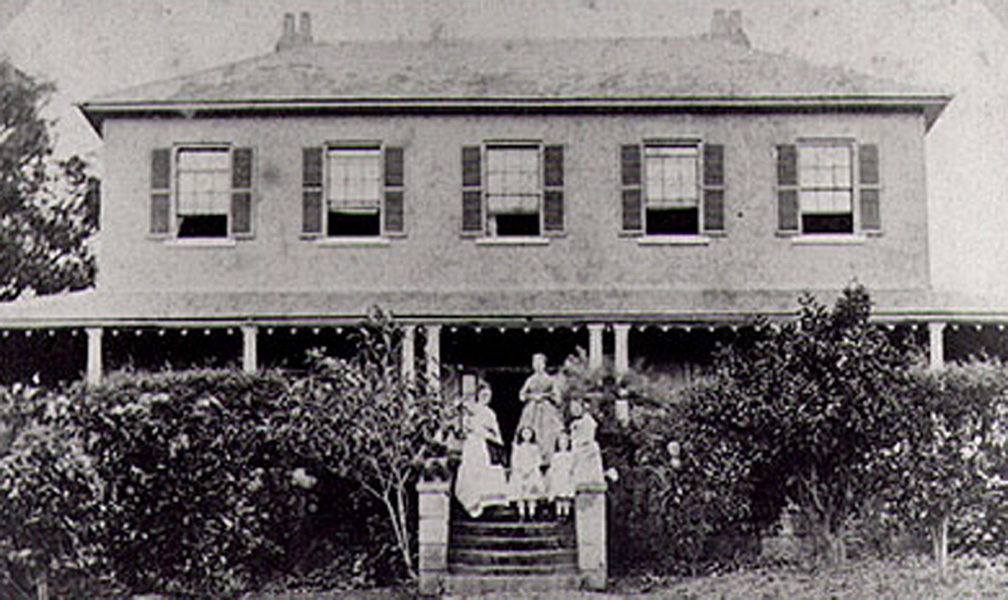
Willandra is a heritage-listed former service station and homestead and now community facility located at 782 Victoria Road, Ryde, New South Wales, Australia. Its design is attributed to William Weaver and built from 1841 to 1844 by James Devlin. It is also known as the Ryde House. The property is owned by the City of Ryde council. It was added to the New South Wales State Heritage Register on 2 April 1999.
The house is completed in the Colonial Georgian architectural style. During the 1970s the house was in danger of being demolished but it was purchased by the City of Ryde Council with the assistance of the Australian Government and has been restored. It is now used by local community groups.
The Ryde area was highly suitable for farming and orchards, and early grants to marines were given to encourage agriculture. In 1792 land in the area was granted to eight marines; two were in the modern area of Ryde. Isaac Archer and John Colethread each received 32 hectares (80 acres) of land on the site of the present Ryde-Parramatta Golf Links, now in West Ryde. Later in 1792, in the Eastern Farms area, twelve grants, most about 12 hectares (30 acres), were made to convicts. Much later these were bought by John Macarthur, Gregory Blaxland and the Reverend Samuel Marsden. The district remained an important orcharding area throughout the 19th century.
The grants in the Ryde area were originally called Eastern Farms, later Kissing Point, because of a rock shelf in the Parramatta River bed. At low tide the keels of boats graxed the rock shelf, which in nautical terms is called "kissing". The whole settlement became known as Kissing Point - right up the hill and over the area where Devlin was to build Ryde House (later Willandra).
The land on which the house was built was part of John Small's original 1794 grant and was acquired (Cashman, (1982) says 'inherited') by James Devlin in 1828. Devlin was born in NSW in 1808, the son of Irish exile Arthur Devlin. Arthur had survived the Great Rebellion of 1798 in Ireland, and the Robert Emmet revolt of 1803. A great number of his comrades of 1798 were shipped to New South Wales as convicts, but Arthur managed to bargain for his terms of surrender and came to Sydney as an exile, and not as a convict, with a few of his relatives. Soon after arrival (1831) Arthur married colonial-born Priscilla Squire. She was the daughter of James Squire, patriarch of Kissing Point, land owner, brewer and man of business.
Not long after Arthur Devlin died, his mother remarried, this time to Thomas, son of a first Fleeter, John Small. Thomas and Priscilla became the owners of a 30-acre (12 hectare) grant to John Small. And James Devlin was to become heir to some of James Squire's considerable fortune, when Squire died in James's 14th year. When James reached maturity he in turn was granted the land by succession.
Already in 1837, James had joined the land rush, and he must have felt confident in the early 1840s when he began to build. In the 1850s the previous decade's optimism was replaced with one of the worst depressions to befall New South Wales. It perhaps indicates Devlin's financial position that he could conceive such a grand building plan when conditions seemed so inopportune. In any case he mortgaged the property almost immediately it was completed. But unlike many others, he was able to survive the bad times and retain his property. At that time few buildings were nearby. St. Anne's church was then a small, insignificant building, doing duty as church and school until 1838. In that year a school was built down the road, opposite the police station. The rector of St.Anne's was the Rev. G.E.W.Turner, recently arrived with his wife from the Isle of Wight. Mrs Turner fancied there was a resemblance in the area to her old homeland, and the expatriates began using the name "Ryde", although it was variously called Hunters Hill, Kissing Point and Field of Mars. Devlin called his new house "Ryde House" and in 1841 the Post Office was named Ryde.
Devlin was originally a wheelwright. Later he became pound-keeper and postmaster (Government contractor for the district, until 1839) of Kissing Point before becoming a successful developer and contractor.
Willandra, Ryde
Willandra is a heritage-listed former service station and homestead and now community facility located at 782 Victoria Road, Ryde, New South Wales, Australia. Its design is attributed to William Weaver and built from 1841 to 1844 by James Devlin. It is also known as the Ryde House. The property is owned by the City of Ryde council. It was added to the New South Wales State Heritage Register on 2 April 1999.
The house is completed in the Colonial Georgian architectural style. During the 1970s the house was in danger of being demolished but it was purchased by the City of Ryde Council with the assistance of the Australian Government and has been restored. It is now used by local community groups.
The Ryde area was highly suitable for farming and orchards, and early grants to marines were given to encourage agriculture. In 1792 land in the area was granted to eight marines; two were in the modern area of Ryde. Isaac Archer and John Colethread each received 32 hectares (80 acres) of land on the site of the present Ryde-Parramatta Golf Links, now in West Ryde. Later in 1792, in the Eastern Farms area, twelve grants, most about 12 hectares (30 acres), were made to convicts. Much later these were bought by John Macarthur, Gregory Blaxland and the Reverend Samuel Marsden. The district remained an important orcharding area throughout the 19th century.
The grants in the Ryde area were originally called Eastern Farms, later Kissing Point, because of a rock shelf in the Parramatta River bed. At low tide the keels of boats graxed the rock shelf, which in nautical terms is called "kissing". The whole settlement became known as Kissing Point - right up the hill and over the area where Devlin was to build Ryde House (later Willandra).
The land on which the house was built was part of John Small's original 1794 grant and was acquired (Cashman, (1982) says 'inherited') by James Devlin in 1828. Devlin was born in NSW in 1808, the son of Irish exile Arthur Devlin. Arthur had survived the Great Rebellion of 1798 in Ireland, and the Robert Emmet revolt of 1803. A great number of his comrades of 1798 were shipped to New South Wales as convicts, but Arthur managed to bargain for his terms of surrender and came to Sydney as an exile, and not as a convict, with a few of his relatives. Soon after arrival (1831) Arthur married colonial-born Priscilla Squire. She was the daughter of James Squire, patriarch of Kissing Point, land owner, brewer and man of business.
Not long after Arthur Devlin died, his mother remarried, this time to Thomas, son of a first Fleeter, John Small. Thomas and Priscilla became the owners of a 30-acre (12 hectare) grant to John Small. And James Devlin was to become heir to some of James Squire's considerable fortune, when Squire died in James's 14th year. When James reached maturity he in turn was granted the land by succession.
Already in 1837, James had joined the land rush, and he must have felt confident in the early 1840s when he began to build. In the 1850s the previous decade's optimism was replaced with one of the worst depressions to befall New South Wales. It perhaps indicates Devlin's financial position that he could conceive such a grand building plan when conditions seemed so inopportune. In any case he mortgaged the property almost immediately it was completed. But unlike many others, he was able to survive the bad times and retain his property. At that time few buildings were nearby. St. Anne's church was then a small, insignificant building, doing duty as church and school until 1838. In that year a school was built down the road, opposite the police station. The rector of St.Anne's was the Rev. G.E.W.Turner, recently arrived with his wife from the Isle of Wight. Mrs Turner fancied there was a resemblance in the area to her old homeland, and the expatriates began using the name "Ryde", although it was variously called Hunters Hill, Kissing Point and Field of Mars. Devlin called his new house "Ryde House" and in 1841 the Post Office was named Ryde.
Devlin was originally a wheelwright. Later he became pound-keeper and postmaster (Government contractor for the district, until 1839) of Kissing Point before becoming a successful developer and contractor.
Recent media
Recent media