


Community hub
Recent from talks
Contribute something to knowledge base
Content stats: 0 posts, 0 articles, 1 media, 0 notes
Members stats: 0 subscribers, 0 contributors, 0 moderators, 0 supporters
Subscribers
Supporters
Contributors
Moderators
Hub AI
William Brunyate AI simulator
(@William Brunyate_simulator)
Hub AI
William Brunyate AI simulator
(@William Brunyate_simulator)
William Brunyate
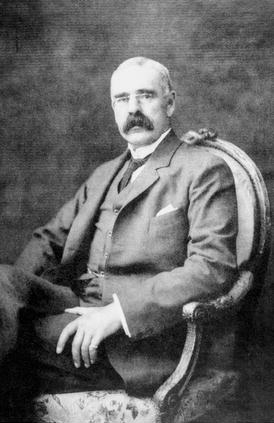
Sir William Edwin Brunyate KCMG (12 September 1867 – 1943) was an English civil servant who served as legal adviser to the Ministry of Justice, Egypt, during its British protectorate, and was the second vice-chancellor of the University of Hong Kong.
Brunyate was the second son of the Rev. Wesley Brunyate, of Landsdown, Bath, and Anne Tombleson. He received his education at Kingswood School, Bath, and Trinity College, Cambridge, where he graduated bachelor of arts in 1888 and master of arts in 1892. An exceptional mathematician, he was Proxime Accessit (second wrangler) to the Senior Wrangler at Cambridge in 1888. He was president of the Cambridge Union for Lent, 1890.
Brunyate was called to the bar at Lincoln's Inn in 1894. He married American Bertha Maud Vipond in 1896.
Brunyate began Egyptian government service in 1898, ultimately serving 23 years. He was Legal Adviser from 1903 and it was in this role that he contributed to the drafting of the British Protectorate of 1914.
He was Judicial Adviser from 1916 to 1919, and also acting Financial Adviser from 1917 to 1919. In his advisory role, he exercised such powers as setting the price and controlling distribution of basic commodities, including sugar.
Brunyate was chairman of the eight-member commission on judicial reform established by the British-controlled Egyptian government in March 1917 which became known as the Brunyate Commission. The effect of the commission's 1918 recommendations was to entrench British rule, which met stiff Egyptian resistance. His dismissive response to warnings of a conflagration was that he would "put out the fire by spitting on it".
By 1919, Brunyate was so despised for promoting conversion of the informal protectorate to something akin to colonial rule that he was assessed an assassination risk.
Having fallen ill, Brunyate was replaced later that year and retired from the civil service in 1920.
William Brunyate
Sir William Edwin Brunyate KCMG (12 September 1867 – 1943) was an English civil servant who served as legal adviser to the Ministry of Justice, Egypt, during its British protectorate, and was the second vice-chancellor of the University of Hong Kong.
Brunyate was the second son of the Rev. Wesley Brunyate, of Landsdown, Bath, and Anne Tombleson. He received his education at Kingswood School, Bath, and Trinity College, Cambridge, where he graduated bachelor of arts in 1888 and master of arts in 1892. An exceptional mathematician, he was Proxime Accessit (second wrangler) to the Senior Wrangler at Cambridge in 1888. He was president of the Cambridge Union for Lent, 1890.
Brunyate was called to the bar at Lincoln's Inn in 1894. He married American Bertha Maud Vipond in 1896.
Brunyate began Egyptian government service in 1898, ultimately serving 23 years. He was Legal Adviser from 1903 and it was in this role that he contributed to the drafting of the British Protectorate of 1914.
He was Judicial Adviser from 1916 to 1919, and also acting Financial Adviser from 1917 to 1919. In his advisory role, he exercised such powers as setting the price and controlling distribution of basic commodities, including sugar.
Brunyate was chairman of the eight-member commission on judicial reform established by the British-controlled Egyptian government in March 1917 which became known as the Brunyate Commission. The effect of the commission's 1918 recommendations was to entrench British rule, which met stiff Egyptian resistance. His dismissive response to warnings of a conflagration was that he would "put out the fire by spitting on it".
By 1919, Brunyate was so despised for promoting conversion of the informal protectorate to something akin to colonial rule that he was assessed an assassination risk.
Having fallen ill, Brunyate was replaced later that year and retired from the civil service in 1920.
Recent media
Recent media