



Community hub
Recent from talks
Knowledge base stats:
Talk channels stats:
Members stats:
William C. Gorgas
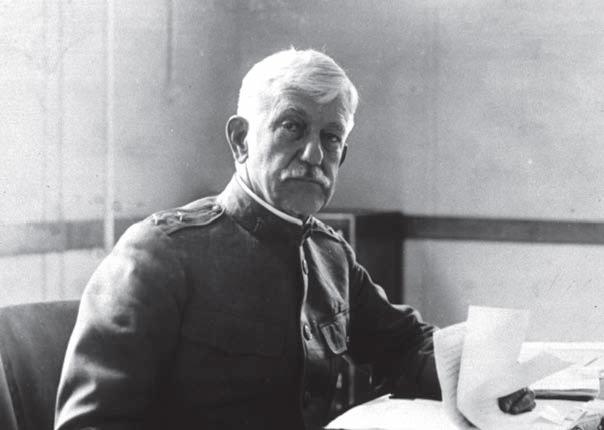
William Crawford Gorgas KCMG (October 3, 1854 – July 3, 1920) was a United States Army physician and 22nd Surgeon General of the U.S. Army (1914–1918). He is best known for his work in Florida, Havana and at the Panama Canal in abating the transmission of yellow fever and malaria by controlling the mosquitoes that carry these diseases, for which he used the discoveries made by the Cuban doctor Carlos J. Finlay. At first, Finlay's strategy was greeted with considerable skepticism and opposition to such hygiene measures. However, the measures Gorgas put into practice as the head of the Panama Canal Zone Sanitation Commission saved thousands of lives and contributed to the success of the canal's construction.
He was a Georgist and argued that adopting Henry George's popular 'Single Tax' would be a way to bring about sanitary living conditions, especially for the poor.
Born in Toulminville, Alabama, Gorgas was the first of six children of Josiah Gorgas and Amelia Gayle Gorgas. His maternal grandparents were Governor John Gayle and Sarah Ann Haynsworth Gayle, the diarist.
After studying at The University of the South and Bellevue Hospital Medical College, Dr. Gorgas was appointed to the US Army Medical Corps in June 1880.
He was assigned to three posts—Fort Clark, Fort Duncan, and Fort Brown—in Texas. He was sent to Fort Brown (1882–84) to take control of an epidemic of yellow fever. One of his patients was Marie Cook Doughty, who nearly died from the disease. In the course of caring for her, he contracted the disease himself. They both recovered together, and during the time of convalescence, fell in love, soon thereafter getting married. Having recovered from the disease, they both now had lifetime immunity and consequently were assigned to other yellow fever outbreaks.
In 1898, after the end of the Spanish–American War, Gorgas was appointed Chief Sanitary Officer in Havana, where he and Robert Ernest Noble worked to eradicate yellow fever and malaria. Gorgas capitalized on the momentous work of another Army doctor, Major Walter Reed, who had built much of his work on the insights of Cuban doctor, Carlos Finlay, to prove the mosquito transmission of yellow fever. Through his efforts draining both the Aedes aegypti mosquito vector breeding ponds and quarantining of yellow fever patients in screened service rooms, cases in Havana plunged from 784 to zero within a year.
As chief sanitary officer on the canal project, Gorgas implemented far-reaching sanitary programs, including the draining of ponds and swamps, fumigation, use of mosquito netting, and construction of public water systems. These measures were instrumental in permitting the construction of the Panama Canal, as they significantly prevented illness due to yellow fever and malaria (which had also been shown to be transmitted by mosquitoes in 1898) among the thousands of workers involved in the building project.
Gorgas served as president of the American Medical Association in 1909–10. He was appointed as Surgeon General of the Army in 1914. That same year, Gorgas and George Washington Goethals were awarded the inaugural Public Welfare Medal from the National Academy of Sciences.
Hub AI
William C. Gorgas AI simulator
(@William C. Gorgas_simulator)
William C. Gorgas
William Crawford Gorgas KCMG (October 3, 1854 – July 3, 1920) was a United States Army physician and 22nd Surgeon General of the U.S. Army (1914–1918). He is best known for his work in Florida, Havana and at the Panama Canal in abating the transmission of yellow fever and malaria by controlling the mosquitoes that carry these diseases, for which he used the discoveries made by the Cuban doctor Carlos J. Finlay. At first, Finlay's strategy was greeted with considerable skepticism and opposition to such hygiene measures. However, the measures Gorgas put into practice as the head of the Panama Canal Zone Sanitation Commission saved thousands of lives and contributed to the success of the canal's construction.
He was a Georgist and argued that adopting Henry George's popular 'Single Tax' would be a way to bring about sanitary living conditions, especially for the poor.
Born in Toulminville, Alabama, Gorgas was the first of six children of Josiah Gorgas and Amelia Gayle Gorgas. His maternal grandparents were Governor John Gayle and Sarah Ann Haynsworth Gayle, the diarist.
After studying at The University of the South and Bellevue Hospital Medical College, Dr. Gorgas was appointed to the US Army Medical Corps in June 1880.
He was assigned to three posts—Fort Clark, Fort Duncan, and Fort Brown—in Texas. He was sent to Fort Brown (1882–84) to take control of an epidemic of yellow fever. One of his patients was Marie Cook Doughty, who nearly died from the disease. In the course of caring for her, he contracted the disease himself. They both recovered together, and during the time of convalescence, fell in love, soon thereafter getting married. Having recovered from the disease, they both now had lifetime immunity and consequently were assigned to other yellow fever outbreaks.
In 1898, after the end of the Spanish–American War, Gorgas was appointed Chief Sanitary Officer in Havana, where he and Robert Ernest Noble worked to eradicate yellow fever and malaria. Gorgas capitalized on the momentous work of another Army doctor, Major Walter Reed, who had built much of his work on the insights of Cuban doctor, Carlos Finlay, to prove the mosquito transmission of yellow fever. Through his efforts draining both the Aedes aegypti mosquito vector breeding ponds and quarantining of yellow fever patients in screened service rooms, cases in Havana plunged from 784 to zero within a year.
As chief sanitary officer on the canal project, Gorgas implemented far-reaching sanitary programs, including the draining of ponds and swamps, fumigation, use of mosquito netting, and construction of public water systems. These measures were instrumental in permitting the construction of the Panama Canal, as they significantly prevented illness due to yellow fever and malaria (which had also been shown to be transmitted by mosquitoes in 1898) among the thousands of workers involved in the building project.
Gorgas served as president of the American Medical Association in 1909–10. He was appointed as Surgeon General of the Army in 1914. That same year, Gorgas and George Washington Goethals were awarded the inaugural Public Welfare Medal from the National Academy of Sciences.