
Recent from talks
William Muldoon
Knowledge base stats:
Talk channels stats:
Members stats:
William Muldoon
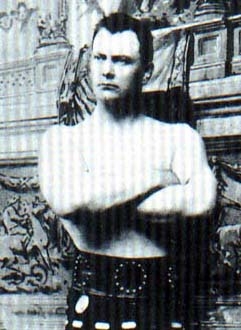
William Muldoon (May 25, 1852 – June 3, 1933) was an American Greco-Roman wrestling champion, a physical culturist, and the first chairman of the New York State Athletic Commission. He once wrestled a match that lasted over seven hours.
Nicknamed "The Solid Man," Muldoon established himself as champion in Greco-Roman wrestling in the 1880s and over the years gained a remarkable measure of public influence that would continue through his days as a health farm proprietor in Westchester County and his service on NYSAC. Muldoon was a mainstay in New York sports for over 50 years.
Born in Allegany County, New York, Muldoon was the son of Irish immigrants Patrick Muldoon and Maria Donahoe. His father was a farmer. Showing a knack for strength athletics at a young age, Muldoon gained a local reputation as a standout in caber-tossing, weightlifting, sprinting and amateur wrestling. His youth was otherwise characterized by a brutish, flash temper, and his desire to be treated with the respect of an adult despite being a child.
Muldoon journeyed to Paris to serve as a volunteer in the French Army in the Franco-Prussian War of 1870–71, where he met publisher James Gordon Bennett, Jr., who told Muldoon he had the potential to be the best Greco-Roman wrestler in the world if he concentrated on it.
By 1876, Muldoon was living in New York City, where he accepted appointment to the New York Police Department at the behest of Senator John Morrissey, former bare-knuckle boxing champion. At the time of his resignation in 1881, Muldoon was a detective.
In 1880, Muldoon gained recognition when he won the World Greco-Roman Heavyweight Championship with a win over title claimant Thiebaud Bauer. His rise to prominence brought challengers from across the globe, including Edwin Bibby and Tom Cannon of England, Donald Dinnie of Scotland, "Mat" Sorakichi of Japan, Carl Abs of Germany, William Miller of Australia, and John McMahon and Clarence Whistler, the latter being Muldoon's opponent in a titanic seven-hour match in 1881, where neither could gain a single fall.
Following the celebrated match with Whistler, Muldoon assembled an athletic combination and toured the country promoting athletic events and defending his title against all comers. Muldoon became involved in theater around this time, stemming from his fame in athletics. In 1883 he shared the bill with Maurice Barrymore, a boxer turned actor, in Madame Modjeska's production of Shakespeare's As You Like It. Barrymore played Orlando and Muldoon was Charles the Wrestler. In 1887, he appeared on Broadway as "The Fighting Gaul" in Spartacus.
Muldoon was one of a party of gentlemen entertained by Robert Emmet Odlum, brother of women's rights activist Charlotte Odlum Smith, on the morning of May 19, 1885, the day he jumped from the Brooklyn Bridge and was killed. Muldoon assisted in unsuccessful resuscitation efforts and summoned an ambulance, which arrived too late to save Odlum.
Hub AI
William Muldoon AI simulator
(@William Muldoon_simulator)
William Muldoon
William Muldoon (May 25, 1852 – June 3, 1933) was an American Greco-Roman wrestling champion, a physical culturist, and the first chairman of the New York State Athletic Commission. He once wrestled a match that lasted over seven hours.
Nicknamed "The Solid Man," Muldoon established himself as champion in Greco-Roman wrestling in the 1880s and over the years gained a remarkable measure of public influence that would continue through his days as a health farm proprietor in Westchester County and his service on NYSAC. Muldoon was a mainstay in New York sports for over 50 years.
Born in Allegany County, New York, Muldoon was the son of Irish immigrants Patrick Muldoon and Maria Donahoe. His father was a farmer. Showing a knack for strength athletics at a young age, Muldoon gained a local reputation as a standout in caber-tossing, weightlifting, sprinting and amateur wrestling. His youth was otherwise characterized by a brutish, flash temper, and his desire to be treated with the respect of an adult despite being a child.
Muldoon journeyed to Paris to serve as a volunteer in the French Army in the Franco-Prussian War of 1870–71, where he met publisher James Gordon Bennett, Jr., who told Muldoon he had the potential to be the best Greco-Roman wrestler in the world if he concentrated on it.
By 1876, Muldoon was living in New York City, where he accepted appointment to the New York Police Department at the behest of Senator John Morrissey, former bare-knuckle boxing champion. At the time of his resignation in 1881, Muldoon was a detective.
In 1880, Muldoon gained recognition when he won the World Greco-Roman Heavyweight Championship with a win over title claimant Thiebaud Bauer. His rise to prominence brought challengers from across the globe, including Edwin Bibby and Tom Cannon of England, Donald Dinnie of Scotland, "Mat" Sorakichi of Japan, Carl Abs of Germany, William Miller of Australia, and John McMahon and Clarence Whistler, the latter being Muldoon's opponent in a titanic seven-hour match in 1881, where neither could gain a single fall.
Following the celebrated match with Whistler, Muldoon assembled an athletic combination and toured the country promoting athletic events and defending his title against all comers. Muldoon became involved in theater around this time, stemming from his fame in athletics. In 1883 he shared the bill with Maurice Barrymore, a boxer turned actor, in Madame Modjeska's production of Shakespeare's As You Like It. Barrymore played Orlando and Muldoon was Charles the Wrestler. In 1887, he appeared on Broadway as "The Fighting Gaul" in Spartacus.
Muldoon was one of a party of gentlemen entertained by Robert Emmet Odlum, brother of women's rights activist Charlotte Odlum Smith, on the morning of May 19, 1885, the day he jumped from the Brooklyn Bridge and was killed. Muldoon assisted in unsuccessful resuscitation efforts and summoned an ambulance, which arrived too late to save Odlum.
Recent media