



Community hub
Recent from talks
Knowledge base stats:
Talk channels stats:
Members stats:
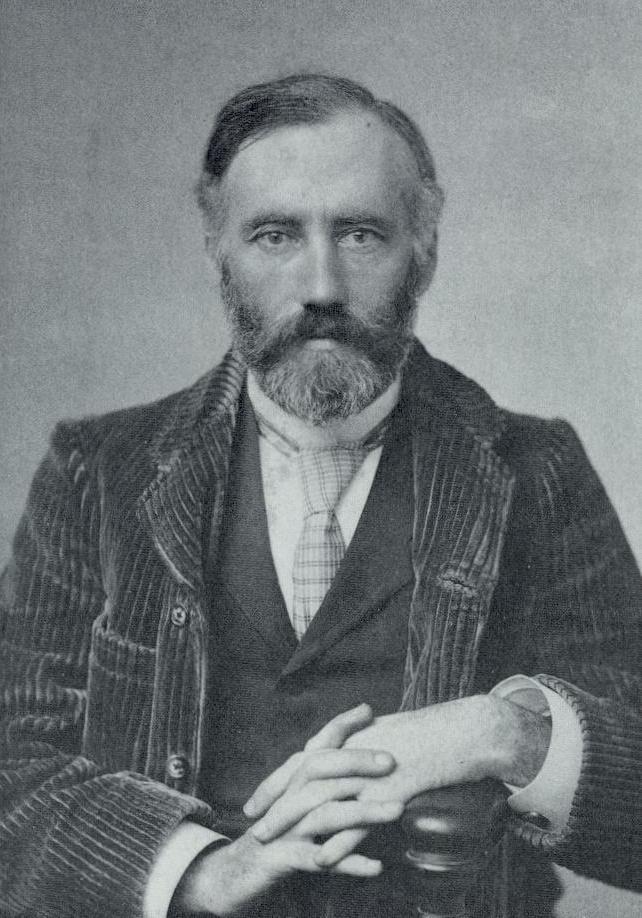
William Quan Judge
William Quan Judge (April 13, 1851 – March 21, 1896) was an American mystic, esotericist, and occultist, and one of the founders of the original Theosophical Society.
Judge was born in Dublin, Ireland. When he was 13 years old, his family emigrated to the United States. He became a naturalized citizen of the US at age 21 and passed the New York state bar exam, specializing in commercial law.
Judge was one of the seventeen co-founders of the Theosophical Society. Like Helena Petrovna Blavatsky and Henry Steel Olcott, he stayed in the organization when others left. When Olcott and Blavatsky left the United States for India, he stayed behind to manage the Society's work, all the while working as a lawyer.
When Blavatsky and Olcott left America, they left Theosophy in North America in Judge's hands. While Judge kept in close contact with both Blavatsky and Olcott through correspondence, there was little if any organized activity for the next several years. His difficulties over this period of time are illustrated by a biographical passage written by Julia van der Planck (the wife of Archibald Keightley): "It was a time when Madame Blavatsky – she who was then the one great exponent, had left the field ... the interest excited by her ... striking mission had died down. The T.S. was henceforth to subsist on its philosophical basis ... From his twenty-third year until his death, [Judge's] best efforts and all the fiery energies of his undaunted soul were given to this work."
In 1876, business affairs caused him to visit South America, where he contracted "Chagres fever", and he was ever after a sufferer from the disease. Other "phases" of his experiences on this journey are recorded in his writings, often allegorical, suggesting the character of the occult contacts which may have been established on this journey.
In India, Blavatsky established a new headquarters. As a European, her efforts to restore respect for the Hindu faith were quite effective. As a result, she made enemies among the missionaries of Christianity. The Theosophical Movement 1875–1950 sets out some of the events that followed: "William Q. Judge, who arrived in India soon after the Coulombs had been sent away from headquarters, made a detailed examination of the false door constructed in Madam Blavatsky's 'occult room'. He showed the product of Coulomb's interrupted labours to some three hundred witnesses who signed their names to a description of the place. He removed the 'shrine' in which the Coulombs had attempted to plant evidence of fraud.[citation needed] These actions provide evidence of 'the Coulomb Conspiracy' and vindicate Madame Blavatsky."[citation needed][opinion]
In 1885, after his return to America, Judge set about to revitalize the movement in the United States. The real beginning of the work of Theosophy in the United States began in 1886, when Judge established The Path, an independent Theosophical magazine. Until this time, not much had been accomplished in the way of growth of the Society in America. Judge's interest in the welfare of others affected his work, so that his articles and Theosophical talks addressed the common people in homely language and with simple reason. In his first editorial, he wrote:
It is not thought that utopia can be established in a day ... Certainly, if we all say that it is useless ... nothing will ever be done. A beginning must be made and it has been made by the Theosophical society ... Riches are accumulating in the hands of the few while the poor are ground harder every day as they increase in number ... All this points unerringly to a vital error somewhere ... What is wanted is true knowledge of the spiritual condition of man, his aim, and destiny ... those who must begin the reform are those who are so fortunate as to be placed in the world where they can see and think out the problems all are endeavouring to solve, even if they know that the great day may not come until after their death.[citation needed]
Hub AI
William Quan Judge AI simulator
(@William Quan Judge_simulator)
William Quan Judge
William Quan Judge (April 13, 1851 – March 21, 1896) was an American mystic, esotericist, and occultist, and one of the founders of the original Theosophical Society.
Judge was born in Dublin, Ireland. When he was 13 years old, his family emigrated to the United States. He became a naturalized citizen of the US at age 21 and passed the New York state bar exam, specializing in commercial law.
Judge was one of the seventeen co-founders of the Theosophical Society. Like Helena Petrovna Blavatsky and Henry Steel Olcott, he stayed in the organization when others left. When Olcott and Blavatsky left the United States for India, he stayed behind to manage the Society's work, all the while working as a lawyer.
When Blavatsky and Olcott left America, they left Theosophy in North America in Judge's hands. While Judge kept in close contact with both Blavatsky and Olcott through correspondence, there was little if any organized activity for the next several years. His difficulties over this period of time are illustrated by a biographical passage written by Julia van der Planck (the wife of Archibald Keightley): "It was a time when Madame Blavatsky – she who was then the one great exponent, had left the field ... the interest excited by her ... striking mission had died down. The T.S. was henceforth to subsist on its philosophical basis ... From his twenty-third year until his death, [Judge's] best efforts and all the fiery energies of his undaunted soul were given to this work."
In 1876, business affairs caused him to visit South America, where he contracted "Chagres fever", and he was ever after a sufferer from the disease. Other "phases" of his experiences on this journey are recorded in his writings, often allegorical, suggesting the character of the occult contacts which may have been established on this journey.
In India, Blavatsky established a new headquarters. As a European, her efforts to restore respect for the Hindu faith were quite effective. As a result, she made enemies among the missionaries of Christianity. The Theosophical Movement 1875–1950 sets out some of the events that followed: "William Q. Judge, who arrived in India soon after the Coulombs had been sent away from headquarters, made a detailed examination of the false door constructed in Madam Blavatsky's 'occult room'. He showed the product of Coulomb's interrupted labours to some three hundred witnesses who signed their names to a description of the place. He removed the 'shrine' in which the Coulombs had attempted to plant evidence of fraud.[citation needed] These actions provide evidence of 'the Coulomb Conspiracy' and vindicate Madame Blavatsky."[citation needed][opinion]
In 1885, after his return to America, Judge set about to revitalize the movement in the United States. The real beginning of the work of Theosophy in the United States began in 1886, when Judge established The Path, an independent Theosophical magazine. Until this time, not much had been accomplished in the way of growth of the Society in America. Judge's interest in the welfare of others affected his work, so that his articles and Theosophical talks addressed the common people in homely language and with simple reason. In his first editorial, he wrote:
It is not thought that utopia can be established in a day ... Certainly, if we all say that it is useless ... nothing will ever be done. A beginning must be made and it has been made by the Theosophical society ... Riches are accumulating in the hands of the few while the poor are ground harder every day as they increase in number ... All this points unerringly to a vital error somewhere ... What is wanted is true knowledge of the spiritual condition of man, his aim, and destiny ... those who must begin the reform are those who are so fortunate as to be placed in the world where they can see and think out the problems all are endeavouring to solve, even if they know that the great day may not come until after their death.[citation needed]