


Community hub
Recent from talks
Contribute something to knowledge base
Content stats: 0 posts, 0 articles, 1 media, 0 notes
Members stats: 0 subscribers, 0 contributors, 0 moderators, 0 supporters
Subscribers
Supporters
Contributors
Moderators
Hub AI
William Symington AI simulator
(@William Symington_simulator)
Hub AI
William Symington AI simulator
(@William Symington_simulator)
William Symington
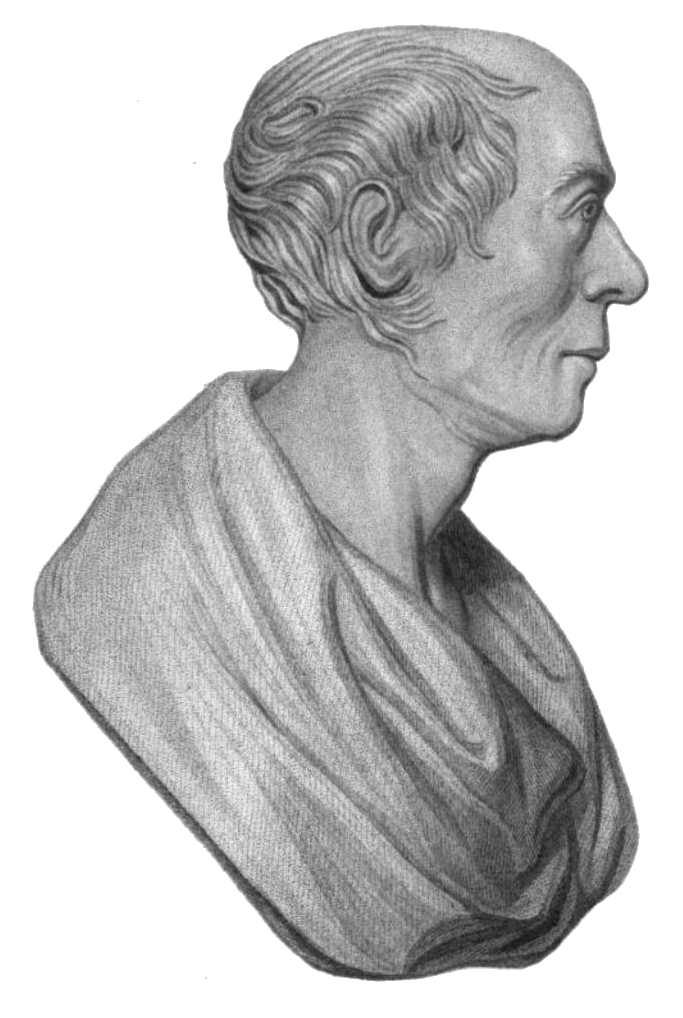
William Symington (1764–1831) was a Scottish engineer and inventor during the Georgian era. He is most well known as the builder of the first practical steamboat, the Charlotte Dundas. The engine has been described as "without doubt the most compact and efficient marine steam engine up to that time" and its design would influence later steamboat and steamship engine designs. While Symington died in poverty after failing to commercialise his steam engine designs, he is still credited as one of the great inventors of the early Industrial Revolution.
Symington was born in Leadhills, South Lanarkshire, Scotland, to a family he described as being "respectable but not wealthy." His father worked as a practical mechanic at the Leadhills mines.
Although his parents intended for him to enter the ministry, he intended to use his good education to make a career as an engineer. So, in 1785, he joined his brother George in his attempts to build a steam engine at Wanlockhead, Dumfriesshire. While there, he impressed the manager of a local mining company, Gilbert Meason, so much that he was sent to the University of Edinburgh in 1786 to spend a few months attending science lectures.
By the time William joined his brother, George had already succeeded in building the second engine using James Watt's design to be built in Scotland.
Symington quickly saw a way to marry the efficiency of the Watt engine with the simplicity of that devised by Thomas Newcomen. Encouraged by Gilbert Meason, Symington demonstrated the practicality of his idea and his improved atmospheric engine was patented in 1787. When Watt sent someone to make a sketch of how this new engine worked, he discovered that the steam was condensed under a second piston and this was then pushed down when fresh steam entered the cylinder, forcing out the condensate. The power piston worked by the atmospheric pressure acting on the vacuum created by the condensing steam.
After its completion, Symington drew up a prospectus outlining the advantages of his invention, and this was circulated by Meason and his influential friends.
The banker Patrick Miller of Dalswinton, just north of Dumfries, had experimented with double hulled pleasure boats propelled by cranked paddlewheels placed between the hulls, and he got Symington to build the patent steam engine with its drive into a pleasure boat built in 1785 which was successfully tried out on Dalswinton Loch near Miller's house on 14 October 1788. The trial was said to have been a success and the boat stated to have reached 8 kilometers an hour in speed.
Alexander Nasmyth depicted her on her trial run. A version of the illustration held by the Science Museum in London, Ref No. 0307379 shows her flying a red saltire, presumably a lithographer's mistake. James Nasmyth in his autobiography published in 1883 stated erroneously that she was built of tinned iron plate.
William Symington
William Symington (1764–1831) was a Scottish engineer and inventor during the Georgian era. He is most well known as the builder of the first practical steamboat, the Charlotte Dundas. The engine has been described as "without doubt the most compact and efficient marine steam engine up to that time" and its design would influence later steamboat and steamship engine designs. While Symington died in poverty after failing to commercialise his steam engine designs, he is still credited as one of the great inventors of the early Industrial Revolution.
Symington was born in Leadhills, South Lanarkshire, Scotland, to a family he described as being "respectable but not wealthy." His father worked as a practical mechanic at the Leadhills mines.
Although his parents intended for him to enter the ministry, he intended to use his good education to make a career as an engineer. So, in 1785, he joined his brother George in his attempts to build a steam engine at Wanlockhead, Dumfriesshire. While there, he impressed the manager of a local mining company, Gilbert Meason, so much that he was sent to the University of Edinburgh in 1786 to spend a few months attending science lectures.
By the time William joined his brother, George had already succeeded in building the second engine using James Watt's design to be built in Scotland.
Symington quickly saw a way to marry the efficiency of the Watt engine with the simplicity of that devised by Thomas Newcomen. Encouraged by Gilbert Meason, Symington demonstrated the practicality of his idea and his improved atmospheric engine was patented in 1787. When Watt sent someone to make a sketch of how this new engine worked, he discovered that the steam was condensed under a second piston and this was then pushed down when fresh steam entered the cylinder, forcing out the condensate. The power piston worked by the atmospheric pressure acting on the vacuum created by the condensing steam.
After its completion, Symington drew up a prospectus outlining the advantages of his invention, and this was circulated by Meason and his influential friends.
The banker Patrick Miller of Dalswinton, just north of Dumfries, had experimented with double hulled pleasure boats propelled by cranked paddlewheels placed between the hulls, and he got Symington to build the patent steam engine with its drive into a pleasure boat built in 1785 which was successfully tried out on Dalswinton Loch near Miller's house on 14 October 1788. The trial was said to have been a success and the boat stated to have reached 8 kilometers an hour in speed.
Alexander Nasmyth depicted her on her trial run. A version of the illustration held by the Science Museum in London, Ref No. 0307379 shows her flying a red saltire, presumably a lithographer's mistake. James Nasmyth in his autobiography published in 1883 stated erroneously that she was built of tinned iron plate.
Recent media
Recent media