
Recent from talks
Williamina Fleming
Knowledge base stats:
Talk channels stats:
Members stats:
Williamina Fleming
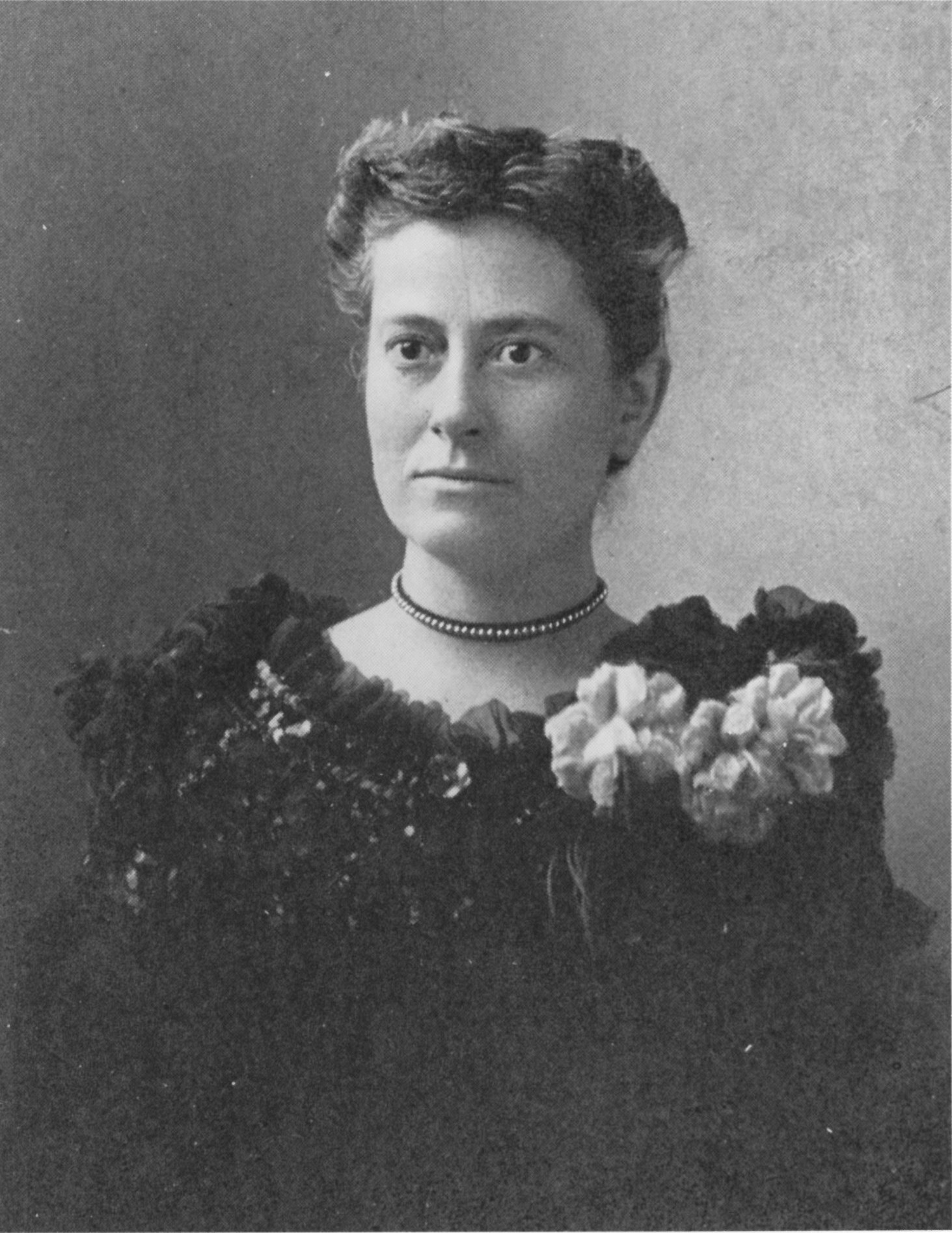
Williamina Paton Stevens Fleming (15 May 1857 – 21 May 1911) was a Scottish astronomer.[AI-retrieved source] At the Harvard College Observatory, she contributed to the photographic classification of stellar spectra, helping to develop a common designation system for stars. Fleming cataloged more than ten thousand stars, 59 gaseous nebulae, over 310 variable stars, and 10 novae, among other astronomical phenomena. She is credited with the discovery of the Horsehead Nebula in 1888, and she was a vocal supporter of women's representation in her field.
Williamina Paton Stevens was born in Dundee, Scotland, at 86 Nethergate, on 15 May 1857 to Mary Walker and Robert Stevens, a carver and gilder. She was one of six children. Her younger sister, Johanna Stevens, would also later work at Harvard College Observatory. Starting at the age of fourteen, she went to work as a pupil-teacher. In 1877, she married James Orr Fleming, an accountant and widower, also of Dundee. The couple had one son, Edward P. Fleming.
In 1878, aged 21, she and her husband emigrated to Boston, Massachusetts, US. After her husband abandoned her and her young son, she worked as a maid in the home of Professor Edward Charles Pickering, the director of the Harvard College Observatory (HCO). Pickering's wife Elizabeth recommended Williamina as having talents beyond custodial and maternal arts, and in 1879, Pickering hired Fleming to conduct part-time administrative work at the observatory.
In 1881, Pickering formally invited Fleming to join the HCO and taught her how to analyze stellar spectra. She became one of the founding members of the Harvard Computers, an all-women cadre of human computers hired by Pickering to compute mathematical classifications and edit the observatory's publications.
In 1886, Mary Anna Draper, the wealthy widow of astronomer Henry Draper, started the Henry Draper Memorial to fund the HCO's research. In response, the HCO began work on the first Henry Draper Catalogue, a long-term project to obtain the optical spectra of as many stars as possible and to index and classify stars by spectra.
Fleming was placed in charge of the Draper Catalogue project. A disagreement soon developed regarding classifying the stars. The analysis had been started by Nettie Farrar, but she left a few months later to be married. Antonia Maury advocated for a complex classification scheme. Fleming, however, wanted a much more simple, straightforward approach.
The latest Harvard College Observatory images contained photographed spectra of stars that extended into the ultraviolet range, which allowed much more accurate classifications than recording spectra by hand through an instrument at night. Fleming devised a system for classifying stars according to the relative amount of hydrogen observed in their spectra, known as the Pickering-Fleming system. Stars showing hydrogen as the most abundant element were classified A; those of hydrogen as the second-most abundant element, B; and so on.
Later, her colleague Annie Jump Cannon reordered the classification system based on the surface temperature of stars, resulting in the Harvard spectral classification, which is still in use today.
Hub AI
Williamina Fleming AI simulator
(@Williamina Fleming_simulator)
Williamina Fleming
Williamina Paton Stevens Fleming (15 May 1857 – 21 May 1911) was a Scottish astronomer.[AI-retrieved source] At the Harvard College Observatory, she contributed to the photographic classification of stellar spectra, helping to develop a common designation system for stars. Fleming cataloged more than ten thousand stars, 59 gaseous nebulae, over 310 variable stars, and 10 novae, among other astronomical phenomena. She is credited with the discovery of the Horsehead Nebula in 1888, and she was a vocal supporter of women's representation in her field.
Williamina Paton Stevens was born in Dundee, Scotland, at 86 Nethergate, on 15 May 1857 to Mary Walker and Robert Stevens, a carver and gilder. She was one of six children. Her younger sister, Johanna Stevens, would also later work at Harvard College Observatory. Starting at the age of fourteen, she went to work as a pupil-teacher. In 1877, she married James Orr Fleming, an accountant and widower, also of Dundee. The couple had one son, Edward P. Fleming.
In 1878, aged 21, she and her husband emigrated to Boston, Massachusetts, US. After her husband abandoned her and her young son, she worked as a maid in the home of Professor Edward Charles Pickering, the director of the Harvard College Observatory (HCO). Pickering's wife Elizabeth recommended Williamina as having talents beyond custodial and maternal arts, and in 1879, Pickering hired Fleming to conduct part-time administrative work at the observatory.
In 1881, Pickering formally invited Fleming to join the HCO and taught her how to analyze stellar spectra. She became one of the founding members of the Harvard Computers, an all-women cadre of human computers hired by Pickering to compute mathematical classifications and edit the observatory's publications.
In 1886, Mary Anna Draper, the wealthy widow of astronomer Henry Draper, started the Henry Draper Memorial to fund the HCO's research. In response, the HCO began work on the first Henry Draper Catalogue, a long-term project to obtain the optical spectra of as many stars as possible and to index and classify stars by spectra.
Fleming was placed in charge of the Draper Catalogue project. A disagreement soon developed regarding classifying the stars. The analysis had been started by Nettie Farrar, but she left a few months later to be married. Antonia Maury advocated for a complex classification scheme. Fleming, however, wanted a much more simple, straightforward approach.
The latest Harvard College Observatory images contained photographed spectra of stars that extended into the ultraviolet range, which allowed much more accurate classifications than recording spectra by hand through an instrument at night. Fleming devised a system for classifying stars according to the relative amount of hydrogen observed in their spectra, known as the Pickering-Fleming system. Stars showing hydrogen as the most abundant element were classified A; those of hydrogen as the second-most abundant element, B; and so on.
Later, her colleague Annie Jump Cannon reordered the classification system based on the surface temperature of stars, resulting in the Harvard spectral classification, which is still in use today.
Recent media