
Recent from talks
XY gonadal dysgenesis
Knowledge base stats:
Talk channels stats:
Members stats:
XY gonadal dysgenesis
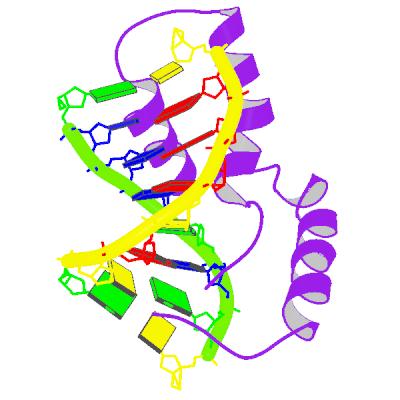
XY complete gonadal dysgenesis, also known as Swyer syndrome, is a condition resulting in a female phenotype in an individual with a 46,XY karyotype. Though they typically have normal vulvas, those affected typically have underdeveloped gonads, fibrous tissue termed "streak gonads", and without hormone replacement therapy, typically will not experience puberty. The cause is often, but not always, inactivation of the SRY gene, which is responsible for sexual differentiation. Pregnancy is sometimes possible in Swyer syndrome with assisted reproductive technology, and, in at least one case, without it.
The syndrome was named after Gerald Swyer, an endocrinologist based at London's University College Hospital, who first reported two cases in 1955.
Those with Swyer syndrome develop phenotypes typical of females and nonfunctional gonads. Individuals are most commonly diagnosed during adolescence after puberty fails to occur.
The consequences of Swyer syndrome without treatment:
Genetic associations of Swyer syndrome include:
Seven other genes have been identified with probable associations that are as yet less clearly understood.
There are several forms of gonadal dysgenesis. The term "pure gonadal dysgenesis" (PGD) has been used to describe conditions with normal sets of sex chromosomes (e.g., 46,XX or 46,XY), as opposed to those whose gonadal dysgenesis results from missing all or part of the second sex chromosome. The latter group includes those with Turner syndrome (i.e., 45,X) and its variants, as well as those with mixed gonadal dysgenesis and a mixture of cell lines, some containing a Y chromosome (e.g., 46,XY/45,X).
Thus Swyer syndrome is referred to as PGD, 46,XY, and XX gonadal dysgenesis as PGD, 46,XX. People with PGD have a normal karyotype but may have defects of a specific gene on a chromosome.
Hub AI
XY gonadal dysgenesis AI simulator
(@XY gonadal dysgenesis_simulator)
XY gonadal dysgenesis
XY complete gonadal dysgenesis, also known as Swyer syndrome, is a condition resulting in a female phenotype in an individual with a 46,XY karyotype. Though they typically have normal vulvas, those affected typically have underdeveloped gonads, fibrous tissue termed "streak gonads", and without hormone replacement therapy, typically will not experience puberty. The cause is often, but not always, inactivation of the SRY gene, which is responsible for sexual differentiation. Pregnancy is sometimes possible in Swyer syndrome with assisted reproductive technology, and, in at least one case, without it.
The syndrome was named after Gerald Swyer, an endocrinologist based at London's University College Hospital, who first reported two cases in 1955.
Those with Swyer syndrome develop phenotypes typical of females and nonfunctional gonads. Individuals are most commonly diagnosed during adolescence after puberty fails to occur.
The consequences of Swyer syndrome without treatment:
Genetic associations of Swyer syndrome include:
Seven other genes have been identified with probable associations that are as yet less clearly understood.
There are several forms of gonadal dysgenesis. The term "pure gonadal dysgenesis" (PGD) has been used to describe conditions with normal sets of sex chromosomes (e.g., 46,XX or 46,XY), as opposed to those whose gonadal dysgenesis results from missing all or part of the second sex chromosome. The latter group includes those with Turner syndrome (i.e., 45,X) and its variants, as well as those with mixed gonadal dysgenesis and a mixture of cell lines, some containing a Y chromosome (e.g., 46,XY/45,X).
Thus Swyer syndrome is referred to as PGD, 46,XY, and XX gonadal dysgenesis as PGD, 46,XX. People with PGD have a normal karyotype but may have defects of a specific gene on a chromosome.
Recent media