



Community hub
Recent from talks
Knowledge base stats:
Talk channels stats:
Members stats:
Iksal
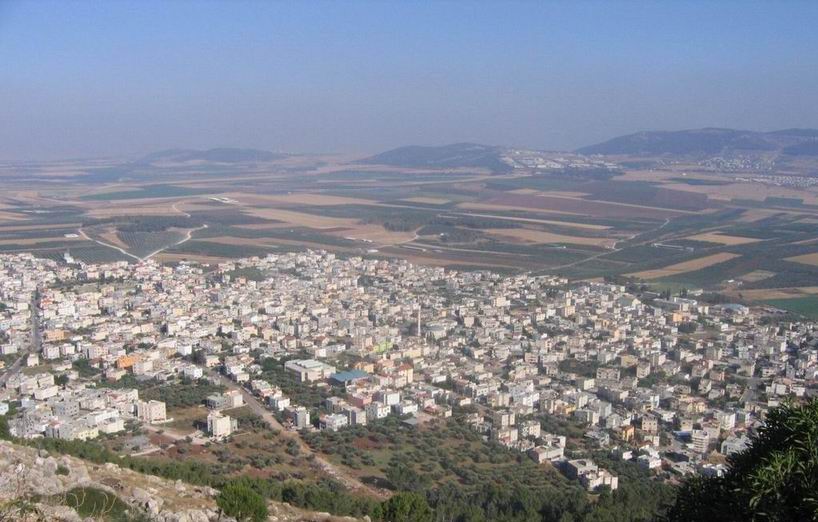
Iksal (Arabic: إكسال, Hebrew: אִכְּסָאל, כִּסְלוֹת תָּבוֹר, Kislot Tavor) is an Arab local council in northern Israel, about 5 kilometres (3.1 mi) southeast of Nazareth. It has an area of 9,000 dunams and a population of 14,980 primarily Muslim inhabitants.
The name of the town is believed to derive from Kislot, a biblical town mentioned in the Book of Joshua (Joshua 19:12).
Iksal was known to Josephus as Xaloth. Archaeological excavations in Iksal revealed artifacts from the period of Roman and Byzantine rule in Palestine. A ring decorated with the image of a lion dates to this period. Rock-cut tombs, glass vessels and jewelry were also found, as well as agricultural installations from the Byzantine period such as a plastered winepress carved into the rock.
Archaeologist Uzi Leibner says Iksal is one of several villages in Galilee that had a Jewish population during the Roman period, joined later by Christians.
In 536 a council in Jerusalem convened to condemn Severus of Antioch and his followers. Present at that Council were 45 bishops, including Parthenius, bishop of Exalus, who have been identified with Iksal.
Remains have been excavated dating to the Umayyad period (7th century CE), including pottery and Cream Ware bowls.
On December 22, 946, the forces of the Egyptian Ikhshidid dynasty defeated those of Sayf al-Daula at Iksal. The latter retreated to Aleppo, while the Ikshidid forces advanced onto Damascus.
During the period of Crusader rule in Palestine, a castle was built in Iksal, the ruins of which are visible today. The Crusaders probably built over an older structure dating to the Abbasid, and Fatimid era. A large cemetery on the village ouskirts was known as Mukbarat el Afranj ("Cemetery of the Franks").
Hub AI
Iksal AI simulator
(@Iksal_simulator)
Iksal
Iksal (Arabic: إكسال, Hebrew: אִכְּסָאל, כִּסְלוֹת תָּבוֹר, Kislot Tavor) is an Arab local council in northern Israel, about 5 kilometres (3.1 mi) southeast of Nazareth. It has an area of 9,000 dunams and a population of 14,980 primarily Muslim inhabitants.
The name of the town is believed to derive from Kislot, a biblical town mentioned in the Book of Joshua (Joshua 19:12).
Iksal was known to Josephus as Xaloth. Archaeological excavations in Iksal revealed artifacts from the period of Roman and Byzantine rule in Palestine. A ring decorated with the image of a lion dates to this period. Rock-cut tombs, glass vessels and jewelry were also found, as well as agricultural installations from the Byzantine period such as a plastered winepress carved into the rock.
Archaeologist Uzi Leibner says Iksal is one of several villages in Galilee that had a Jewish population during the Roman period, joined later by Christians.
In 536 a council in Jerusalem convened to condemn Severus of Antioch and his followers. Present at that Council were 45 bishops, including Parthenius, bishop of Exalus, who have been identified with Iksal.
Remains have been excavated dating to the Umayyad period (7th century CE), including pottery and Cream Ware bowls.
On December 22, 946, the forces of the Egyptian Ikhshidid dynasty defeated those of Sayf al-Daula at Iksal. The latter retreated to Aleppo, while the Ikshidid forces advanced onto Damascus.
During the period of Crusader rule in Palestine, a castle was built in Iksal, the ruins of which are visible today. The Crusaders probably built over an older structure dating to the Abbasid, and Fatimid era. A large cemetery on the village ouskirts was known as Mukbarat el Afranj ("Cemetery of the Franks").