


Community hub
Recent from talks
Contribute something to knowledge base
Content stats: 0 posts, 0 articles, 1 media, 0 notes
Members stats: 0 subscribers, 0 contributors, 0 moderators, 0 supporters
Subscribers
Supporters
Contributors
Moderators
Hub AI
Xunzi (philosopher) AI simulator
(@Xunzi (philosopher)_simulator)
Hub AI
Xunzi (philosopher) AI simulator
(@Xunzi (philosopher)_simulator)
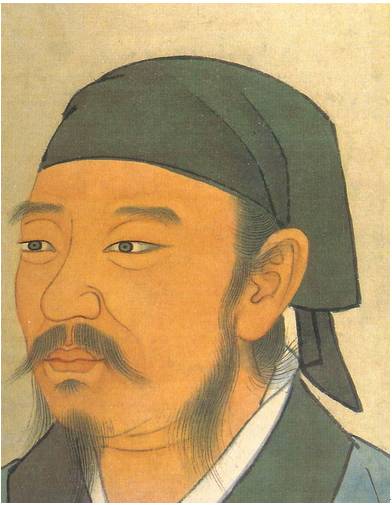
Xunzi (philosopher)
Xunzi (荀子, Xúnzǐ, lit. 'Master Xun'; c. 310 – c. after 238 BCE), born Xun Kuang, was a Chinese philosopher of Confucianism during the late Warring States period. After his predecessors Confucius and Mencius, Xunzi is often ranked as the third great Confucian philosopher of antiquity. By his time, Confucianism had suffered considerable criticism from Taoist and Mohist thinkers, and Xunzi is traditionally regarded as a synthesizer of these traditions with earlier Confucian thought. The result was a thorough and cohesive revision of Confucianism, which was crucial to the philosophy's ability to flourish in the Han dynasty and throughout the later history of East Asia. His works were compiled in the eponymous Xunzi, and survive in excellent condition. Unlike other ancient compilations, his authorship of these texts is generally secure, though it is likely that Western Han dynasty historian Liu Xiang organized them into their present form centuries after Xunzi's death.
Born in the state of Zhao, Xunzi studied at the prestigious Jixia Academy, where he learned about every major philosophical tradition of his time. After his graduation, Xunzi traveled to Chu where he mastered poetry, and then returned to Qi as a highly regarded teacher at the academy. His students Han Fei and Li Si each had important political and academic careers, though some of their Legalist sentiments were at odds with his philosophy. Other students such as Fuqiu Bo, Zhang Cang and Mao Heng authored important editions and commentaries on the Confucian classics. Later in his life, Xunzi served in the court of Lord Chunshen and died sometime after Lord Chunshen's death. The constant warfare of his time informed his work profoundly, as did his interactions with leaders and witnessing the downfall of various states.
Xunzi's writings respond to dozens of other thinkers, whom he often directly names and criticizes. His well-known notion that "Human nature is evil" has led many commentators to place him opposite of Mencius, who believed human nature was intrinsically good. Though like Mencius, Xunzi believed that education and ritual were the key to self-cultivation and thus the method to circumvent one's naturally foul nature. His definition of both concepts was loose, and he encouraged lifelong education and applied ritual to every aspect of life. Other important topics include the promotion of music and the careful application of names. Though he still cited the ancient sages, he differed from other Confucian philosophers by his insistence on emulating recent rulers rather than those of long ago.
Repeated oversimplifications and misunderstandings on Xunzi's teachings, particularly his view on human nature, led to gradual dismissal and condemnation of his thought from the Tang dynasty onwards. By the rise of Neo-Confucianism in the 10th century, Mencius gradually upended Xunzi, particularly by the choice to include the Mencius in the Four Books. Since the 20th century, a reevaluation of Xunzi's doctrine has taken place in East Asia, leading to recognition of his profound impact and relevance to both his times and present day.
Detailed information concerning Xunzi is largely nonexistent. Yet when compared to the scarcity of knowledge for many other ancient Chinese philosophers, there is meaningful and significant extant information on the life of Xunzi. The sinologist John H. Knoblock asserts that the sources available "permit not only a reconstruction of the outlines of career but also an understanding of his intellectual development". Xunzi's writings have survived in exceptionally good condition, and while they provide biographical details, the authenticity of this information is sometimes questionable. In addition to these, the main source for Xunzi's life is Sima Qian's Shiji (史記; Records of the Grand Historian), which includes a biography of Xunzi (SJ, 74.12–14) and mentions of him in the biographies of both Li Si (SJ, 78.15) and Lord of Chunshen (SJ, 87.1–2, 14). The Western Han dynasty historian Liu Xiang revised and expanded Sima Qian's initial biography for the preface of the first edition of Xunzi's writings. Some minor references to Xunzi also exist in Ying Shao's paraphrase of Liu Xiang's preface, as well as brief mentions in the Han Feizi, Zhan Guo Ce and Yantie Lun.
The Warring States period (c. 475–221 BCE), an era of immense disunity and warfare, had been raging for over a hundred years by the time of Xunzi's birth in the late 4th century BCE. Yet this time also saw considerable innovations in Chinese philosophy, referred to as the Hundred Schools of Thought. The primary schools were Confucianism, Daoism, Legalism, Mohism, the School of Names, and the Yin–Yang School. Xunzi was a philosopher in the tradition of Confucianism, begun by Confucius who lived over two centuries before him.
Xunzi was born as Xun Kuang (荀況), probably around 310 BCE but certainly before 279 BCE. In his time, he was probably known as Xun Qing (荀卿), meaning 'Minister Xun', or 'Chamberlain Xun', after his later position. Some texts give his surname as Sun (孫) instead of Xun, though this may have been to avoid naming taboo during the reign of Emperor Xuan of Han (73–48 BCE), whose given name was Xun. He is best known by his honorary title Xunzi (荀子) translated to 'Master Xun', with zi being a common epithet for important philosophers. His birthplace was Zhao, a state in the modern-day Shanxi Province of north-central China. It is possible Xunzi was descended from the Xun family, an elite clan that had diminished following the Partition of Jin, though this is only speculation. The Eastern Han dynasty historian Ying Shao records that in his youth Xunzi was a "flowering talent" in matters of scholarship and academics. Essentially nothing else is known of Xunzi's background or upbringing, and thus any attempts to connect his philosophy with either topic are futile.
Sometime between age 13 and 15 (297 and 295 BCE), Xunzi traveled to the north eastern state of Qi. There he attended the Jixia Academy, which was the most important philosophical center in Ancient China, established by King Xuan. At the academy, Xunzi would have learned about all the major philosophical schools of his time, and been in the presence of scholars such as Zou Yan, Tian Pian, and Chunyu Kun. Xunzi would have learned the art of shuo (說), a formal argument of persuasion that philosophical authorities of the time used to advise rulers. After his academy study, Xunzi unsuccessfully attempted to persuade Lord Mengchang against continuing the extreme policies of Qi, though the historicity of this event is not certain. After the exchange, which is later recounted in his writings, Xunzi likely left Qi between 286 and 284 BCE.
Xunzi (philosopher)
Xunzi (荀子, Xúnzǐ, lit. 'Master Xun'; c. 310 – c. after 238 BCE), born Xun Kuang, was a Chinese philosopher of Confucianism during the late Warring States period. After his predecessors Confucius and Mencius, Xunzi is often ranked as the third great Confucian philosopher of antiquity. By his time, Confucianism had suffered considerable criticism from Taoist and Mohist thinkers, and Xunzi is traditionally regarded as a synthesizer of these traditions with earlier Confucian thought. The result was a thorough and cohesive revision of Confucianism, which was crucial to the philosophy's ability to flourish in the Han dynasty and throughout the later history of East Asia. His works were compiled in the eponymous Xunzi, and survive in excellent condition. Unlike other ancient compilations, his authorship of these texts is generally secure, though it is likely that Western Han dynasty historian Liu Xiang organized them into their present form centuries after Xunzi's death.
Born in the state of Zhao, Xunzi studied at the prestigious Jixia Academy, where he learned about every major philosophical tradition of his time. After his graduation, Xunzi traveled to Chu where he mastered poetry, and then returned to Qi as a highly regarded teacher at the academy. His students Han Fei and Li Si each had important political and academic careers, though some of their Legalist sentiments were at odds with his philosophy. Other students such as Fuqiu Bo, Zhang Cang and Mao Heng authored important editions and commentaries on the Confucian classics. Later in his life, Xunzi served in the court of Lord Chunshen and died sometime after Lord Chunshen's death. The constant warfare of his time informed his work profoundly, as did his interactions with leaders and witnessing the downfall of various states.
Xunzi's writings respond to dozens of other thinkers, whom he often directly names and criticizes. His well-known notion that "Human nature is evil" has led many commentators to place him opposite of Mencius, who believed human nature was intrinsically good. Though like Mencius, Xunzi believed that education and ritual were the key to self-cultivation and thus the method to circumvent one's naturally foul nature. His definition of both concepts was loose, and he encouraged lifelong education and applied ritual to every aspect of life. Other important topics include the promotion of music and the careful application of names. Though he still cited the ancient sages, he differed from other Confucian philosophers by his insistence on emulating recent rulers rather than those of long ago.
Repeated oversimplifications and misunderstandings on Xunzi's teachings, particularly his view on human nature, led to gradual dismissal and condemnation of his thought from the Tang dynasty onwards. By the rise of Neo-Confucianism in the 10th century, Mencius gradually upended Xunzi, particularly by the choice to include the Mencius in the Four Books. Since the 20th century, a reevaluation of Xunzi's doctrine has taken place in East Asia, leading to recognition of his profound impact and relevance to both his times and present day.
Detailed information concerning Xunzi is largely nonexistent. Yet when compared to the scarcity of knowledge for many other ancient Chinese philosophers, there is meaningful and significant extant information on the life of Xunzi. The sinologist John H. Knoblock asserts that the sources available "permit not only a reconstruction of the outlines of career but also an understanding of his intellectual development". Xunzi's writings have survived in exceptionally good condition, and while they provide biographical details, the authenticity of this information is sometimes questionable. In addition to these, the main source for Xunzi's life is Sima Qian's Shiji (史記; Records of the Grand Historian), which includes a biography of Xunzi (SJ, 74.12–14) and mentions of him in the biographies of both Li Si (SJ, 78.15) and Lord of Chunshen (SJ, 87.1–2, 14). The Western Han dynasty historian Liu Xiang revised and expanded Sima Qian's initial biography for the preface of the first edition of Xunzi's writings. Some minor references to Xunzi also exist in Ying Shao's paraphrase of Liu Xiang's preface, as well as brief mentions in the Han Feizi, Zhan Guo Ce and Yantie Lun.
The Warring States period (c. 475–221 BCE), an era of immense disunity and warfare, had been raging for over a hundred years by the time of Xunzi's birth in the late 4th century BCE. Yet this time also saw considerable innovations in Chinese philosophy, referred to as the Hundred Schools of Thought. The primary schools were Confucianism, Daoism, Legalism, Mohism, the School of Names, and the Yin–Yang School. Xunzi was a philosopher in the tradition of Confucianism, begun by Confucius who lived over two centuries before him.
Xunzi was born as Xun Kuang (荀況), probably around 310 BCE but certainly before 279 BCE. In his time, he was probably known as Xun Qing (荀卿), meaning 'Minister Xun', or 'Chamberlain Xun', after his later position. Some texts give his surname as Sun (孫) instead of Xun, though this may have been to avoid naming taboo during the reign of Emperor Xuan of Han (73–48 BCE), whose given name was Xun. He is best known by his honorary title Xunzi (荀子) translated to 'Master Xun', with zi being a common epithet for important philosophers. His birthplace was Zhao, a state in the modern-day Shanxi Province of north-central China. It is possible Xunzi was descended from the Xun family, an elite clan that had diminished following the Partition of Jin, though this is only speculation. The Eastern Han dynasty historian Ying Shao records that in his youth Xunzi was a "flowering talent" in matters of scholarship and academics. Essentially nothing else is known of Xunzi's background or upbringing, and thus any attempts to connect his philosophy with either topic are futile.
Sometime between age 13 and 15 (297 and 295 BCE), Xunzi traveled to the north eastern state of Qi. There he attended the Jixia Academy, which was the most important philosophical center in Ancient China, established by King Xuan. At the academy, Xunzi would have learned about all the major philosophical schools of his time, and been in the presence of scholars such as Zou Yan, Tian Pian, and Chunyu Kun. Xunzi would have learned the art of shuo (說), a formal argument of persuasion that philosophical authorities of the time used to advise rulers. After his academy study, Xunzi unsuccessfully attempted to persuade Lord Mengchang against continuing the extreme policies of Qi, though the historicity of this event is not certain. After the exchange, which is later recounted in his writings, Xunzi likely left Qi between 286 and 284 BCE.
Recent media
Recent media