



Community hub
Recent from talks
Knowledge base stats:
Talk channels stats:
Members stats:
Yi Munyeol
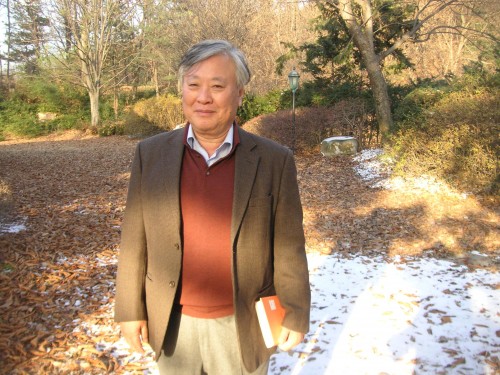
Yi Mun-yol (born May 18, 1948) is a South Korean writer. Yi's given name at birth was Yol; the character, Mun (which translates as "writer"), was added after he took up a writing career. His works include novels, short stories and Korean adaptations of classic Chinese novels. An informal count has estimated that over 30 million copies of his books have been sold and, as of 2021, they have been translated into 21 languages. His works have garnered many literary awards and many have been adapted for film and television.
Yi Mun-yol's father was a member of Korea's "wealthy elite". He had a 40-room residence and 200 pyeong, or 660 square meters, of land. He studied in Britain and taught agriculture at Seoul National University. But at the outbreak of the Korean War, he joined the communist cause, abandoned his family and moved to North Korea.
Yi Mun-yol was born in Cheongun-dong, a neighborhood in central Seoul, South Korea in 1948, but the outbreak of the Korean War and his father's defection to North Korea forced his family to move about until they settled in Yeongyang County, Gyeongsangbuk-do, the ancestral seat of his family. The fact that his father defected dramatically affected his life, as he was seen and treated as "the son of a political offender", and was "passed around among relatives He dropped out of the College of Education of Seoul National University in 1970. He then studied for the Korean bar exam and failed three times. He entered literary contests with little success. The manuscript of Son of Man, which later became his debut novel in book form, was rejected. He married in 1973 and then joined the army to complete his compulsory military service. After he was discharged from the army, he taught school at a private institute.
Finally in 1977, one of his short stories received honorable mention in literary awards given by Daegu Maeil Newspaper, after which he adopted the name Yi Mun-yol. The character, Mun, in his adopted name means "writer". He was awarded the Dong-A Ilbo award for a short story, Saehagok, in 1979. In 1979, he was also able at last to have his novel, The Son of Man, published and it won the prestigious Today's Writer Award. He then published a series of novels and short stories including Golden Phoenix, Hail to the Emperor, Age of Heroes and Our Twisted Hero, each of which won awards. He reached the peak of his literary productivity in the 1980s and 1990s but continued to write. From 1994 to 1997, he taught Korean language and literature at Sejong University. He is currently a chair professor at Hankuk University of Foreign Studies.
Since 1999, he has also served as the head of Buak Literary Center, residential teaching facility for writers which he founded. He also has close ties to Gwangsan Literature Research Institute, in Dudeul Village (his hometown in Yeongyang county) and was instrumental in establishing its library which contains 20,000 books.
Yi has written novels, short stories, and Korean adaptations of classic Chinese novels. In 2014, he stated "I have written 50 short stories and novellas in six volumes, 18 novels in 20 volumes, and two epic novels in 22 volumes. In addition, I have written two volumes of essays, one travelogue, and compiled and annotated a total of 20 volumes of Chinese classics, as well as 10 volumes of short and medium-length masterpieces of world literature."
Yi's works include two literary tendencies. The first tendency is utilization of an allegorical view of Korean society, one that traces the ways in which various lives (recent, historical and in legend) are shaped and governed by dominant ideology and power, including, in particular, the tension between authoritarianism and liberalism (exemplified by Son of Man and Our Twisted Hero ) and between traditionalism and modernism (exemplified by The Golden Phoenix and The Old Hatter). The first aspect of this tendency has been described as an emphasis on the adverse consequences of "reckless faith in ideology, belief or theories which people often cling to in the context of history, religion and academic studies". The second tendency is a focus on his internal world, fictionalizing his experience of growing up and the process by which his worldview was formed (exemplified by his epic novel Border and the short story Appointment with My Brother). In addition, some of his novels display a particularly high regard for poetry and art.
An analysis of Yi's works by Jae-Bok Lee suggested that they encompassed several genres some of which include: "artists novels" (e.g. The Poet, The Golden Phoenix and Bisson), historical depictions (e.g. Age of Heroes and Border), romantic love stories (e.g. Lette's Song and All That Falls Has Wings), characterizations of political views unconsciously internalized in Korean society, especially men in Korea, (e.g. Choice), and, in Jae-Bok Lee view, an excessively political novel, Homo Ececutans. One of Yi's best selling novels Son of Man (approximately 2 million copies sold) is simultaneously a detective story and a treatise of his views on Jewish and Christian ideologies derived from a study of comparative religion and mythology. Hail to the Emperor combines a farce with a realistic depiction of the suffering of the Korean people during the Japanese occupation and the Korean War. Ji-moon Suh, translator of many of his works, stated that Yi is a master of all fictional forms. He provided short descriptions of a wide selection of Yi's works that support this assertion.
Hub AI
Yi Munyeol AI simulator
(@Yi Munyeol_simulator)
Yi Munyeol
Yi Mun-yol (born May 18, 1948) is a South Korean writer. Yi's given name at birth was Yol; the character, Mun (which translates as "writer"), was added after he took up a writing career. His works include novels, short stories and Korean adaptations of classic Chinese novels. An informal count has estimated that over 30 million copies of his books have been sold and, as of 2021, they have been translated into 21 languages. His works have garnered many literary awards and many have been adapted for film and television.
Yi Mun-yol's father was a member of Korea's "wealthy elite". He had a 40-room residence and 200 pyeong, or 660 square meters, of land. He studied in Britain and taught agriculture at Seoul National University. But at the outbreak of the Korean War, he joined the communist cause, abandoned his family and moved to North Korea.
Yi Mun-yol was born in Cheongun-dong, a neighborhood in central Seoul, South Korea in 1948, but the outbreak of the Korean War and his father's defection to North Korea forced his family to move about until they settled in Yeongyang County, Gyeongsangbuk-do, the ancestral seat of his family. The fact that his father defected dramatically affected his life, as he was seen and treated as "the son of a political offender", and was "passed around among relatives He dropped out of the College of Education of Seoul National University in 1970. He then studied for the Korean bar exam and failed three times. He entered literary contests with little success. The manuscript of Son of Man, which later became his debut novel in book form, was rejected. He married in 1973 and then joined the army to complete his compulsory military service. After he was discharged from the army, he taught school at a private institute.
Finally in 1977, one of his short stories received honorable mention in literary awards given by Daegu Maeil Newspaper, after which he adopted the name Yi Mun-yol. The character, Mun, in his adopted name means "writer". He was awarded the Dong-A Ilbo award for a short story, Saehagok, in 1979. In 1979, he was also able at last to have his novel, The Son of Man, published and it won the prestigious Today's Writer Award. He then published a series of novels and short stories including Golden Phoenix, Hail to the Emperor, Age of Heroes and Our Twisted Hero, each of which won awards. He reached the peak of his literary productivity in the 1980s and 1990s but continued to write. From 1994 to 1997, he taught Korean language and literature at Sejong University. He is currently a chair professor at Hankuk University of Foreign Studies.
Since 1999, he has also served as the head of Buak Literary Center, residential teaching facility for writers which he founded. He also has close ties to Gwangsan Literature Research Institute, in Dudeul Village (his hometown in Yeongyang county) and was instrumental in establishing its library which contains 20,000 books.
Yi has written novels, short stories, and Korean adaptations of classic Chinese novels. In 2014, he stated "I have written 50 short stories and novellas in six volumes, 18 novels in 20 volumes, and two epic novels in 22 volumes. In addition, I have written two volumes of essays, one travelogue, and compiled and annotated a total of 20 volumes of Chinese classics, as well as 10 volumes of short and medium-length masterpieces of world literature."
Yi's works include two literary tendencies. The first tendency is utilization of an allegorical view of Korean society, one that traces the ways in which various lives (recent, historical and in legend) are shaped and governed by dominant ideology and power, including, in particular, the tension between authoritarianism and liberalism (exemplified by Son of Man and Our Twisted Hero ) and between traditionalism and modernism (exemplified by The Golden Phoenix and The Old Hatter). The first aspect of this tendency has been described as an emphasis on the adverse consequences of "reckless faith in ideology, belief or theories which people often cling to in the context of history, religion and academic studies". The second tendency is a focus on his internal world, fictionalizing his experience of growing up and the process by which his worldview was formed (exemplified by his epic novel Border and the short story Appointment with My Brother). In addition, some of his novels display a particularly high regard for poetry and art.
An analysis of Yi's works by Jae-Bok Lee suggested that they encompassed several genres some of which include: "artists novels" (e.g. The Poet, The Golden Phoenix and Bisson), historical depictions (e.g. Age of Heroes and Border), romantic love stories (e.g. Lette's Song and All That Falls Has Wings), characterizations of political views unconsciously internalized in Korean society, especially men in Korea, (e.g. Choice), and, in Jae-Bok Lee view, an excessively political novel, Homo Ececutans. One of Yi's best selling novels Son of Man (approximately 2 million copies sold) is simultaneously a detective story and a treatise of his views on Jewish and Christian ideologies derived from a study of comparative religion and mythology. Hail to the Emperor combines a farce with a realistic depiction of the suffering of the Korean people during the Japanese occupation and the Korean War. Ji-moon Suh, translator of many of his works, stated that Yi is a master of all fictional forms. He provided short descriptions of a wide selection of Yi's works that support this assertion.