



Community hub
Recent from talks
Contribute something to knowledge base
Content stats: 0 posts, 0 articles, 1 media, 0 notes
Members stats: 0 subscribers, 0 contributors, 0 moderators, 0 supporters
Subscribers
Supporters
Contributors
Moderators
Hub AI
Yixuan, Prince Chun AI simulator
(@Yixuan, Prince Chun_simulator)
Hub AI
Yixuan, Prince Chun AI simulator
(@Yixuan, Prince Chun_simulator)
Yixuan, Prince Chun
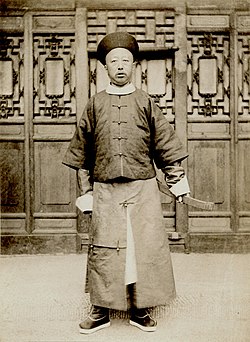
Yixuan (16 October 1840 – 1 January 1891), formally known as Prince Chun, was an imperial prince of the House of Aisin-Gioro and a statesman of the Manchu-led Qing dynasty in China. He holds a special place in Qing history as the son of the Daoguang Emperor, younger half-brother of the Xianfeng Emperor, father of the Guangxu Emperor (his second son) and through his fifth son Zaifeng, the paternal grandfather of the Xuantong Emperor (Puyi), the last Emperor of China.
Yixuan was born in the Aisin-Gioro clan as the seventh son of the Daoguang Emperor. His mother was Imperial Noble Consort Zhuangshun of the Uya (烏雅氏) clan. Four months after his birth, Lady Uya, a who was recently promoted to "Noble Lady Lin" (琳貴人), was further elevated to the status of "Imperial Concubine Lin" (琳嬪), a rare distinction. Lady Uya's rapid rise through the ranks continued, and she was promoted to "Consort Lin" (琳妃) and "Noble Consort Lin" (琳貴妃) in 1842 and 1847 respectively. The Tongzhi Emperor granted her the posthumous title "Imperial Noble Consort Zhuangshun" (莊順皇貴妃).
In February 1850, after the Daoguang Emperor's death, Yixuan's fourth brother, Yizhu, ascended the throne and became historically known as the Xianfeng Emperor. The Xianfeng Emperor made Yixuan a junwang (second-rank prince) under the title "Prince Chun of the Second Rank" (醇郡王). Yixuan kept a low profile in politics throughout the Xianfeng Emperor's 11-year reign.
In 1860, by the Xianfeng Emperor's decree, Yixuan married Wanzhen of the Yehe Nara clan, who was the younger sister of Empress Dowager Cixi, who at that time was one of the Xianfeng Emperor's consorts. The marriage forged a close bond between Yixuan and Empress Dowager Cixi. The Xianfeng Emperor died in August 1861, leaving the throne to his five-year-old son, Zaichun, who would reign as the Tongzhi Emperor. On the Xianfeng Emperor's death, a power struggle emerged over the regency for the emperor, with one faction led by Sushun, and princes Duanhua and Zaiyuan, and another faction led by Yixuan's sixth brother, Prince Gong, as well as the Xianfeng Emperor's empress, honoured with the title of Empress Dowager Ci'an, and Noble Consort Yi, the mother of the new emperor, honored with the title of Empress Dowager Cixi. In November 1861, Yixuan sided with Prince Gong and the two dowager empresses and launched the Xinyou Coup to seize the regency from Sushun and his faction. Yixuan personally led imperial forces to arrest Sushun and bring him back to Beijing, where he was executed.
As a consequence of the Xinyou Coup, Yixuan found himself elevated to the highest ranks in the imperial court. In the 14-year reign of the Tongzhi Emperor from 1861 to 1875, he had a dual career in the military and civil services. In 1872, he was promoted from junwang (second-rank prince) to a qinwang (first-rank prince), hence he became known as "Prince Chun of the First Rank" (醇親王). In 1874, he was dismissed from office by the Tongzhi Emperor, along with Prince Gong, and several others, due to his involvement in a reprimand of the emperor for his poor conduct, only to be reinstated, along with the others, thanks to the intervention of the dowager empresses.
In January 1875, the Tongzhi Emperor died without an heir, so Empress Dowager Cixi chose Yixuan's second son, Zaitian, to be the new emperor. Zaitian was adopted into the Xianfeng Emperor's lineage; this meant that he was nominally no longer Yixuan's son. As the Xianfeng Emperor's "son", Zaitian was installed on the throne and became historically known as the Guangxu Emperor. This choice brought advantages to Cixi: Zaitian was her nephew (Zaitian's mother, Wanzhen, was Cixi's younger sister); Zaitian's father, Yixuan, had been a loyal supporter of Cixi; Zaitian was still young so Cixi could continue ruling as regent. As for Yixuan himself, however, Cixi's choice was a catastrophe for him. When he heard that his son had been chosen to be the new emperor, he reportedly hit himself and wept bitterly before sinking into unconsciousness.
In the last centuries of imperial China, it was very unusual for an emperor's father to be still alive while the emperor was reigning. The only prior example in the Qing dynasty was that of the situation between 1796 and 1799, when the Qianlong Emperor abdicated in favour of his 15th son, the Jiaqing Emperor, and became a taishang huang (retired emperor). Since filial piety is a highly revered value in Chinese culture, it meant that Yixuan, the biological father of the reigning emperor, would be endowed with the highest honours and privileges. However, Yixuan perceived himself to be in an extremely dangerous and uncomfortable position, given the prickly nature of Empress Dowager Cixi and her obsessional paranoia of any potential threat to her status.
The first decision that Yixuan made, after his son became the emperor, was to resign from all his official positions. He tried to keep a low profile but could not avoid being showered with honours and privileges, which he tried to decline as much as possible. Soon after his son became the emperor, Yixuan was awarded the "iron-cap" privilege, which meant that he could pass on his Prince Chun title to his descendants without the title being downgraded one grade per generation.
Yixuan, Prince Chun
Yixuan (16 October 1840 – 1 January 1891), formally known as Prince Chun, was an imperial prince of the House of Aisin-Gioro and a statesman of the Manchu-led Qing dynasty in China. He holds a special place in Qing history as the son of the Daoguang Emperor, younger half-brother of the Xianfeng Emperor, father of the Guangxu Emperor (his second son) and through his fifth son Zaifeng, the paternal grandfather of the Xuantong Emperor (Puyi), the last Emperor of China.
Yixuan was born in the Aisin-Gioro clan as the seventh son of the Daoguang Emperor. His mother was Imperial Noble Consort Zhuangshun of the Uya (烏雅氏) clan. Four months after his birth, Lady Uya, a who was recently promoted to "Noble Lady Lin" (琳貴人), was further elevated to the status of "Imperial Concubine Lin" (琳嬪), a rare distinction. Lady Uya's rapid rise through the ranks continued, and she was promoted to "Consort Lin" (琳妃) and "Noble Consort Lin" (琳貴妃) in 1842 and 1847 respectively. The Tongzhi Emperor granted her the posthumous title "Imperial Noble Consort Zhuangshun" (莊順皇貴妃).
In February 1850, after the Daoguang Emperor's death, Yixuan's fourth brother, Yizhu, ascended the throne and became historically known as the Xianfeng Emperor. The Xianfeng Emperor made Yixuan a junwang (second-rank prince) under the title "Prince Chun of the Second Rank" (醇郡王). Yixuan kept a low profile in politics throughout the Xianfeng Emperor's 11-year reign.
In 1860, by the Xianfeng Emperor's decree, Yixuan married Wanzhen of the Yehe Nara clan, who was the younger sister of Empress Dowager Cixi, who at that time was one of the Xianfeng Emperor's consorts. The marriage forged a close bond between Yixuan and Empress Dowager Cixi. The Xianfeng Emperor died in August 1861, leaving the throne to his five-year-old son, Zaichun, who would reign as the Tongzhi Emperor. On the Xianfeng Emperor's death, a power struggle emerged over the regency for the emperor, with one faction led by Sushun, and princes Duanhua and Zaiyuan, and another faction led by Yixuan's sixth brother, Prince Gong, as well as the Xianfeng Emperor's empress, honoured with the title of Empress Dowager Ci'an, and Noble Consort Yi, the mother of the new emperor, honored with the title of Empress Dowager Cixi. In November 1861, Yixuan sided with Prince Gong and the two dowager empresses and launched the Xinyou Coup to seize the regency from Sushun and his faction. Yixuan personally led imperial forces to arrest Sushun and bring him back to Beijing, where he was executed.
As a consequence of the Xinyou Coup, Yixuan found himself elevated to the highest ranks in the imperial court. In the 14-year reign of the Tongzhi Emperor from 1861 to 1875, he had a dual career in the military and civil services. In 1872, he was promoted from junwang (second-rank prince) to a qinwang (first-rank prince), hence he became known as "Prince Chun of the First Rank" (醇親王). In 1874, he was dismissed from office by the Tongzhi Emperor, along with Prince Gong, and several others, due to his involvement in a reprimand of the emperor for his poor conduct, only to be reinstated, along with the others, thanks to the intervention of the dowager empresses.
In January 1875, the Tongzhi Emperor died without an heir, so Empress Dowager Cixi chose Yixuan's second son, Zaitian, to be the new emperor. Zaitian was adopted into the Xianfeng Emperor's lineage; this meant that he was nominally no longer Yixuan's son. As the Xianfeng Emperor's "son", Zaitian was installed on the throne and became historically known as the Guangxu Emperor. This choice brought advantages to Cixi: Zaitian was her nephew (Zaitian's mother, Wanzhen, was Cixi's younger sister); Zaitian's father, Yixuan, had been a loyal supporter of Cixi; Zaitian was still young so Cixi could continue ruling as regent. As for Yixuan himself, however, Cixi's choice was a catastrophe for him. When he heard that his son had been chosen to be the new emperor, he reportedly hit himself and wept bitterly before sinking into unconsciousness.
In the last centuries of imperial China, it was very unusual for an emperor's father to be still alive while the emperor was reigning. The only prior example in the Qing dynasty was that of the situation between 1796 and 1799, when the Qianlong Emperor abdicated in favour of his 15th son, the Jiaqing Emperor, and became a taishang huang (retired emperor). Since filial piety is a highly revered value in Chinese culture, it meant that Yixuan, the biological father of the reigning emperor, would be endowed with the highest honours and privileges. However, Yixuan perceived himself to be in an extremely dangerous and uncomfortable position, given the prickly nature of Empress Dowager Cixi and her obsessional paranoia of any potential threat to her status.
The first decision that Yixuan made, after his son became the emperor, was to resign from all his official positions. He tried to keep a low profile but could not avoid being showered with honours and privileges, which he tried to decline as much as possible. Soon after his son became the emperor, Yixuan was awarded the "iron-cap" privilege, which meant that he could pass on his Prince Chun title to his descendants without the title being downgraded one grade per generation.
Recent media
Recent media