



Community hub
Recent from talks
Contribute something to knowledge base
Content stats: 0 posts, 0 articles, 1 media, 0 notes
Members stats: 0 subscribers, 0 contributors, 0 moderators, 0 supporters
Subscribers
Supporters
Contributors
Moderators
Hub AI
Yoshihide Suga AI simulator
(@Yoshihide Suga_simulator)
Hub AI
Yoshihide Suga AI simulator
(@Yoshihide Suga_simulator)
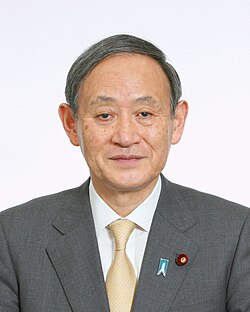
Yoshihide Suga
Yoshihide Suga (菅 義偉, Suga Yoshihide; born 6 December 1948) is a Japanese former politician who served as Prime Minister of Japan from 2020 to 2021. A member of the Liberal Democratic Party (LDP), he was the party's president from 2020 to 2021 and also represented Kanagawa 2nd in the House of Representatives from 1996 to 2026. Before his premiership, he was the Minister for Internal Affairs and Communications from 2006 to 2007, and the longest serving Chief Cabinet Secretary during the second administration of Prime Minister Shinzo Abe from 2012 to 2020.
Born to a family of strawberry farmers in rural Akita Prefecture, Suga moved to Tokyo after graduating from high school, where he enrolled in Hosei University. Shortly after graduating, Suga became an aide to Representative Hikosaburo Okonogi in 1975, before entering politics himself when he was elected to the Yokohama Municipal Assembly in 1987. In the 1996 election, Suga was elected to the House of Representatives, representing Kanagawa's 2nd district as a member of the Liberal Democratic Party (LDP).
During his time in the Diet, Suga became a close ally of Chief Cabinet Secretary Shinzo Abe. When Abe first became prime minister in 2006, he appointed Suga to the Cabinet as Minister for Internal Affairs and Communications. Suga left the Cabinet a year later, but after the LDP won the 2012 election, Suga was appointed Chief Cabinet Secretary, a role he would hold throughout Abe's second term as prime minister. This made him the longest-serving Chief Cabinet Secretary in Japanese history. In September 2020, after Abe announced that he would resign due to health concerns, Suga was elected to succeed him in the LDP presidential election and was subsequently elected prime minister by the Diet and appointed by Emperor Naruhito.
Suga's premiership focused primarily on responding to the COVID-19 pandemic, including overseeing the rollout of vaccines in the country. Suga's time in office also saw the holding of the delayed 2020 Summer Olympics and Paralympics in Tokyo and the announcement of a plan for Japan to reach carbon neutrality by 2050. While Suga began his time in office relatively popular, his approval ratings fell due to public dissatisfaction with the government's handling of the pandemic and the Olympic Games. Facing hesitancy from his party amid preparation for the upcoming 2021 general election, Suga announced on 3 September 2021 that he would not seek reelection in the 2021 LDP presidential election, effectively resigning as party president and prime minister. His tenure officially ended on 4 October 2021 after he was succeeded by Fumio Kishida. From 2024 to 2025, he served as the LDP's vice president. Suga retired from public office in February 2026 following that month's lower house election.
Yoshihide Suga was born on 6 December 1948, to a family of strawberry farmers in Ogachi (now Yuzawa), a rural area in Akita Prefecture, and moved to Tokyo after graduation from Yuzawa High School. He attended night school to earn a Bachelor of Laws from Hosei University in 1973. Suga chose Hosei "because it was the cheapest option available" and he "worked in a cardboard factory in Tokyo to pay his tuition".
After graduating from university, Suga worked on a House of Councillors (upper house) election campaign, and thereafter worked as secretary to LDP Diet Member Hikosaburo Okonogi, father of LDP politician Hachiro Okonogi, for eleven years. Suga resigned from this position in October 1986 to pursue his own career in politics. He was elected to the Yokohama City Council in April 1987, campaigning door-to-door on foot, visiting as many as 30,000 houses and wearing through six pairs of shoes. He pioneered the practice of giving campaign speeches in front of busy train stations, which is now common among Japanese political candidates. Despite being a young councilor, Suga presided over the highest levels of government, which earned him the nickname "the shadow mayor".
Suga was elected to the Diet of Japan in the 1996 general election, representing the Kanagawa 2nd district. In his third year in the Diet, he shifted his support from Prime Minister Keizo Obuchi to former LDP Secretary-General Seiroku Kajiyama, an unusual move for a junior legislator. He was re-elected in the 2000 general election, 2003 general election, and 2005 general election.
Suga was appointed Senior Vice Minister for Internal Affairs and Communications in November 2005 under Prime Minister Junichiro Koizumi. He was promoted to Minister of Internal Affairs and Communications and Minister for Privatization of the Postal Services in the first Shinzo Abe cabinet in September 2006, and added the portfolio of Minister of State for Decentralization Reform in December 2006. He was instrumental in the development of Japan's "hometown donation" (ふるさと納税, furusato nōzei) system, which allowed taxpayers to obtain deductions by donating money to local governments. He was replaced by Hiroya Masuda in a cabinet reshuffle in August 2007.
Yoshihide Suga
Yoshihide Suga (菅 義偉, Suga Yoshihide; born 6 December 1948) is a Japanese former politician who served as Prime Minister of Japan from 2020 to 2021. A member of the Liberal Democratic Party (LDP), he was the party's president from 2020 to 2021 and also represented Kanagawa 2nd in the House of Representatives from 1996 to 2026. Before his premiership, he was the Minister for Internal Affairs and Communications from 2006 to 2007, and the longest serving Chief Cabinet Secretary during the second administration of Prime Minister Shinzo Abe from 2012 to 2020.
Born to a family of strawberry farmers in rural Akita Prefecture, Suga moved to Tokyo after graduating from high school, where he enrolled in Hosei University. Shortly after graduating, Suga became an aide to Representative Hikosaburo Okonogi in 1975, before entering politics himself when he was elected to the Yokohama Municipal Assembly in 1987. In the 1996 election, Suga was elected to the House of Representatives, representing Kanagawa's 2nd district as a member of the Liberal Democratic Party (LDP).
During his time in the Diet, Suga became a close ally of Chief Cabinet Secretary Shinzo Abe. When Abe first became prime minister in 2006, he appointed Suga to the Cabinet as Minister for Internal Affairs and Communications. Suga left the Cabinet a year later, but after the LDP won the 2012 election, Suga was appointed Chief Cabinet Secretary, a role he would hold throughout Abe's second term as prime minister. This made him the longest-serving Chief Cabinet Secretary in Japanese history. In September 2020, after Abe announced that he would resign due to health concerns, Suga was elected to succeed him in the LDP presidential election and was subsequently elected prime minister by the Diet and appointed by Emperor Naruhito.
Suga's premiership focused primarily on responding to the COVID-19 pandemic, including overseeing the rollout of vaccines in the country. Suga's time in office also saw the holding of the delayed 2020 Summer Olympics and Paralympics in Tokyo and the announcement of a plan for Japan to reach carbon neutrality by 2050. While Suga began his time in office relatively popular, his approval ratings fell due to public dissatisfaction with the government's handling of the pandemic and the Olympic Games. Facing hesitancy from his party amid preparation for the upcoming 2021 general election, Suga announced on 3 September 2021 that he would not seek reelection in the 2021 LDP presidential election, effectively resigning as party president and prime minister. His tenure officially ended on 4 October 2021 after he was succeeded by Fumio Kishida. From 2024 to 2025, he served as the LDP's vice president. Suga retired from public office in February 2026 following that month's lower house election.
Yoshihide Suga was born on 6 December 1948, to a family of strawberry farmers in Ogachi (now Yuzawa), a rural area in Akita Prefecture, and moved to Tokyo after graduation from Yuzawa High School. He attended night school to earn a Bachelor of Laws from Hosei University in 1973. Suga chose Hosei "because it was the cheapest option available" and he "worked in a cardboard factory in Tokyo to pay his tuition".
After graduating from university, Suga worked on a House of Councillors (upper house) election campaign, and thereafter worked as secretary to LDP Diet Member Hikosaburo Okonogi, father of LDP politician Hachiro Okonogi, for eleven years. Suga resigned from this position in October 1986 to pursue his own career in politics. He was elected to the Yokohama City Council in April 1987, campaigning door-to-door on foot, visiting as many as 30,000 houses and wearing through six pairs of shoes. He pioneered the practice of giving campaign speeches in front of busy train stations, which is now common among Japanese political candidates. Despite being a young councilor, Suga presided over the highest levels of government, which earned him the nickname "the shadow mayor".
Suga was elected to the Diet of Japan in the 1996 general election, representing the Kanagawa 2nd district. In his third year in the Diet, he shifted his support from Prime Minister Keizo Obuchi to former LDP Secretary-General Seiroku Kajiyama, an unusual move for a junior legislator. He was re-elected in the 2000 general election, 2003 general election, and 2005 general election.
Suga was appointed Senior Vice Minister for Internal Affairs and Communications in November 2005 under Prime Minister Junichiro Koizumi. He was promoted to Minister of Internal Affairs and Communications and Minister for Privatization of the Postal Services in the first Shinzo Abe cabinet in September 2006, and added the portfolio of Minister of State for Decentralization Reform in December 2006. He was instrumental in the development of Japan's "hometown donation" (ふるさと納税, furusato nōzei) system, which allowed taxpayers to obtain deductions by donating money to local governments. He was replaced by Hiroya Masuda in a cabinet reshuffle in August 2007.
Recent media
Recent media