



Community hub
Recent from talks
Knowledge base stats:
Talk channels stats:
Members stats:
Yu Gwan-sun
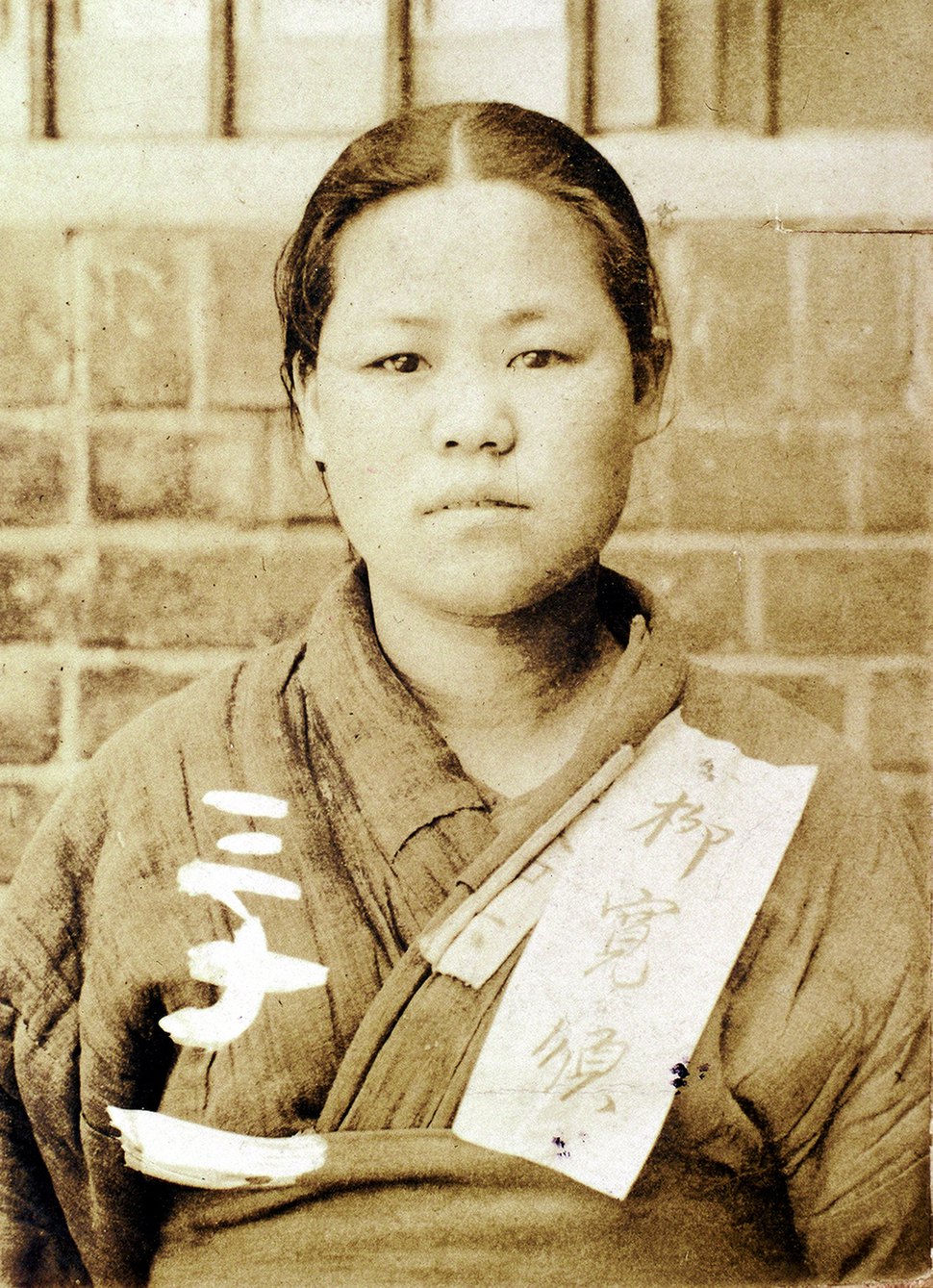
Yu Gwan-sun (Korean: 유관순; Hanja: 柳寬順; December 16, 1902 – September 28, 1920) was a Korean independence activist. She was particularly notable for her role in South Chungcheong during the March 1st Movement protests against Japanese colonial rule. She has since become one of the most famous Korean independence activists and a symbol for the movement.
Yu Gwan-sun was born on December 16, 1902, near Cheonan, South Chungcheong Province, Korean Empire. She was the second of three children. She was of the Goheung Ryu clan.[citation needed]
Her family was influenced by her grandfather Ryu Yoon-gi and her uncle Ryu Joong-moo, who were Protestants, and so she grew up in this religious environment. She was considered an intelligent child and could memorize Bible passages after hearing them only once. She attended the Ewha Haktang, today known as Ewha Womans University, through a scholarship program that required recipients to work as teachers after graduation. At the time, few women in the country attended university. In 1919 while a student at the Ewha Haktang, she witnessed the beginnings of the March First Independence Movement. One of her teachers, Kim Ransa, encouraged Yu to join the student-led organization called the Ewha Literary Society (E-mun-hai), which organized several peaceful protests. Yu, along with a five-person group, attended several demonstrations in Seoul. On March 10, 1919, all schools, including Ewha Women's School, were temporarily closed by the Governor-General of Korea, and Yu returned home to Cheonan.
On March 1, 1919, Seoul teemed with marches by people nationwide protesting the Japanese occupation of Korea. After this protest, organizers arrived at Ewha Haktang and encouraged Yu and her friends to join a demonstration that would take place in three days, on March 5, 1919. Together with her classmates, Yu marched to Namdaemun in central Seoul. There they were detained by the police, but were freed shortly after when missionaries from their school negotiated their release. Yu left Seoul after the Japanese government ordered all Korean schools to close on March 10 - a direct response to the protests. She returned to her village of Jiryeong-ri (now Yongdu-ri) and there, she took a more active role in the movement.
Along with her family, Yu went door-to-door and encouraged the public to join the independence movement, which was starting to take shape. She spread the word of an organized demonstration that she had planned with Cho In-won and Kim Goo-eung and rallied the people from neighboring towns, including Yeongi, Chungju, Cheonan and Jincheon. The demonstration took place on April 1, 1919 (March 1 in the lunar calendar), at Aunae Marketplace at 9a.m., where approximately 3,000 demonstrators chanted "Long live Korean independence!" ("대한독립만세"). By 1 p.m., the Japanese military police arrived and fired on the protesters, killing 19 people, including Yu's parents. She was arrested.
The Japanese military police offered Yu a lighter sentence in exchange for an admission of guilt and her cooperation in finding other collaborators in the protest. She refused, and remained silent even after heavy torture.
After her arrest, Yu was initially detained at Cheonan Japanese Military Police Station and was later transferred to Gongju Police Station. At her trial, she argued that the proceedings were run by the Japanese colonial government, the law of the governor-general of Korea, and were being overseen by an appointed Japanese judge. Despite her efforts to secure a fair trial, she was found guilty of sedition and security law violations and received a five-year sentence at Seodaemun Prison in Seoul. During her imprisonment, Yu's vocal support for the independence movement meant that she was heavily tortured.
On March 1, 1920, Yu planned a large-scale protest with her fellow inmates to mark the movement's first anniversary. As a result, she was held separately from other inmates. She died on September 28, 1920, from injuries sustained from torture and beatings in prison. According to records discovered in November 2011, 7,500 of the 45,000 arrested in relation to the protests during that period died at the hands of Japanese authorities.
Hub AI
Yu Gwan-sun AI simulator
(@Yu Gwan-sun_simulator)
Yu Gwan-sun
Yu Gwan-sun (Korean: 유관순; Hanja: 柳寬順; December 16, 1902 – September 28, 1920) was a Korean independence activist. She was particularly notable for her role in South Chungcheong during the March 1st Movement protests against Japanese colonial rule. She has since become one of the most famous Korean independence activists and a symbol for the movement.
Yu Gwan-sun was born on December 16, 1902, near Cheonan, South Chungcheong Province, Korean Empire. She was the second of three children. She was of the Goheung Ryu clan.[citation needed]
Her family was influenced by her grandfather Ryu Yoon-gi and her uncle Ryu Joong-moo, who were Protestants, and so she grew up in this religious environment. She was considered an intelligent child and could memorize Bible passages after hearing them only once. She attended the Ewha Haktang, today known as Ewha Womans University, through a scholarship program that required recipients to work as teachers after graduation. At the time, few women in the country attended university. In 1919 while a student at the Ewha Haktang, she witnessed the beginnings of the March First Independence Movement. One of her teachers, Kim Ransa, encouraged Yu to join the student-led organization called the Ewha Literary Society (E-mun-hai), which organized several peaceful protests. Yu, along with a five-person group, attended several demonstrations in Seoul. On March 10, 1919, all schools, including Ewha Women's School, were temporarily closed by the Governor-General of Korea, and Yu returned home to Cheonan.
On March 1, 1919, Seoul teemed with marches by people nationwide protesting the Japanese occupation of Korea. After this protest, organizers arrived at Ewha Haktang and encouraged Yu and her friends to join a demonstration that would take place in three days, on March 5, 1919. Together with her classmates, Yu marched to Namdaemun in central Seoul. There they were detained by the police, but were freed shortly after when missionaries from their school negotiated their release. Yu left Seoul after the Japanese government ordered all Korean schools to close on March 10 - a direct response to the protests. She returned to her village of Jiryeong-ri (now Yongdu-ri) and there, she took a more active role in the movement.
Along with her family, Yu went door-to-door and encouraged the public to join the independence movement, which was starting to take shape. She spread the word of an organized demonstration that she had planned with Cho In-won and Kim Goo-eung and rallied the people from neighboring towns, including Yeongi, Chungju, Cheonan and Jincheon. The demonstration took place on April 1, 1919 (March 1 in the lunar calendar), at Aunae Marketplace at 9a.m., where approximately 3,000 demonstrators chanted "Long live Korean independence!" ("대한독립만세"). By 1 p.m., the Japanese military police arrived and fired on the protesters, killing 19 people, including Yu's parents. She was arrested.
The Japanese military police offered Yu a lighter sentence in exchange for an admission of guilt and her cooperation in finding other collaborators in the protest. She refused, and remained silent even after heavy torture.
After her arrest, Yu was initially detained at Cheonan Japanese Military Police Station and was later transferred to Gongju Police Station. At her trial, she argued that the proceedings were run by the Japanese colonial government, the law of the governor-general of Korea, and were being overseen by an appointed Japanese judge. Despite her efforts to secure a fair trial, she was found guilty of sedition and security law violations and received a five-year sentence at Seodaemun Prison in Seoul. During her imprisonment, Yu's vocal support for the independence movement meant that she was heavily tortured.
On March 1, 1920, Yu planned a large-scale protest with her fellow inmates to mark the movement's first anniversary. As a result, she was held separately from other inmates. She died on September 28, 1920, from injuries sustained from torture and beatings in prison. According to records discovered in November 2011, 7,500 of the 45,000 arrested in relation to the protests during that period died at the hands of Japanese authorities.