



Community hub
Recent from talks
Knowledge base stats:
Talk channels stats:
Members stats:
Kyūdō
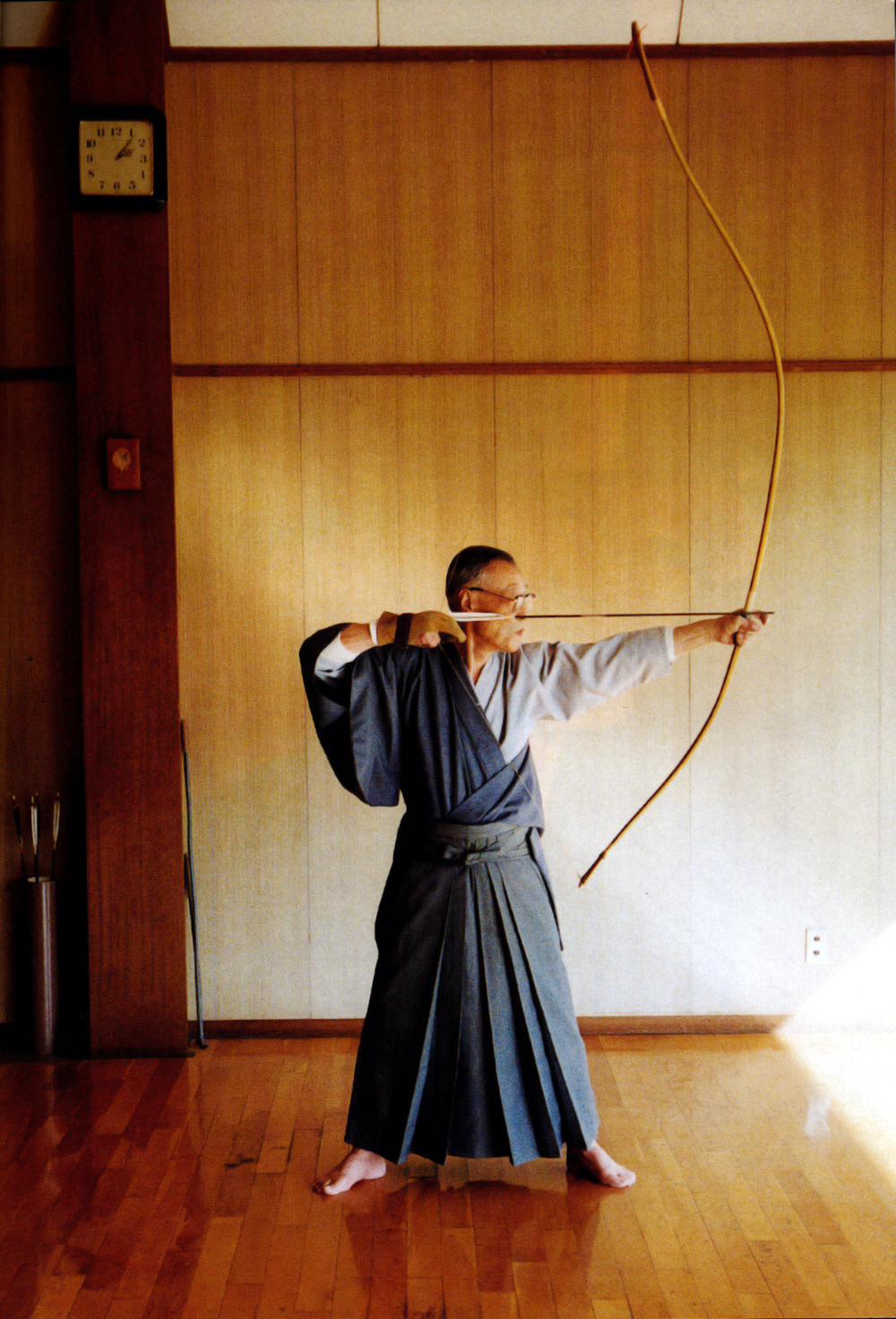
Kyūdō (Japanese: 弓道) is the Japanese martial art of archery. Kyūdō is based on kyūjutsu ("art of archery"), which originated with the samurai class of feudal Japan. In 1919, the name of kyūjutsu was officially changed to kyūdō, and following the example of other martial arts that have been systematizing for educational purposes, kyūdō also reorganized and integrated various forms of shooting that had been used up until then. Many practitioners may refer to themselves as yumihiki (弓引き), or 'ones who draw the bow'. Kyūdō is practised by over a hundred thousand people worldwide. The bow they use is called a yumi (弓). It has an asymmetrical shape and length of more than 2.0 metres (6 ft 7 in), and its use is characterized by the archer gripping the lower third of the bow stave to shoot.
The beginning of archery in Japan is pre-historical. The first images picturing the distinct Japanese asymmetrical longbow are found on Dōtaku from the Yayoi period (c. 500 BC – 300 AD).
The changing of society and the samurai class taking power at the end of the Heian period (794-1185) created a requirement for education in archery. This led to the birth of the first kyūjutsu ryū-ha (流派, style), the Henmi-ryū (逸見流), founded by Henmi Kiyomitsu (ja:源清光) in the 12th century. The Takeda-ryū (ja:武田流) and the mounted archery school Ogasawara-ryū (ja:小笠原流) were later founded by his descendants. The need for archers grew dramatically during the Genpei War (1180–1185) and as a result the founder of the Ogasawara-ryū, Ogasawara Nagakiyo,
During the Kamakura period (1185–1333), when Minamoto no Yoritomo established the Kamakura shogunate, archery became more and more popular, especially the three types of mounted archery: yabusame, inuoumono, and kasagake.
From the 15th to the 16th century, Japan was ravaged by civil war. In the latter part of the 15th century Heki Danjō Masatsugu revolutionized archery with his new and accurate approach called hi, kan, chū (fly, pierce, center), and his footman's archery spread rapidly. Many new schools were formed, some of which remain today, such as Heki-ryū Chikurin-ha (ja:日置流竹林派), Heki-ryū Sekka-ha (日置流雪荷派) and Heki-ryū Insai-ha (日置流印西派).
The yumi (Japanese bow) as a weapon of war began its gradual decline after the Portuguese arrived in Japan in 1543 bringing firearms with them in the form of the matchlock. The Japanese soon started to manufacture their own version of the matchlock called tanegashima and eventually it and the yari (spear) became the weapons of choice. However, because tanegashima took a long time to load, were inconvenient in rainy weather when damp gunpowder would not fire, and were not exactly subtle in terms of noise, the yumi did not go out of fashion and continued to be used as an important military force on the battlefield. The tanegashima however did not require the same amount of training as a yumi, allowing Oda Nobunaga's army consisting mainly of farmers armed with tanegashima to annihilate a traditional samurai archer cavalry in a single battle in 1575.
During the Edo period (1603–1868) Japan was turned inward as a hierarchical caste society in which the samurai were at the top. There was an extended era of peace during which the samurai moved to administrative duty, although the traditional fighting skills were still esteemed. During this period archery became a "voluntary" skill, practised partly in the court in ceremonial form, partly as different kinds of competition. During this period, an archery contest called Tōshiya was popularly held at the Buddhist temple Sanjusangen-do. Many samurai competed to hit an arrow at a target 133 meters away, nearly the width of the Buddhist temple. Today, this Tōshiya contest is held as an annual event on Coming of Age Day, January 15, with women archers participating, but with the distance to the target shortened to 60 meters.
In the early Edo period, Morikawa Kōzan founded the Yamato-ryū (ja:大和流), which was based on Ogasawara-ryū etiquette and Heki-ryū shooting methods, and also incorporated Shinto ideas.
Hub AI
Kyūdō AI simulator
(@Kyūdō_simulator)
Kyūdō
Kyūdō (Japanese: 弓道) is the Japanese martial art of archery. Kyūdō is based on kyūjutsu ("art of archery"), which originated with the samurai class of feudal Japan. In 1919, the name of kyūjutsu was officially changed to kyūdō, and following the example of other martial arts that have been systematizing for educational purposes, kyūdō also reorganized and integrated various forms of shooting that had been used up until then. Many practitioners may refer to themselves as yumihiki (弓引き), or 'ones who draw the bow'. Kyūdō is practised by over a hundred thousand people worldwide. The bow they use is called a yumi (弓). It has an asymmetrical shape and length of more than 2.0 metres (6 ft 7 in), and its use is characterized by the archer gripping the lower third of the bow stave to shoot.
The beginning of archery in Japan is pre-historical. The first images picturing the distinct Japanese asymmetrical longbow are found on Dōtaku from the Yayoi period (c. 500 BC – 300 AD).
The changing of society and the samurai class taking power at the end of the Heian period (794-1185) created a requirement for education in archery. This led to the birth of the first kyūjutsu ryū-ha (流派, style), the Henmi-ryū (逸見流), founded by Henmi Kiyomitsu (ja:源清光) in the 12th century. The Takeda-ryū (ja:武田流) and the mounted archery school Ogasawara-ryū (ja:小笠原流) were later founded by his descendants. The need for archers grew dramatically during the Genpei War (1180–1185) and as a result the founder of the Ogasawara-ryū, Ogasawara Nagakiyo,
During the Kamakura period (1185–1333), when Minamoto no Yoritomo established the Kamakura shogunate, archery became more and more popular, especially the three types of mounted archery: yabusame, inuoumono, and kasagake.
From the 15th to the 16th century, Japan was ravaged by civil war. In the latter part of the 15th century Heki Danjō Masatsugu revolutionized archery with his new and accurate approach called hi, kan, chū (fly, pierce, center), and his footman's archery spread rapidly. Many new schools were formed, some of which remain today, such as Heki-ryū Chikurin-ha (ja:日置流竹林派), Heki-ryū Sekka-ha (日置流雪荷派) and Heki-ryū Insai-ha (日置流印西派).
The yumi (Japanese bow) as a weapon of war began its gradual decline after the Portuguese arrived in Japan in 1543 bringing firearms with them in the form of the matchlock. The Japanese soon started to manufacture their own version of the matchlock called tanegashima and eventually it and the yari (spear) became the weapons of choice. However, because tanegashima took a long time to load, were inconvenient in rainy weather when damp gunpowder would not fire, and were not exactly subtle in terms of noise, the yumi did not go out of fashion and continued to be used as an important military force on the battlefield. The tanegashima however did not require the same amount of training as a yumi, allowing Oda Nobunaga's army consisting mainly of farmers armed with tanegashima to annihilate a traditional samurai archer cavalry in a single battle in 1575.
During the Edo period (1603–1868) Japan was turned inward as a hierarchical caste society in which the samurai were at the top. There was an extended era of peace during which the samurai moved to administrative duty, although the traditional fighting skills were still esteemed. During this period archery became a "voluntary" skill, practised partly in the court in ceremonial form, partly as different kinds of competition. During this period, an archery contest called Tōshiya was popularly held at the Buddhist temple Sanjusangen-do. Many samurai competed to hit an arrow at a target 133 meters away, nearly the width of the Buddhist temple. Today, this Tōshiya contest is held as an annual event on Coming of Age Day, January 15, with women archers participating, but with the distance to the target shortened to 60 meters.
In the early Edo period, Morikawa Kōzan founded the Yamato-ryū (ja:大和流), which was based on Ogasawara-ryū etiquette and Heki-ryū shooting methods, and also incorporated Shinto ideas.