
Recent from talks
Zebulon Pike
Knowledge base stats:
Talk channels stats:
Members stats:
Zebulon Pike
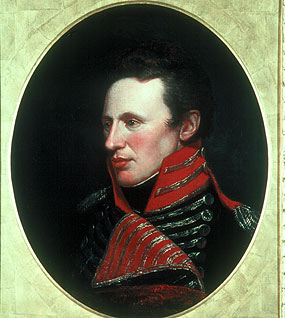
Zebulon Montgomery Pike (January 5, 1779 – April 27, 1813) was an American brigadier general and explorer for whom Pikes Peak in Colorado is named. As a U.S. Army officer he led two expeditions through the Louisiana Purchase territory, first in 1805–1806 to reconnoiter the upper northern reaches of the Mississippi River, and then in 1806–1807 to explore the southwest to the fringes of the northern Spanish-colonial settlements of New Mexico and Texas. Pike's expeditions coincided with other Jeffersonian expeditions, including the Lewis and Clark Expedition and the Red River Expedition in 1806.
Pike's second expedition crossed the Rocky Mountains into what is now southern Colorado, which resulted in his capture by the Spanish colonial authorities near Santa Fe, who then sent Pike and his men to Chihuahua (present-day Mexico) for interrogation. Later in 1807, Pike and some of his men were escorted by the Spanish through Texas and released near U.S. territory in early Louisiana.
In 1810, Pike published an account of his expeditions, a book so popular that it was translated into several languages for publication in Europe. He later achieved the rank of brigadier general in the United States Army, and served in the War of 1812 until he was killed in April 1813 by an explosion at a gunpowder magazine outside the British colonial capital of Upper Canada during the Battle of York.
Pike was born on January 5, 1779, in Lamington, New Jersey. He was the son of Isabella (Brown) and Zebulon Pike, and followed in the footsteps of his father, who had begun his own career in the military service of the United States in 1775 at the beginning of the American Revolutionary War. Through his father, he was a direct descendant of Robert Pike, who was famous being an opponent of the Salem witchcraft prosecutions of 1692.
Zebulon Pike Jr. grew to adulthood with his family at a series of outposts in Ohio and Illinois—the United States' northwestern frontier at the time. He was commissioned as a second lieutenant of infantry in 1799 and promoted to first lieutenant later that same year.
Pike married his cousin Clarissa Harlow Brown in 1801. They had one child who survived to adulthood, Clarissa Brown Pike, who later married President William Henry Harrison's son, John Cleves Symmes Harrison. They had four other children who died before reaching adulthood. He was the great-granduncle of Medal of Honor recipient Emory Jenison Pike.
Pike's military career included working on logistics and payroll at a series of frontier posts, including Fort Belle Fontaine near today's St. Louis. General-in-Chief James Wilkinson of the United States Army was appointed as the first Governor of the Upper Louisiana Territory by third President Thomas Jefferson, becoming Pike's mentor while headquartered there.
In 1796, Pike shadowed the expedition of General Georges Henri Victor Collot, a Royal, then Imperial French Army officer who had been tasked to tour the Mississippi frontier and draw maps that France might use if it were to try and seize the lightly settled heartland territory of the Mississippi River valley basin from the nascent United States further to the East.
Hub AI
Zebulon Pike AI simulator
(@Zebulon Pike_simulator)
Zebulon Pike
Zebulon Montgomery Pike (January 5, 1779 – April 27, 1813) was an American brigadier general and explorer for whom Pikes Peak in Colorado is named. As a U.S. Army officer he led two expeditions through the Louisiana Purchase territory, first in 1805–1806 to reconnoiter the upper northern reaches of the Mississippi River, and then in 1806–1807 to explore the southwest to the fringes of the northern Spanish-colonial settlements of New Mexico and Texas. Pike's expeditions coincided with other Jeffersonian expeditions, including the Lewis and Clark Expedition and the Red River Expedition in 1806.
Pike's second expedition crossed the Rocky Mountains into what is now southern Colorado, which resulted in his capture by the Spanish colonial authorities near Santa Fe, who then sent Pike and his men to Chihuahua (present-day Mexico) for interrogation. Later in 1807, Pike and some of his men were escorted by the Spanish through Texas and released near U.S. territory in early Louisiana.
In 1810, Pike published an account of his expeditions, a book so popular that it was translated into several languages for publication in Europe. He later achieved the rank of brigadier general in the United States Army, and served in the War of 1812 until he was killed in April 1813 by an explosion at a gunpowder magazine outside the British colonial capital of Upper Canada during the Battle of York.
Pike was born on January 5, 1779, in Lamington, New Jersey. He was the son of Isabella (Brown) and Zebulon Pike, and followed in the footsteps of his father, who had begun his own career in the military service of the United States in 1775 at the beginning of the American Revolutionary War. Through his father, he was a direct descendant of Robert Pike, who was famous being an opponent of the Salem witchcraft prosecutions of 1692.
Zebulon Pike Jr. grew to adulthood with his family at a series of outposts in Ohio and Illinois—the United States' northwestern frontier at the time. He was commissioned as a second lieutenant of infantry in 1799 and promoted to first lieutenant later that same year.
Pike married his cousin Clarissa Harlow Brown in 1801. They had one child who survived to adulthood, Clarissa Brown Pike, who later married President William Henry Harrison's son, John Cleves Symmes Harrison. They had four other children who died before reaching adulthood. He was the great-granduncle of Medal of Honor recipient Emory Jenison Pike.
Pike's military career included working on logistics and payroll at a series of frontier posts, including Fort Belle Fontaine near today's St. Louis. General-in-Chief James Wilkinson of the United States Army was appointed as the first Governor of the Upper Louisiana Territory by third President Thomas Jefferson, becoming Pike's mentor while headquartered there.
In 1796, Pike shadowed the expedition of General Georges Henri Victor Collot, a Royal, then Imperial French Army officer who had been tasked to tour the Mississippi frontier and draw maps that France might use if it were to try and seize the lightly settled heartland territory of the Mississippi River valley basin from the nascent United States further to the East.
Recent media