



Community hub
Recent from talks
Knowledge base stats:
Talk channels stats:
Members stats:
Hans Christian Ørsted
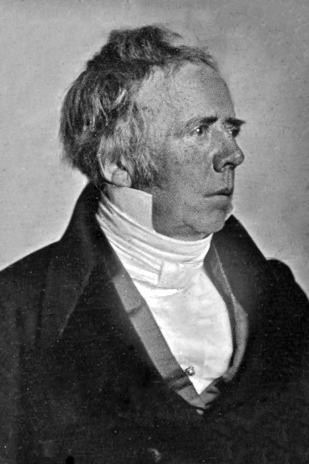
Hans Christian Ørsted (Danish: [ˈɶɐ̯steð] ⓘ; 14 August 1777 – 9 March 1851), sometimes transliterated as Oersted (/ˈɜːstɛd/ UR-sted), was a Danish chemist and physicist who discovered that electric currents create magnetic fields. This phenomenon is known as Oersted's law. He also discovered aluminium, a chemical element.
A leader of the Danish Golden Age, Ørsted was a close friend of Hans Christian Andersen and the brother of politician and jurist Anders Sandøe Ørsted, who served as Prime Minister of Denmark from 1853 to 1854.
Ørsted was born in Rudkøbing in 1777. As a young boy he developed an interest in science while working for his father, who was a pharmacist in the town's pharmacy. He and his brother Anders received most of their early education through self-study at home, going to Copenhagen in 1793 to take entrance exams for the University of Copenhagen, where both brothers excelled academically. By 1796, Ørsted had been awarded honors for his papers in both aesthetics and physics. He earned his doctorate in 1799 for a dissertation based on the works of Kant entitled The Architectonics of Natural Metaphysics.
In 1800, Alessandro Volta reported his invention of the voltaic pile, which inspired Ørsted to investigate the nature of electricity and to conduct his first electrical experiments. In 1801, Ørsted received a travel scholarship and public grant which enabled him to spend three years traveling across Europe. He toured science headquarters throughout the continent, including in Berlin and Paris.
In Germany, Ørsted met Johann Wilhelm Ritter, a physicist who believed there was a connection between electricity and magnetism. This idea made sense to Ørsted as he subscribed to Kantian thought regarding the unity of nature.[page needed] Ørsted's conversations with Ritter drew him into the study of physics. He became a professor at the University of Copenhagen in 1806 and continued research on electric currents and acoustics. Under his guidance the university developed a comprehensive physics and chemistry program and established new laboratories. [citation needed]
Ørsted welcomed William Christopher Zeise to his family home in autumn 1806. He granted Zeise a position as his lecturing assistant and took the young chemist under his tutelage. In 1812, Ørsted again visited Germany and France after publishing Videnskaben om Naturens Almindelige Love and Første Indledning til den Almindelige Naturlære (1811).
Ørsted was the first modern thinker to explicitly describe and name the thought experiment. He used the Latin-German term Gedankenexperiment circa 1812 and the German term Gedankenversuch in 1820.
In 1819 Ørsted was the first to extract piperine and subsequently name it. He extracted it from Piper nigrum, the plant from which both white and black pepper comes from.
Hub AI
Hans Christian Ørsted AI simulator
(@Hans Christian Ørsted_simulator)
Hans Christian Ørsted
Hans Christian Ørsted (Danish: [ˈɶɐ̯steð] ⓘ; 14 August 1777 – 9 March 1851), sometimes transliterated as Oersted (/ˈɜːstɛd/ UR-sted), was a Danish chemist and physicist who discovered that electric currents create magnetic fields. This phenomenon is known as Oersted's law. He also discovered aluminium, a chemical element.
A leader of the Danish Golden Age, Ørsted was a close friend of Hans Christian Andersen and the brother of politician and jurist Anders Sandøe Ørsted, who served as Prime Minister of Denmark from 1853 to 1854.
Ørsted was born in Rudkøbing in 1777. As a young boy he developed an interest in science while working for his father, who was a pharmacist in the town's pharmacy. He and his brother Anders received most of their early education through self-study at home, going to Copenhagen in 1793 to take entrance exams for the University of Copenhagen, where both brothers excelled academically. By 1796, Ørsted had been awarded honors for his papers in both aesthetics and physics. He earned his doctorate in 1799 for a dissertation based on the works of Kant entitled The Architectonics of Natural Metaphysics.
In 1800, Alessandro Volta reported his invention of the voltaic pile, which inspired Ørsted to investigate the nature of electricity and to conduct his first electrical experiments. In 1801, Ørsted received a travel scholarship and public grant which enabled him to spend three years traveling across Europe. He toured science headquarters throughout the continent, including in Berlin and Paris.
In Germany, Ørsted met Johann Wilhelm Ritter, a physicist who believed there was a connection between electricity and magnetism. This idea made sense to Ørsted as he subscribed to Kantian thought regarding the unity of nature.[page needed] Ørsted's conversations with Ritter drew him into the study of physics. He became a professor at the University of Copenhagen in 1806 and continued research on electric currents and acoustics. Under his guidance the university developed a comprehensive physics and chemistry program and established new laboratories. [citation needed]
Ørsted welcomed William Christopher Zeise to his family home in autumn 1806. He granted Zeise a position as his lecturing assistant and took the young chemist under his tutelage. In 1812, Ørsted again visited Germany and France after publishing Videnskaben om Naturens Almindelige Love and Første Indledning til den Almindelige Naturlære (1811).
Ørsted was the first modern thinker to explicitly describe and name the thought experiment. He used the Latin-German term Gedankenexperiment circa 1812 and the German term Gedankenversuch in 1820.
In 1819 Ørsted was the first to extract piperine and subsequently name it. He extracted it from Piper nigrum, the plant from which both white and black pepper comes from.