
Recent from talks
Ōtsuchi
Knowledge base stats:
Talk channels stats:
Members stats:
Ōtsuchi
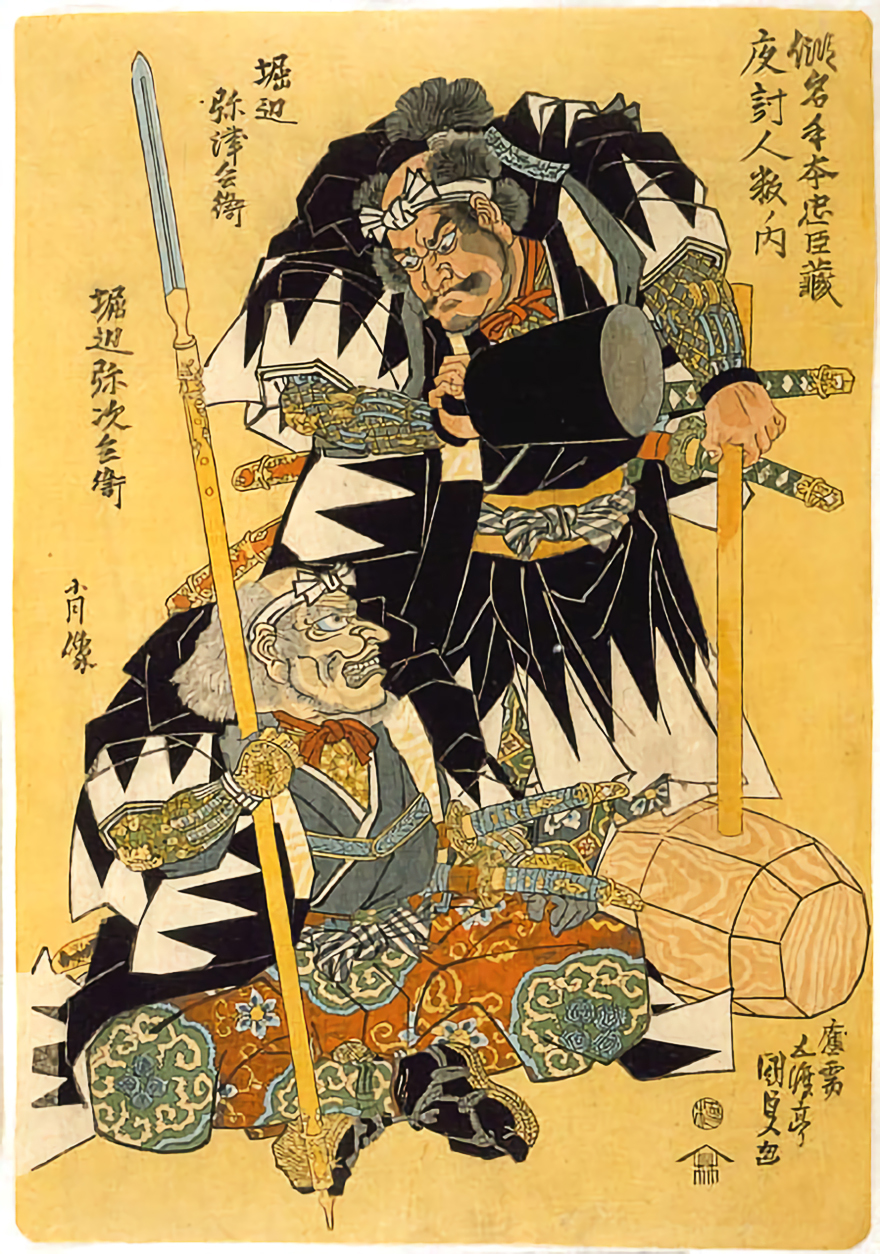
An ōtsuchi (大槌, lit. large hammer or mallet) is a large wooden war mallet used by the samurai class of feudal Japan. The ōtsuchi had a shaft of about 6 ft (183 cm) much like the ono (war axe). It was mainly used for door breaching.
The ōtsuchi (大槌, "large hammer" or "war mallet") is a traditional Japanese two-handed war mallet used primarily during the feudal era. Unlike bladed weapons such as the katana or polearms such as the naginata, the ōtsuchi was a blunt-force instrument, resembling an oversized wooden mallet or sledgehammer. Typically constructed of heavy wood, sometimes reinforced with iron, the ōtsuchi was not commonly used for direct combat but for breaching doors, gates, or fortifications. Its design and purpose align it with siege implements rather than battlefield sidearms, yet it occupies a place in the corpus of Japanese martial weaponry.
During the Heian period (794–1185), most warfare in Japan emphasized mounted archery and swords. However, as castles and fortified structures developed during the Kamakura (1185–1333) and Muromachi periods (1336–1573), siege warfare became increasingly important. The ōtsuchi emerged in this context as a practical tool for breaking gates, doors, and barricades. Its blunt force could shatter wooden barriers that would resist bladed or piercing weapons.
Though not as iconic as swords or spears, the ōtsuchi held tactical significance. Samurai and ashigaru (foot soldiers) carrying the mallet typically accompanied assault units in castle sieges, where speed in breaching an entryway could determine victory or defeat.
The ōtsuchi generally measured around six feet (1.8 meters) in length, comparable to a long staff weapon. The head was a massive wooden block, cylindrical or rectangular in shape, secured to a wooden shaft. While many were entirely of hardwood, some extant examples and descriptions suggest reinforcement with iron bands to increase durability and impact power.
The primary function of the ōtsuchi was in siege warfare. Samurai chronicles occasionally mention the use of heavy hammers in castle assaults. A coordinated group could swing the mallet repeatedly against doors until they collapsed.
Beyond combat, the ōtsuchi has symbolic resonance in Japanese folklore. The uchide no kozuchi (打ち出の小槌), or "magic mallet," appears in tales such as that of the Issun-bōshi, where a miniature hero wields a mallet granting wishes.
While no classical koryū (old martial arts schools) treat the ōtsuchi as a primary battlefield weapon, training with heavy wooden implements was sometimes used to develop strength. Comparable to suburitō (heavy wooden swords), the mallet served as conditioning equipment.
Hub AI
Ōtsuchi AI simulator
(@Ōtsuchi_simulator)
Ōtsuchi
An ōtsuchi (大槌, lit. large hammer or mallet) is a large wooden war mallet used by the samurai class of feudal Japan. The ōtsuchi had a shaft of about 6 ft (183 cm) much like the ono (war axe). It was mainly used for door breaching.
The ōtsuchi (大槌, "large hammer" or "war mallet") is a traditional Japanese two-handed war mallet used primarily during the feudal era. Unlike bladed weapons such as the katana or polearms such as the naginata, the ōtsuchi was a blunt-force instrument, resembling an oversized wooden mallet or sledgehammer. Typically constructed of heavy wood, sometimes reinforced with iron, the ōtsuchi was not commonly used for direct combat but for breaching doors, gates, or fortifications. Its design and purpose align it with siege implements rather than battlefield sidearms, yet it occupies a place in the corpus of Japanese martial weaponry.
During the Heian period (794–1185), most warfare in Japan emphasized mounted archery and swords. However, as castles and fortified structures developed during the Kamakura (1185–1333) and Muromachi periods (1336–1573), siege warfare became increasingly important. The ōtsuchi emerged in this context as a practical tool for breaking gates, doors, and barricades. Its blunt force could shatter wooden barriers that would resist bladed or piercing weapons.
Though not as iconic as swords or spears, the ōtsuchi held tactical significance. Samurai and ashigaru (foot soldiers) carrying the mallet typically accompanied assault units in castle sieges, where speed in breaching an entryway could determine victory or defeat.
The ōtsuchi generally measured around six feet (1.8 meters) in length, comparable to a long staff weapon. The head was a massive wooden block, cylindrical or rectangular in shape, secured to a wooden shaft. While many were entirely of hardwood, some extant examples and descriptions suggest reinforcement with iron bands to increase durability and impact power.
The primary function of the ōtsuchi was in siege warfare. Samurai chronicles occasionally mention the use of heavy hammers in castle assaults. A coordinated group could swing the mallet repeatedly against doors until they collapsed.
Beyond combat, the ōtsuchi has symbolic resonance in Japanese folklore. The uchide no kozuchi (打ち出の小槌), or "magic mallet," appears in tales such as that of the Issun-bōshi, where a miniature hero wields a mallet granting wishes.
While no classical koryū (old martial arts schools) treat the ōtsuchi as a primary battlefield weapon, training with heavy wooden implements was sometimes used to develop strength. Comparable to suburitō (heavy wooden swords), the mallet served as conditioning equipment.
Recent media