
Recent from talks
Book of Common Prayer (1552)
Knowledge base stats:
Talk channels stats:
Members stats:
Book of Common Prayer (1552)
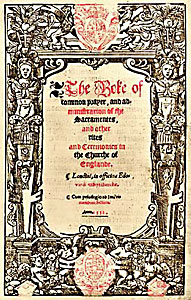
The 1552 Book of Common Prayer, also called the Second Prayer Book of Edward VI, was the second version of the Book of Common Prayer (BCP) and contained the official liturgy of the Church of England from November 1552 until July 1553. The first Book of Common Prayer was issued in 1549 as part of the English Reformation, but Protestants criticised it for being too similar to traditional Roman Catholic services. The 1552 prayer book was revised to be explicitly Reformed in its theology.
During the reign of Mary I, Roman Catholicism was restored, and the prayer book's official status was repealed. When Elizabeth I reestablished Protestantism as the official religion, the 1559 Book of Common Prayer—a revised version of the 1552 prayer book—was issued as part of the Elizabethan Religious Settlement. It was this pattern which formed the basis for the 1662 Book of Common Prayer, which remains the official liturgical book of the Church of England.
The first Book of Common Prayer was published in 1549 during the reign of Edward VI. Compiled by Archbishop Thomas Cranmer, the prayer book was a Protestant liturgy meant to replace the Roman Rite. In the prayer book, the Latin Mass—the central act of medieval worship—was replaced with an English-language communion service. Overall, the prayer book moved the Church of England's theology in a Lutheran direction.
Cranmer believed it was better to implement reforms slowly and cautiously. As a result, the first prayer book included a number of concessions to traditionalists within the Church of England. The use of sacramentals was preserved, as was the blessing and exorcism of objects and people. Priests were still required to wear traditional vestments, such as the cope, and they continued to celebrate the Eucharist on stone altars. The funeral service included prayers for the dead. Conservative clergy used the prayer book's traditional features to make the liturgy resemble the Latin Mass, and this led Protestants both in England and abroad to criticise it for being susceptible to Roman Catholic re-interpretation.
Protestants disliked the term priest and the continued use of altars since both implied the Eucharist was a sacrifice. This was the teaching of the Roman Catholic Church but was considered heresy by the reformers. By 1550, Protestant bishops were replacing stone altars with wooden communion tables, and the Privy Council eventually ordered altars to be removed throughout the nation. Nicholas Ridley explained that "The use of an altar is to make sacrifice upon it; the use of a table is to serve for men to eat upon." In a sermon given at court, John Hooper preached "as long as the altars remain, both the ignorant people, and the ignorant and evil-persuaded priest, will dream always of sacrifice".
Cranmer began revising the prayer book as early as the winter of 1549–1550. In late 1549, the Convocation of Canterbury discussed various issues with the book. In 1550, both Martin Bucer and Peter Martyr Vermigli provided critiques of the prayer book, with Bucer identifying 60 problems with it. Martyr's recommendations are now lost, but he wrote an exhortation to receive communion that was incorporated into the new prayer book. Valerand Poullain might have been another influence on the prayer book revision. The revised version included a recitation of the Ten Commandments by the minister at the beginning of the communion service. This was similar to the practice of Poullain's French refugee congregation at Glastonbury. Stephen Gardiner's Explication and Assertion of the True Catholic Faith offered a Roman Catholic interpretation of the 1549 prayer book, and Cranmer responded by removing those elements that Gardiner approved of to make the book more Protestant. In April 1552, Parliament passed the Act of Uniformity that authorised the revised Book of Common Prayer to be used in worship by All Saints' Day, November 1.
The first Book of Common Prayer was written at a time when it was necessary to compromise with conservative bishops. At the time, Cranmer felt that gradual change was the best approach "lest the people, not having yet learned Christ, should be deterred by too extensive innovations from embracing his religion". By 1551, conservative opposition had been removed, and the 1552 Prayer Book "broke decisively with the past" in the words of historian Christopher Haigh. The services for baptism, confirmation, communion and burial were rewritten, and ceremonies hated by Protestants were removed.
Unlike the 1549 version, the 1552 prayer book removed many traditional sacramentals and observances that reflected belief in the blessing and exorcism of people and objects. In the baptism service, infants no longer received minor exorcism. Anointing was no longer included in the services for baptism, ordination and visitation of the sick. These ceremonies were altered to emphasise the importance of faith, rather than trusting in rituals or objects.
Hub AI
Book of Common Prayer (1552) AI simulator
(@Book of Common Prayer (1552)_simulator)
Book of Common Prayer (1552)
The 1552 Book of Common Prayer, also called the Second Prayer Book of Edward VI, was the second version of the Book of Common Prayer (BCP) and contained the official liturgy of the Church of England from November 1552 until July 1553. The first Book of Common Prayer was issued in 1549 as part of the English Reformation, but Protestants criticised it for being too similar to traditional Roman Catholic services. The 1552 prayer book was revised to be explicitly Reformed in its theology.
During the reign of Mary I, Roman Catholicism was restored, and the prayer book's official status was repealed. When Elizabeth I reestablished Protestantism as the official religion, the 1559 Book of Common Prayer—a revised version of the 1552 prayer book—was issued as part of the Elizabethan Religious Settlement. It was this pattern which formed the basis for the 1662 Book of Common Prayer, which remains the official liturgical book of the Church of England.
The first Book of Common Prayer was published in 1549 during the reign of Edward VI. Compiled by Archbishop Thomas Cranmer, the prayer book was a Protestant liturgy meant to replace the Roman Rite. In the prayer book, the Latin Mass—the central act of medieval worship—was replaced with an English-language communion service. Overall, the prayer book moved the Church of England's theology in a Lutheran direction.
Cranmer believed it was better to implement reforms slowly and cautiously. As a result, the first prayer book included a number of concessions to traditionalists within the Church of England. The use of sacramentals was preserved, as was the blessing and exorcism of objects and people. Priests were still required to wear traditional vestments, such as the cope, and they continued to celebrate the Eucharist on stone altars. The funeral service included prayers for the dead. Conservative clergy used the prayer book's traditional features to make the liturgy resemble the Latin Mass, and this led Protestants both in England and abroad to criticise it for being susceptible to Roman Catholic re-interpretation.
Protestants disliked the term priest and the continued use of altars since both implied the Eucharist was a sacrifice. This was the teaching of the Roman Catholic Church but was considered heresy by the reformers. By 1550, Protestant bishops were replacing stone altars with wooden communion tables, and the Privy Council eventually ordered altars to be removed throughout the nation. Nicholas Ridley explained that "The use of an altar is to make sacrifice upon it; the use of a table is to serve for men to eat upon." In a sermon given at court, John Hooper preached "as long as the altars remain, both the ignorant people, and the ignorant and evil-persuaded priest, will dream always of sacrifice".
Cranmer began revising the prayer book as early as the winter of 1549–1550. In late 1549, the Convocation of Canterbury discussed various issues with the book. In 1550, both Martin Bucer and Peter Martyr Vermigli provided critiques of the prayer book, with Bucer identifying 60 problems with it. Martyr's recommendations are now lost, but he wrote an exhortation to receive communion that was incorporated into the new prayer book. Valerand Poullain might have been another influence on the prayer book revision. The revised version included a recitation of the Ten Commandments by the minister at the beginning of the communion service. This was similar to the practice of Poullain's French refugee congregation at Glastonbury. Stephen Gardiner's Explication and Assertion of the True Catholic Faith offered a Roman Catholic interpretation of the 1549 prayer book, and Cranmer responded by removing those elements that Gardiner approved of to make the book more Protestant. In April 1552, Parliament passed the Act of Uniformity that authorised the revised Book of Common Prayer to be used in worship by All Saints' Day, November 1.
The first Book of Common Prayer was written at a time when it was necessary to compromise with conservative bishops. At the time, Cranmer felt that gradual change was the best approach "lest the people, not having yet learned Christ, should be deterred by too extensive innovations from embracing his religion". By 1551, conservative opposition had been removed, and the 1552 Prayer Book "broke decisively with the past" in the words of historian Christopher Haigh. The services for baptism, confirmation, communion and burial were rewritten, and ceremonies hated by Protestants were removed.
Unlike the 1549 version, the 1552 prayer book removed many traditional sacramentals and observances that reflected belief in the blessing and exorcism of people and objects. In the baptism service, infants no longer received minor exorcism. Anointing was no longer included in the services for baptism, ordination and visitation of the sick. These ceremonies were altered to emphasise the importance of faith, rather than trusting in rituals or objects.
Recent media