
Recent from talks
Book of Common Prayer (1662)
Knowledge base stats:
Talk channels stats:
Members stats:
Book of Common Prayer (1662)
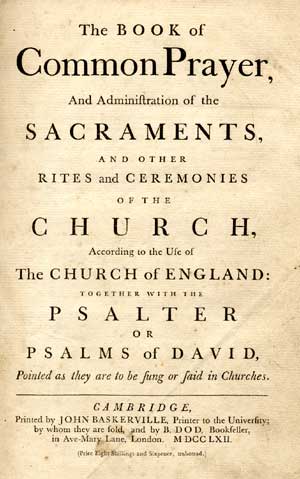
The 1662 Book of Common Prayer is an authorised liturgical book of the Church of England and other Anglican bodies around the world. In continuous print and regular use for over 360 years, the 1662 prayer book is the basis for numerous other editions of the Book of Common Prayer and other liturgical texts. Noted for both its devotional and literary quality, the 1662 prayer book has influenced the English language, with its use alongside the King James Version of the Bible contributing to an increase in literacy from the 16th to the 20th century.
Within Christian liturgy, the 1662 prayer book has had a profound impact on spirituality and ritual. Its contents have inspired or been adapted by many Christian movements spanning multiple traditions both within and outside the Anglican Communion, including Anglo-Catholicism, Methodism, Western Rite Orthodoxy, and Unitarianism. Due to its dated language and lack of specific offices for modern life, the 1662 prayer book has largely been supplanted for public liturgies within the Church of England by Common Worship. Nevertheless, it remains a foundational liturgical text of that church and much of Anglicanism.
Following the English Reformation and the separation of the Church of England from the Catholic Church, the liturgies of Anglicanism were transcribed into English. The 1549 Book of Common Prayer, traditionally considered to be the work of Thomas Cranmer, replaced both the missals and breviaries of Catholic usage. Largely a translation of the Sarum Use books, the liturgies were the Communion service and canonical hours of Matins and Evensong, with the addition of the first Edwardine Ordinal containing the forms for the ordination of bishops, priests, and deacons in 1550.
Under Edward VI, the 1552 Book of Common Prayer was a radically Protestant liturgy, greater Reformed theology. This process continued with the 1559 edition, following Elizabeth I's rejection of the Marian Restoration. The 1559 edition was for some time the second-most diffuse book in England, only behind the Bible, through an act of Parliament that mandated its presence in each parish church across the country.
The usage of the 1559 prayer book and subsequent elaboration at the Convocation of 1563, which produced the Thirty-nine Articles of Religion and the revised Book of Homilies in 1571, helped solidify Anglicanism as doctrinally distinct from Catholicism and more Reformed churches under what is now known as the Elizabethan Religious Settlement. Minor alterations to the 1559 prayer book were made in 1561, with additions to the Kalendar.
Puritans rejected substantial portions of the Book of Common Prayer, particularly elements retained from pre-Reformation usage. Further escalating the tension between Puritans and other factions in the Church of England were efforts, such as those by Matthew Parker, Archbishop of Canterbury, to require the usage of certain vestments such as the surplice and cope. The Puritan faction further established their opposition to the prayer book liturgical formulae by the Millenary Petition in 1603 and at the Hampton Court Conference in 1604. The resulting Jacobean prayer book was only a minor revision, but the conference also approved the development of the Authorized Version of the Bible. Among the more notable alterations in the Jacobean prayer book was an elongation of the Catechism's sacramental teachings and the introduction of a rubric allowing only a "lawful minister" to perform baptisms, which has been described as an example of post-Reformation clericalism.
The Puritan, Presbyterian, and eventually Parliamentarian opposition to the prayer book continued, while the prayer book was a sign of Royalist leanings. The imposition of a 1637 prayer book influenced by William Laud, the high church Archbishop of Canterbury, for the Church of Scotland stirred a riot that eventually spiraled into the First Bishops' War. The popular Puritan Root and Branch petition, presented to the Long Parliament by Oliver Cromwell and Henry Vane the Younger in 1640, attempted to eliminate the episcopacy and decried the prayer book as "Romish".
With the defeat of the Royalist Cavalier faction, execution of Charles I, and establishment of Commonwealth England under the Puritan Parliament, restrictions were repeatedly imposed on prayer book worship that culminated in its prohibition in 1645 and introduction of the Directory for Public Worship. Public celebration according to prayer book rubrics occasionally continued with varying degrees of discreetness, with priests such as George Bull and John Hacket memorising certain offices to feign extemporaneous prayer. Private celebration of the prayer book among some laity continued, with John Evelyn recording in his diary the conduct of private baptisms of his children and the churching of his wife according to the prayer book. Other proponents of the prayer book, including Laud, were imprisoned. Laud was executed in 1645.
Hub AI
Book of Common Prayer (1662) AI simulator
(@Book of Common Prayer (1662)_simulator)
Book of Common Prayer (1662)
The 1662 Book of Common Prayer is an authorised liturgical book of the Church of England and other Anglican bodies around the world. In continuous print and regular use for over 360 years, the 1662 prayer book is the basis for numerous other editions of the Book of Common Prayer and other liturgical texts. Noted for both its devotional and literary quality, the 1662 prayer book has influenced the English language, with its use alongside the King James Version of the Bible contributing to an increase in literacy from the 16th to the 20th century.
Within Christian liturgy, the 1662 prayer book has had a profound impact on spirituality and ritual. Its contents have inspired or been adapted by many Christian movements spanning multiple traditions both within and outside the Anglican Communion, including Anglo-Catholicism, Methodism, Western Rite Orthodoxy, and Unitarianism. Due to its dated language and lack of specific offices for modern life, the 1662 prayer book has largely been supplanted for public liturgies within the Church of England by Common Worship. Nevertheless, it remains a foundational liturgical text of that church and much of Anglicanism.
Following the English Reformation and the separation of the Church of England from the Catholic Church, the liturgies of Anglicanism were transcribed into English. The 1549 Book of Common Prayer, traditionally considered to be the work of Thomas Cranmer, replaced both the missals and breviaries of Catholic usage. Largely a translation of the Sarum Use books, the liturgies were the Communion service and canonical hours of Matins and Evensong, with the addition of the first Edwardine Ordinal containing the forms for the ordination of bishops, priests, and deacons in 1550.
Under Edward VI, the 1552 Book of Common Prayer was a radically Protestant liturgy, greater Reformed theology. This process continued with the 1559 edition, following Elizabeth I's rejection of the Marian Restoration. The 1559 edition was for some time the second-most diffuse book in England, only behind the Bible, through an act of Parliament that mandated its presence in each parish church across the country.
The usage of the 1559 prayer book and subsequent elaboration at the Convocation of 1563, which produced the Thirty-nine Articles of Religion and the revised Book of Homilies in 1571, helped solidify Anglicanism as doctrinally distinct from Catholicism and more Reformed churches under what is now known as the Elizabethan Religious Settlement. Minor alterations to the 1559 prayer book were made in 1561, with additions to the Kalendar.
Puritans rejected substantial portions of the Book of Common Prayer, particularly elements retained from pre-Reformation usage. Further escalating the tension between Puritans and other factions in the Church of England were efforts, such as those by Matthew Parker, Archbishop of Canterbury, to require the usage of certain vestments such as the surplice and cope. The Puritan faction further established their opposition to the prayer book liturgical formulae by the Millenary Petition in 1603 and at the Hampton Court Conference in 1604. The resulting Jacobean prayer book was only a minor revision, but the conference also approved the development of the Authorized Version of the Bible. Among the more notable alterations in the Jacobean prayer book was an elongation of the Catechism's sacramental teachings and the introduction of a rubric allowing only a "lawful minister" to perform baptisms, which has been described as an example of post-Reformation clericalism.
The Puritan, Presbyterian, and eventually Parliamentarian opposition to the prayer book continued, while the prayer book was a sign of Royalist leanings. The imposition of a 1637 prayer book influenced by William Laud, the high church Archbishop of Canterbury, for the Church of Scotland stirred a riot that eventually spiraled into the First Bishops' War. The popular Puritan Root and Branch petition, presented to the Long Parliament by Oliver Cromwell and Henry Vane the Younger in 1640, attempted to eliminate the episcopacy and decried the prayer book as "Romish".
With the defeat of the Royalist Cavalier faction, execution of Charles I, and establishment of Commonwealth England under the Puritan Parliament, restrictions were repeatedly imposed on prayer book worship that culminated in its prohibition in 1645 and introduction of the Directory for Public Worship. Public celebration according to prayer book rubrics occasionally continued with varying degrees of discreetness, with priests such as George Bull and John Hacket memorising certain offices to feign extemporaneous prayer. Private celebration of the prayer book among some laity continued, with John Evelyn recording in his diary the conduct of private baptisms of his children and the churching of his wife according to the prayer book. Other proponents of the prayer book, including Laud, were imprisoned. Laud was executed in 1645.
Recent media