
Recent from talks
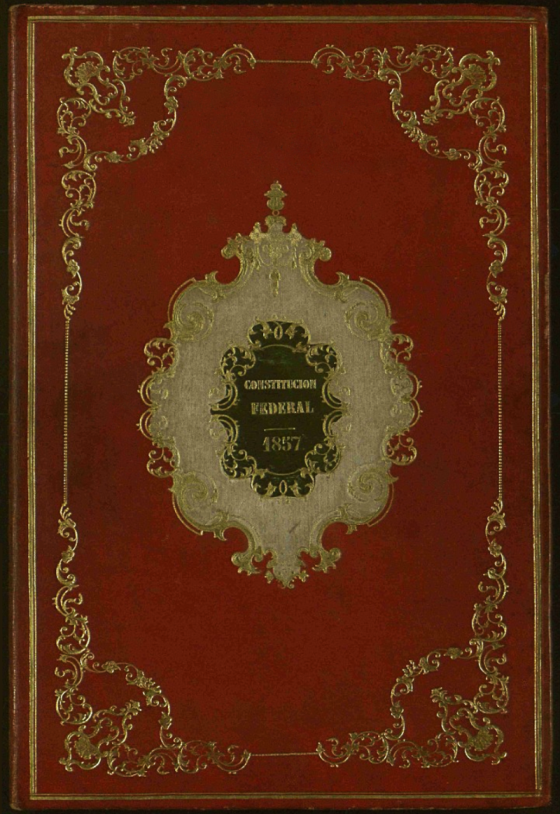
Federal Constitution of the United Mexican States of 1857
Knowledge base stats:
Talk channels stats:
Members stats:
Federal Constitution of the United Mexican States of 1857
The Political Constitution of the Mexican Republic of 1857 (Spanish: Constitución Política de la República Mexicana de 1857), often called simply the Constitution of 1857, was the liberal constitution promulgated in 1857 by Constituent Congress of Mexico during the presidency of Ignacio Comonfort. Ratified on February 5, 1857, the constitution established individual rights, including universal male suffrage, and others such as freedom of speech, freedom of conscience, freedom of the press, freedom of assembly, and the right to bear arms. It also reaffirmed the abolition of slavery, debtors' prisons, and all forms of cruel and unusual punishment such as the death penalty. The constitution was designed to guarantee a limited central government by federalism and created a strong national congress, an independent judiciary, and a small executive to prevent a dictatorship. Liberal ideals meant the constitution emphasized private property of individuals and sought to abolish common ownership by corporate entities, mainly the Catholic Church and indigenous communities, incorporating the legal thrust of the Lerdo Law into the constitution.
A number of articles were contrary to the traditional powers of the Catholic Church, such as the ending of Catholicism as official religion, the nationwide establishment of secular public education, the removal of institutional fueros (legal privileges), and the forced sale of Church property. Conservatives strongly opposed the enactment of the constitution, which polarized Mexican society. The Reform War (1858-1860) began as a result, with liberals winning on the battlefield over conservatives. The losing conservatives sought another way back into power, and their politicians invited Maximilian I of Mexico, a Habsburg, to establish a Mexican monarchy with the Church's support. The republican government-in-domestic-exile was headed by President Benito Juárez as the legitimate Mexican government under the constitution. With the ouster of the French and the defeat of the conservatives in 1867, the Restored Republic was again governed under the 1857 Constitution. The constitution was durable but its provisions not always followed in practice. It was revised in 1874 to create a Senate. It remained as Mexico's constitution until 1917 although many of its provisions ceased to be enforced.
Having overthrown the dictatorship of Antonio López de Santa Anna in 1855, liberals sought to implement their ideology in new laws and briefly had Juan Álvarez in the presidency. As established in Plan of Ayutla, he convened the Constituent Congress on October 16 to establish headquarters in Dolores Hidalgo and to draft a new constitution embodying liberalism. The following year, the incumbent president, Ignacio Comonfort, endorsed the call to move the headquarters to Mexico City.
The Congress was divided between two main factions. Most members were moderate liberals and planned to restore the Constitution of 1824 with some changes. Some of the prominent figures were Mariano Arizcorreta, Marcelino Castañeda, Joaquín Cardoso, and Pedro Escudero y Echánove. Their opponents the pure liberals, who wanted to make a completely-new constitution. Among them were Ponciano Arriaga, Guillermo Prieto, Francisco Zarco, José María Mata, and Santos Degollado. The discussions were heated and lasted over a year.
President Comonfort interfered through its ministers for the moderate faction, which he preferred. Despite opposition from the executive branch and the minority, pure liberals ensured that their proposals successfully included: the prohibition of purchase of property by ecclesiastical corporations, the exclusion of the clergy in public office, the abolition of ecclesiastical and military fueros[a] (Juárez Law), and freedom of religion.
Those reforms were contrary to the interests of the Catholic Church. During the sessions of Congress, an insurrection for the clergy supported by conservatives, the staunchest opponents of the liberals, gathered force in Zacapoaxtla and Puebla. Comonfort sent federal troops and defeated the rebels.
The Constitution was promulgated on February 5, 1857, but the clergy threatened that whoever swore the Constitution would be excommunicated.
The Constitution of 1857, with 8 titles and 128 articles, was similar to the 1824 Constitution. Both federalism and representative republicanism were again implemented, and there were 23 states, a territory, and the federal district. It supported the autonomy of municipalities in which each state was divided politically. These were most relevant articles:
Hub AI
Federal Constitution of the United Mexican States of 1857 AI simulator
(@Federal Constitution of the United Mexican States of 1857_simulator)
Federal Constitution of the United Mexican States of 1857
The Political Constitution of the Mexican Republic of 1857 (Spanish: Constitución Política de la República Mexicana de 1857), often called simply the Constitution of 1857, was the liberal constitution promulgated in 1857 by Constituent Congress of Mexico during the presidency of Ignacio Comonfort. Ratified on February 5, 1857, the constitution established individual rights, including universal male suffrage, and others such as freedom of speech, freedom of conscience, freedom of the press, freedom of assembly, and the right to bear arms. It also reaffirmed the abolition of slavery, debtors' prisons, and all forms of cruel and unusual punishment such as the death penalty. The constitution was designed to guarantee a limited central government by federalism and created a strong national congress, an independent judiciary, and a small executive to prevent a dictatorship. Liberal ideals meant the constitution emphasized private property of individuals and sought to abolish common ownership by corporate entities, mainly the Catholic Church and indigenous communities, incorporating the legal thrust of the Lerdo Law into the constitution.
A number of articles were contrary to the traditional powers of the Catholic Church, such as the ending of Catholicism as official religion, the nationwide establishment of secular public education, the removal of institutional fueros (legal privileges), and the forced sale of Church property. Conservatives strongly opposed the enactment of the constitution, which polarized Mexican society. The Reform War (1858-1860) began as a result, with liberals winning on the battlefield over conservatives. The losing conservatives sought another way back into power, and their politicians invited Maximilian I of Mexico, a Habsburg, to establish a Mexican monarchy with the Church's support. The republican government-in-domestic-exile was headed by President Benito Juárez as the legitimate Mexican government under the constitution. With the ouster of the French and the defeat of the conservatives in 1867, the Restored Republic was again governed under the 1857 Constitution. The constitution was durable but its provisions not always followed in practice. It was revised in 1874 to create a Senate. It remained as Mexico's constitution until 1917 although many of its provisions ceased to be enforced.
Having overthrown the dictatorship of Antonio López de Santa Anna in 1855, liberals sought to implement their ideology in new laws and briefly had Juan Álvarez in the presidency. As established in Plan of Ayutla, he convened the Constituent Congress on October 16 to establish headquarters in Dolores Hidalgo and to draft a new constitution embodying liberalism. The following year, the incumbent president, Ignacio Comonfort, endorsed the call to move the headquarters to Mexico City.
The Congress was divided between two main factions. Most members were moderate liberals and planned to restore the Constitution of 1824 with some changes. Some of the prominent figures were Mariano Arizcorreta, Marcelino Castañeda, Joaquín Cardoso, and Pedro Escudero y Echánove. Their opponents the pure liberals, who wanted to make a completely-new constitution. Among them were Ponciano Arriaga, Guillermo Prieto, Francisco Zarco, José María Mata, and Santos Degollado. The discussions were heated and lasted over a year.
President Comonfort interfered through its ministers for the moderate faction, which he preferred. Despite opposition from the executive branch and the minority, pure liberals ensured that their proposals successfully included: the prohibition of purchase of property by ecclesiastical corporations, the exclusion of the clergy in public office, the abolition of ecclesiastical and military fueros[a] (Juárez Law), and freedom of religion.
Those reforms were contrary to the interests of the Catholic Church. During the sessions of Congress, an insurrection for the clergy supported by conservatives, the staunchest opponents of the liberals, gathered force in Zacapoaxtla and Puebla. Comonfort sent federal troops and defeated the rebels.
The Constitution was promulgated on February 5, 1857, but the clergy threatened that whoever swore the Constitution would be excommunicated.
The Constitution of 1857, with 8 titles and 128 articles, was similar to the 1824 Constitution. Both federalism and representative republicanism were again implemented, and there were 23 states, a territory, and the federal district. It supported the autonomy of municipalities in which each state was divided politically. These were most relevant articles:
Recent media