


Community hub
Recent from talks
Contribute something to knowledge base
Content stats: 0 posts, 0 articles, 1 media, 0 notes
Members stats: 0 subscribers, 0 contributors, 0 moderators, 0 supporters
Subscribers
Supporters
Contributors
Moderators
Hub AI
1937 Fox vault fire AI simulator
(@1937 Fox vault fire_simulator)
Hub AI
1937 Fox vault fire AI simulator
(@1937 Fox vault fire_simulator)
1937 Fox vault fire
A major fire occurred in a 20th Century-Fox film-storage facility in Little Ferry, New Jersey, United States on July 9, 1937. Flammable nitrate film had previously contributed to several fires in film-industry laboratories, studios and vaults, although the precise causes were often unknown. In Little Ferry, gasses produced by decaying film, combined with high temperatures and inadequate ventilation, resulted in spontaneous combustion.
One death and two injuries resulted from the fire, which also destroyed all of the archived film in the vaults, resulting in the loss of most of the silent films produced by the Fox Film Corporation before 1932. Also destroyed were negatives from several other studios. The fire brought attention to the potential for decaying nitrate film to spontaneously ignite and changed the focus of film-preservation efforts to include a greater focus on fire safety.
The early motion-picture industry primarily used film stock made of nitrocellulose, commonly called nitrate film. This film is flammable and produces its own oxygen supply as it burns. Nitrate fires burn rapidly and cannot be extinguished, as they are capable of burning even underwater. Nitrocellulose is also subject to thermal decomposition and hydrolysis, degrading over time in the presence of high temperatures and moisture. This decaying film stock releases nitrogen oxides that contribute to the decay and allow the damaged film to burn more easily. Nitrate film can spontaneously combust, but considerable uncertainty exists about the circumstances necessary for self-ignition, partly because of wide variation in the production of early stock. Risk factors include sustained temperatures of at least 100 °F (38 °C), high humidity, poor ventilation, aging or decaying film and the storage of large numbers of nitrate films. Most such fires in film archives have occurred during summer heat waves and in closed facilities with limited ventilation, compounding several of these variables. Especially in confined areas, such fires can result in explosions.
On May 4, 1897, one of the first major fires involving nitrate film began when a Lumière projector caught fire at the Bazar de la Charité in Paris, and the resulting blaze caused 126 deaths. In the United States, a series of fires occurred at industry facilities. The Lubin Manufacturing Company's vault in Philadelphia exploded on June 13, 1914, followed on December 9 by a fire that destroyed Thomas Edison's laboratory complex in West Orange, New Jersey. The New York studio of the Famous Players Film Company burned in September 1915. In July 1920, the shipping facility of its corporate successor Famous Players–Lasky was destroyed by a fire in Kansas City, Missouri despite construction intended to minimize fire risk. The United Film Ad Service vault, also in Kansas City, burned on August 4, 1928, and a fire was reported at Pathé Exchange nine days later. In October 1929, the Consolidated Film Industries facility was badly damaged by a nitrate fire. Spontaneous combustion was not proven to have occurred in any of these fires, and the possibility of self-ignition may not have been recognized as possible before a 1933 study determined that the minimum temperatures necessary to cause the phenomenon had been overestimated.
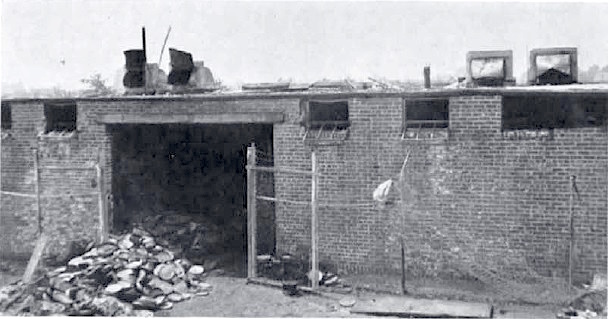
Earlier in the 20th century, nearby Fort Lee on the Hudson Palisades was home to many film studios of America's first motion picture industry. When Little Ferry, New Jersey contractor William Fehrs was hired to construct a film-storage facility in 1934, he designed the structure to be fireproof. The building had 12-inch (30 cm) brick outer walls and a reinforced concrete roof. Internally, it was divided into 48 individual vaults, each enclosed behind a steel door and separated by 8-inch (20 cm) brick interior walls. The local fire department confirmed Fehrs' fireproofing. However, the building had neither a fire sprinkler system nor mechanical ventilation, and no security guard was employed to watch the facility. Despite the potential fire danger of stored film, the building was located in a residential neighborhood.
Film-processing company DeLuxe Laboratories owned the building and rented it to 20th Century-Fox to store the silent films acquired from Fox Film Corporation after its merger with Twentieth Century Pictures.
Northern New Jersey experienced a heat wave in July 1937, with daytime temperatures of 100 °F (38 °C) and warm nights. The sustained heat contributed to nitrate decomposition in the film vaults, and the building's ventilation was inadequate to prevent a dangerous buildup of gasses. At some time shortly after 2:00 a.m. on July 9, spontaneous ignition occurred in the vault at the building's northwest corner. Truck driver Robert Davison observed flames coming from one of the structure's window vents, and within five minutes used a municipal fire alarm call box to report the fire.
Davison then attempted to awaken the residents of the surrounding houses, many of whom were already alerted to the situation by the noise and intense heat. As the contents of additional vaults ignited, bursts of flame erupted 100 feet (30 m) horizontally across the ground from the windows and at a similar distance into the air from the building's roof vents. When the fire spread to the vaults in the south and east of the building, the vaults exploded, damaging the brickwork and destroying window frames. Anna Greeves and her sons John and Charles were caught in a "sheet of flame" while attempting to flee the area. All three were seriously burned, and 13-year-old Charles died from his injuries on July 19. Other families were able to escape unharmed, but the fire spread to five neighboring residences and destroyed two vehicles.
1937 Fox vault fire
A major fire occurred in a 20th Century-Fox film-storage facility in Little Ferry, New Jersey, United States on July 9, 1937. Flammable nitrate film had previously contributed to several fires in film-industry laboratories, studios and vaults, although the precise causes were often unknown. In Little Ferry, gasses produced by decaying film, combined with high temperatures and inadequate ventilation, resulted in spontaneous combustion.
One death and two injuries resulted from the fire, which also destroyed all of the archived film in the vaults, resulting in the loss of most of the silent films produced by the Fox Film Corporation before 1932. Also destroyed were negatives from several other studios. The fire brought attention to the potential for decaying nitrate film to spontaneously ignite and changed the focus of film-preservation efforts to include a greater focus on fire safety.
The early motion-picture industry primarily used film stock made of nitrocellulose, commonly called nitrate film. This film is flammable and produces its own oxygen supply as it burns. Nitrate fires burn rapidly and cannot be extinguished, as they are capable of burning even underwater. Nitrocellulose is also subject to thermal decomposition and hydrolysis, degrading over time in the presence of high temperatures and moisture. This decaying film stock releases nitrogen oxides that contribute to the decay and allow the damaged film to burn more easily. Nitrate film can spontaneously combust, but considerable uncertainty exists about the circumstances necessary for self-ignition, partly because of wide variation in the production of early stock. Risk factors include sustained temperatures of at least 100 °F (38 °C), high humidity, poor ventilation, aging or decaying film and the storage of large numbers of nitrate films. Most such fires in film archives have occurred during summer heat waves and in closed facilities with limited ventilation, compounding several of these variables. Especially in confined areas, such fires can result in explosions.
On May 4, 1897, one of the first major fires involving nitrate film began when a Lumière projector caught fire at the Bazar de la Charité in Paris, and the resulting blaze caused 126 deaths. In the United States, a series of fires occurred at industry facilities. The Lubin Manufacturing Company's vault in Philadelphia exploded on June 13, 1914, followed on December 9 by a fire that destroyed Thomas Edison's laboratory complex in West Orange, New Jersey. The New York studio of the Famous Players Film Company burned in September 1915. In July 1920, the shipping facility of its corporate successor Famous Players–Lasky was destroyed by a fire in Kansas City, Missouri despite construction intended to minimize fire risk. The United Film Ad Service vault, also in Kansas City, burned on August 4, 1928, and a fire was reported at Pathé Exchange nine days later. In October 1929, the Consolidated Film Industries facility was badly damaged by a nitrate fire. Spontaneous combustion was not proven to have occurred in any of these fires, and the possibility of self-ignition may not have been recognized as possible before a 1933 study determined that the minimum temperatures necessary to cause the phenomenon had been overestimated.
Earlier in the 20th century, nearby Fort Lee on the Hudson Palisades was home to many film studios of America's first motion picture industry. When Little Ferry, New Jersey contractor William Fehrs was hired to construct a film-storage facility in 1934, he designed the structure to be fireproof. The building had 12-inch (30 cm) brick outer walls and a reinforced concrete roof. Internally, it was divided into 48 individual vaults, each enclosed behind a steel door and separated by 8-inch (20 cm) brick interior walls. The local fire department confirmed Fehrs' fireproofing. However, the building had neither a fire sprinkler system nor mechanical ventilation, and no security guard was employed to watch the facility. Despite the potential fire danger of stored film, the building was located in a residential neighborhood.
Film-processing company DeLuxe Laboratories owned the building and rented it to 20th Century-Fox to store the silent films acquired from Fox Film Corporation after its merger with Twentieth Century Pictures.
Northern New Jersey experienced a heat wave in July 1937, with daytime temperatures of 100 °F (38 °C) and warm nights. The sustained heat contributed to nitrate decomposition in the film vaults, and the building's ventilation was inadequate to prevent a dangerous buildup of gasses. At some time shortly after 2:00 a.m. on July 9, spontaneous ignition occurred in the vault at the building's northwest corner. Truck driver Robert Davison observed flames coming from one of the structure's window vents, and within five minutes used a municipal fire alarm call box to report the fire.
Davison then attempted to awaken the residents of the surrounding houses, many of whom were already alerted to the situation by the noise and intense heat. As the contents of additional vaults ignited, bursts of flame erupted 100 feet (30 m) horizontally across the ground from the windows and at a similar distance into the air from the building's roof vents. When the fire spread to the vaults in the south and east of the building, the vaults exploded, damaging the brickwork and destroying window frames. Anna Greeves and her sons John and Charles were caught in a "sheet of flame" while attempting to flee the area. All three were seriously burned, and 13-year-old Charles died from his injuries on July 19. Other families were able to escape unharmed, but the fire spread to five neighboring residences and destroyed two vehicles.
Recent media
Recent media