
Recent from talks
1946 World Snooker Championship
Knowledge base stats:
Talk channels stats:
Members stats:
1946 World Snooker Championship
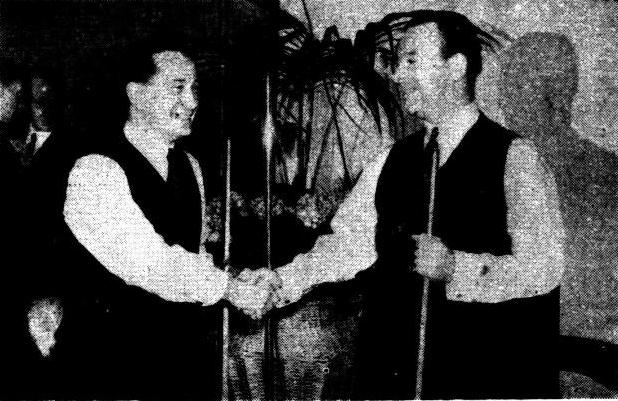
The 1946 World Snooker Championship was a professional snooker tournament held from 4 February to 18 May 1946. Joe Davis won the title by defeating Horace Lindrum by 78 frames to 67 in the final, although the winning margin was reached at 73–62. It was Davis's fifteenth championship win, maintaining his unbeaten record in the tournament since its first edition in 1927. The highest break of the event was 136, a new championship record, compiled by Davis in the final.
The competition was organised by the Billiards Association and Control Council. The final was held at the Royal Horticultural Hall in London, England, from 6 to 18 May. Other matches took place at various venues in the UK. The qualifying competition (known as the "B Section") took place from 7 January to 16 February, and the quarter-finals and semi-finals were staged from 4 February to 9 March. Davis retired from the competition following his victory.
The World Snooker Championship is a professional tournament and the official world championship of the game of snooker. The sport was developed in the late 19th century by British Army soldiers stationed in India. Professional English billiards player and billiard hall manager Joe Davis noticed the increasing popularity of snooker compared to billiards in the 1920s, and with Birmingham-based billiards equipment manager Bill Camkin, persuaded the Billiards Association and Control Council (BACC) to recognise an official professional snooker championship in the 1926–27 season. In 1927, the final of the first professional snooker championship was held at Camkin's Hall; Davis won the tournament by beating Tom Dennis in the final. The annual competition was not titled the World Championship until the 1935 tournament, but the 1927 tournament is now referred to as the first World Snooker Championship. Davis had also won the title every year from 1928 to 1940, after which the tournament was not held again until 1946 due to World War II.
The BACC's official magazine, The Billiard Player, reported in August 1945 that "It is expected by the beginning of next year that the majority of professional players will be free from their [military] Service duties, and it should therefore be possible to run the official championships about March." In the October 1945 issue, it was announced that entries for the competition would close at noon on 31 October, with a stake fee of £20 required. All matches except the final were to be of 31 frames, played across three days, at venues arranged by the players involved. The final would be played over 73 frames at a location determined by the BACC, expected to last one week, but with the organisers having the option to extend the duration to two weeks.
The Championship attracted a total of 14 entries; a total of 13 were originally announced, with Fred Lawrence being added a few days later. Entries were divided into a qualifying group (Section B), the winner joining seven others in the main draw (Section A).
Joe Davis and Walter Donaldson met in Wellington, Shropshire from 4 to 6 February 1946. Davis led 6–4 and 12–8 after the first two days. He took a winning lead during the final afternoon session at 16–9. The final score was 21–10. Davis made a break of 129 in frame 29. From 18 to 20 February, Stanley Newman, the winner of the qualifying competition, faced Sydney Lee at the Clifton Hotel in Blackpool. Newman led 6–4 and 12–8 after the first two days. He won four of the five frames on the final afternoon session to lead 16–9. The final score was 19–12.
Fred Davis played Alec Brown from 7 to 9 March, in the second match to be played at the Clifton Hotel. Davis won the first nine frames and led 9–1 overnight. He built a 15–5 lead after two days, to require only one further frame for victory. Davis won frame 21 to win the match 16–5. The final score was 24–7. Horace Lindrum defeated Herbert Holt 17–14 in the last quarter-final match, played in Streatham, London, from 4 to 6 March. Lindrum was 6–4 in front after the first day, and won four consecutive frames to go from 6–6 to 10–6, finishing the second day at 11–9.
The semi-finals were held in Oldham. Joe Davis met Newman in the first match, from 4 to 6 March. Davis led 6–4 after the first day, making a break of 106 in the eighth frame and a break of 102. He extended his lead to 13–7 after the second day and won the match 21–10.
Hub AI
1946 World Snooker Championship AI simulator
(@1946 World Snooker Championship_simulator)
1946 World Snooker Championship
The 1946 World Snooker Championship was a professional snooker tournament held from 4 February to 18 May 1946. Joe Davis won the title by defeating Horace Lindrum by 78 frames to 67 in the final, although the winning margin was reached at 73–62. It was Davis's fifteenth championship win, maintaining his unbeaten record in the tournament since its first edition in 1927. The highest break of the event was 136, a new championship record, compiled by Davis in the final.
The competition was organised by the Billiards Association and Control Council. The final was held at the Royal Horticultural Hall in London, England, from 6 to 18 May. Other matches took place at various venues in the UK. The qualifying competition (known as the "B Section") took place from 7 January to 16 February, and the quarter-finals and semi-finals were staged from 4 February to 9 March. Davis retired from the competition following his victory.
The World Snooker Championship is a professional tournament and the official world championship of the game of snooker. The sport was developed in the late 19th century by British Army soldiers stationed in India. Professional English billiards player and billiard hall manager Joe Davis noticed the increasing popularity of snooker compared to billiards in the 1920s, and with Birmingham-based billiards equipment manager Bill Camkin, persuaded the Billiards Association and Control Council (BACC) to recognise an official professional snooker championship in the 1926–27 season. In 1927, the final of the first professional snooker championship was held at Camkin's Hall; Davis won the tournament by beating Tom Dennis in the final. The annual competition was not titled the World Championship until the 1935 tournament, but the 1927 tournament is now referred to as the first World Snooker Championship. Davis had also won the title every year from 1928 to 1940, after which the tournament was not held again until 1946 due to World War II.
The BACC's official magazine, The Billiard Player, reported in August 1945 that "It is expected by the beginning of next year that the majority of professional players will be free from their [military] Service duties, and it should therefore be possible to run the official championships about March." In the October 1945 issue, it was announced that entries for the competition would close at noon on 31 October, with a stake fee of £20 required. All matches except the final were to be of 31 frames, played across three days, at venues arranged by the players involved. The final would be played over 73 frames at a location determined by the BACC, expected to last one week, but with the organisers having the option to extend the duration to two weeks.
The Championship attracted a total of 14 entries; a total of 13 were originally announced, with Fred Lawrence being added a few days later. Entries were divided into a qualifying group (Section B), the winner joining seven others in the main draw (Section A).
Joe Davis and Walter Donaldson met in Wellington, Shropshire from 4 to 6 February 1946. Davis led 6–4 and 12–8 after the first two days. He took a winning lead during the final afternoon session at 16–9. The final score was 21–10. Davis made a break of 129 in frame 29. From 18 to 20 February, Stanley Newman, the winner of the qualifying competition, faced Sydney Lee at the Clifton Hotel in Blackpool. Newman led 6–4 and 12–8 after the first two days. He won four of the five frames on the final afternoon session to lead 16–9. The final score was 19–12.
Fred Davis played Alec Brown from 7 to 9 March, in the second match to be played at the Clifton Hotel. Davis won the first nine frames and led 9–1 overnight. He built a 15–5 lead after two days, to require only one further frame for victory. Davis won frame 21 to win the match 16–5. The final score was 24–7. Horace Lindrum defeated Herbert Holt 17–14 in the last quarter-final match, played in Streatham, London, from 4 to 6 March. Lindrum was 6–4 in front after the first day, and won four consecutive frames to go from 6–6 to 10–6, finishing the second day at 11–9.
The semi-finals were held in Oldham. Joe Davis met Newman in the first match, from 4 to 6 March. Davis led 6–4 after the first day, making a break of 106 in the eighth frame and a break of 102. He extended his lead to 13–7 after the second day and won the match 21–10.
Recent media