
Recent from talks
1978 24 Hours of Le Mans
Knowledge base stats:
Talk channels stats:
Members stats:
1978 24 Hours of Le Mans
The 1978 24 Hours of Le Mans was the 46th Grand Prix of Endurance, and took place on 10 and 11 June 1978. In many ways it was a continuation of the race from the year before – the two main protagonists would be the very evenly-matched works teams of Alpine-Renault and Porsche, with four cars each. The race was not valid (did not count points) for any championship.
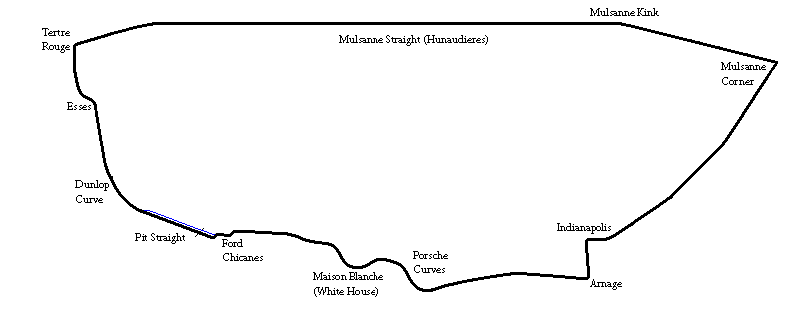
This time it was the Porsche team that had reliability issues – on only the second lap of the race two of their cars were in the pits. Renault soon established a solid hold of the top three positions. Like the year before, after the Ickx /Pescarolo car had early problems, Ickx was transferred to the second Porsche of Barth/Wollek. Once again he set about driving back through the field during the night, getting up to second by midnight behind the Jabouille/Depailler car. But a loss of fifth gear cost them half an hour to repair it. When the lead Renault Alpine A443 stopped on the circuit with a jammed gearbox, there was a sense of déjà vu for the French team. The sister Renault Alpine A442B of Jean-Pierre Jaussaud and Didier Pironi inherited the lead, with a 7-lap margin over the Porsches. Although the second-placed Porsche pulled back two of those laps, this time Renault would not be denied, and Pironi took the flag for a popular local victory with a record race-distance.
Porsche were second and third, the remaining running Renault fourth with the Porsche 935s of customer teams in the next four places. The race also saw several high-speed crashes on the Mulsanne straight, but only one driver was seriously injured.
With the predictable demise of the FIA Championship for Group 6 (World Championship for Sports Cars), Le Mans was left as the only significant race that combined Group 6 and Group 5 racecars. No changes were made to the race regulations.
This year, the IMSA GT Championship added the Le Mans GTX class to the incumbent GTO and GTU classes. This, in turn, meant the Automobile Club de l'Ouest (ACO) could merge the IMSA and GTX into a single class. The IMSA regulations allowed a lower minimum weight and wider rear wheels than Group 5. IMSA also inaugurated the World Challenge for Endurance Drivers. Not sanctioned by the FIA, it was a series that linked American races at Daytona, Sebring and Talladega with Le Mans and the Nürburgring. Finally, the Daytona-Le Mans Trophy was repeated.
The ACO received only 70 applications, the smallest number in a decade with 60 chosen for qualification with a further 7 kept on reserve. Once again, the only manufacturer works teams were from Porsche and Renault, bolstered by entries from small-scale racing specialists Mirage, Osella and WM.
Defending winners, the Martini-Porsche works team, brought back the 936 for its only race of the season. The 2140cc engine with twin KKK (Kühnle, Kopp & Kausch) turbos had been enhanced with quads-cams and at 1.4bar of turbo boost now put out 580 bhp. Wound up to 1.7bar, it was a bit slower at top speed 345 kp/h (215 mph) but overall, with new aerodynamics, much faster around a complete lap. The extra engine power meant higher running temperatures and for the first time, Porsche had water-cooling, combined with its regular air-cooling. The cars were also fitted with the same gearboxes the Can-Am Porsche 917s had used to handle the great engine power. Once again, the endurance experts Jacky Ickx and Henri Pescarolo were paired up, and given the new car. Jürgen Barth had a new co-driver in Bob Wollek, driving the car that failed to finish last year fitted with the new engine. For Wollek, it was his first drive with the works team, after fulfilling a prior commitment with Kremer the year before. Americans Hurley Haywood and Peter Gregg were given the winning car from 1976 and '77, still fitted with the twin-cam, single-turbo engine. Jochen Mass and Reinhold Joest were designated as reserve drivers.
After a disastrous showing the previous year, Renault Alpine did extensive work on the 2.0-litre twin-turbo engines, making over thirty modifications. The chassis also got scrutiny, with side-skirts and a Perspex bubble-canopy trialled. They did unprecedented testing, covering over 10,000 miles (16,000 km) at Circuit Paul Ricard and Istres airfield. Two short-tail chassis from the last season were given the new engine (A442A), while another was given a longer chassis (A442B). Finally, a brand-new chassis (only unveiled a month before) was built (A443) that had a 15cm longer wheelbase and was broader to carry wider wheels.The bigger 2138cc engine with a single turbo put out slightly more power (520 vs 500 bhp) but could reach 360 kp/h (225 mph) on the Hunaudières straight, fully 25 kp/h faster than the Porsche. Once again, the cream of French Grand Prix talent was brought in: Jean-Pierre Jabouille/Patrick Depailler shared the new car, Jean-Pierre Jaussaud/Didier Pironi had the A442B. The older cars were driven by rally specialists Jean Ragnotti, Guy Fréquelin with José Dolhem and Jean-Pierre Jarier with Le Mans veteran Derek Bell. Patrick Tambay had been slated to race with Jabouille, but his burned foot had not healed sufficiently.
Hub AI
1978 24 Hours of Le Mans AI simulator
(@1978 24 Hours of Le Mans_simulator)
1978 24 Hours of Le Mans
The 1978 24 Hours of Le Mans was the 46th Grand Prix of Endurance, and took place on 10 and 11 June 1978. In many ways it was a continuation of the race from the year before – the two main protagonists would be the very evenly-matched works teams of Alpine-Renault and Porsche, with four cars each. The race was not valid (did not count points) for any championship.
This time it was the Porsche team that had reliability issues – on only the second lap of the race two of their cars were in the pits. Renault soon established a solid hold of the top three positions. Like the year before, after the Ickx /Pescarolo car had early problems, Ickx was transferred to the second Porsche of Barth/Wollek. Once again he set about driving back through the field during the night, getting up to second by midnight behind the Jabouille/Depailler car. But a loss of fifth gear cost them half an hour to repair it. When the lead Renault Alpine A443 stopped on the circuit with a jammed gearbox, there was a sense of déjà vu for the French team. The sister Renault Alpine A442B of Jean-Pierre Jaussaud and Didier Pironi inherited the lead, with a 7-lap margin over the Porsches. Although the second-placed Porsche pulled back two of those laps, this time Renault would not be denied, and Pironi took the flag for a popular local victory with a record race-distance.
Porsche were second and third, the remaining running Renault fourth with the Porsche 935s of customer teams in the next four places. The race also saw several high-speed crashes on the Mulsanne straight, but only one driver was seriously injured.
With the predictable demise of the FIA Championship for Group 6 (World Championship for Sports Cars), Le Mans was left as the only significant race that combined Group 6 and Group 5 racecars. No changes were made to the race regulations.
This year, the IMSA GT Championship added the Le Mans GTX class to the incumbent GTO and GTU classes. This, in turn, meant the Automobile Club de l'Ouest (ACO) could merge the IMSA and GTX into a single class. The IMSA regulations allowed a lower minimum weight and wider rear wheels than Group 5. IMSA also inaugurated the World Challenge for Endurance Drivers. Not sanctioned by the FIA, it was a series that linked American races at Daytona, Sebring and Talladega with Le Mans and the Nürburgring. Finally, the Daytona-Le Mans Trophy was repeated.
The ACO received only 70 applications, the smallest number in a decade with 60 chosen for qualification with a further 7 kept on reserve. Once again, the only manufacturer works teams were from Porsche and Renault, bolstered by entries from small-scale racing specialists Mirage, Osella and WM.
Defending winners, the Martini-Porsche works team, brought back the 936 for its only race of the season. The 2140cc engine with twin KKK (Kühnle, Kopp & Kausch) turbos had been enhanced with quads-cams and at 1.4bar of turbo boost now put out 580 bhp. Wound up to 1.7bar, it was a bit slower at top speed 345 kp/h (215 mph) but overall, with new aerodynamics, much faster around a complete lap. The extra engine power meant higher running temperatures and for the first time, Porsche had water-cooling, combined with its regular air-cooling. The cars were also fitted with the same gearboxes the Can-Am Porsche 917s had used to handle the great engine power. Once again, the endurance experts Jacky Ickx and Henri Pescarolo were paired up, and given the new car. Jürgen Barth had a new co-driver in Bob Wollek, driving the car that failed to finish last year fitted with the new engine. For Wollek, it was his first drive with the works team, after fulfilling a prior commitment with Kremer the year before. Americans Hurley Haywood and Peter Gregg were given the winning car from 1976 and '77, still fitted with the twin-cam, single-turbo engine. Jochen Mass and Reinhold Joest were designated as reserve drivers.
After a disastrous showing the previous year, Renault Alpine did extensive work on the 2.0-litre twin-turbo engines, making over thirty modifications. The chassis also got scrutiny, with side-skirts and a Perspex bubble-canopy trialled. They did unprecedented testing, covering over 10,000 miles (16,000 km) at Circuit Paul Ricard and Istres airfield. Two short-tail chassis from the last season were given the new engine (A442A), while another was given a longer chassis (A442B). Finally, a brand-new chassis (only unveiled a month before) was built (A443) that had a 15cm longer wheelbase and was broader to carry wider wheels.The bigger 2138cc engine with a single turbo put out slightly more power (520 vs 500 bhp) but could reach 360 kp/h (225 mph) on the Hunaudières straight, fully 25 kp/h faster than the Porsche. Once again, the cream of French Grand Prix talent was brought in: Jean-Pierre Jabouille/Patrick Depailler shared the new car, Jean-Pierre Jaussaud/Didier Pironi had the A442B. The older cars were driven by rally specialists Jean Ragnotti, Guy Fréquelin with José Dolhem and Jean-Pierre Jarier with Le Mans veteran Derek Bell. Patrick Tambay had been slated to race with Jabouille, but his burned foot had not healed sufficiently.
Recent media