
Recent from talks
1 gauge
Knowledge base stats:
Talk channels stats:
Members stats:
1 gauge
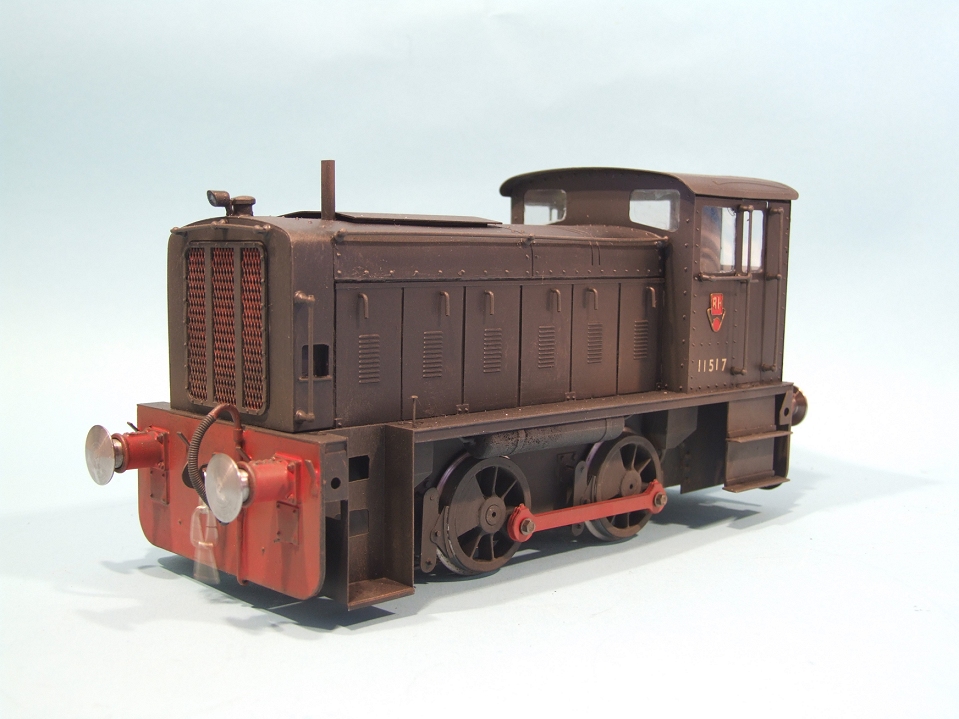
1 gauge, gauge 1 or gauge one is a model railway and toy train standard that was popular in the early 20th century, particularly with European manufacturers. Its track measures 1.75 in (44.45 mm), making it larger than 0 gauge but slightly smaller than wide gauge, which came to be the dominant U.S. standard during the 1920s.
Gauge one was standardised, according to Model Railways and Locomotive magazine of August 1909, at 1.75 in (44.45 mm). An exact 1:32 scale would yield 1.766 in (44.85 mm) for standard gauge prototype. The distance between the wheel tyres was set at 1+17⁄32 in (38.894 mm) and between the centre of the track 48 mm (no inch equivalent suggesting it was metric users' requirement only). The wheel width was set at 19⁄64 in (7.541 mm).
Definitions using gauge, rather than scale, were more common in the early days with the four gauges for which standards were adopted being No. 0 (commonly called O gauge currently), No. 1, No. 2 and No. 3.
Initially as popular in the United States as in the UK, 1 gauge lost popularity in the U.S. due to World War I, which dramatically decreased foreign imports, allowing the U.S. wide gauge standard to gain traction. After World War I, most surviving U.S. manufacturers switched to wide gauge. In the UK and the rest of the world, 1 gauge also declined, although more slowly, and by the 1940s had practically disappeared.
In the 1950s and 1960s 1 gauge experienced a renaissance, first in the UK and then elsewhere. This was helped by 1 gauge being the same size as the modern G scale, a popular standard for outdoor model railways.
Although vintage 1 gauge trains use the same track standard as modern G scale, scale modeling was not a primary design consideration in 1 gauge's heyday, so the actual size and scale of the locomotives and cars (UK, wagons) varied. Generally, 1 gauge equipment works out to approximately 1:32 scale (roughly 10 mm = 1 foot). G scale at 1:22.5 means the 1 gauge track represents 1,000 mm (3 ft 3+3⁄8 in) metre gauge track. Such railways are to be found in, among other places, Switzerland, the inspiration source for many commercial G gauge models.
Due to the size of the locomotives it is possible for them to be powered with live steam, which to many is a large advantage as they are cheaper than traditional live steam garden railways. These are usually fired by gas or methylated spirit, which are both very popular. Another form, which is becoming popular, is coal, which gives the user the smell that only steam locomotives carry.
Accucraft Trains in California, The Gauge One Model Railway Company in Britain, ALD Models in the UK (builders of diesel locomotives and wagons), and Aster Hobbies Ltd in Japan produce gauge 1 items, mostly coal, methylated spirits, and butane fired.
Hub AI
1 gauge AI simulator
(@1 gauge_simulator)
1 gauge
1 gauge, gauge 1 or gauge one is a model railway and toy train standard that was popular in the early 20th century, particularly with European manufacturers. Its track measures 1.75 in (44.45 mm), making it larger than 0 gauge but slightly smaller than wide gauge, which came to be the dominant U.S. standard during the 1920s.
Gauge one was standardised, according to Model Railways and Locomotive magazine of August 1909, at 1.75 in (44.45 mm). An exact 1:32 scale would yield 1.766 in (44.85 mm) for standard gauge prototype. The distance between the wheel tyres was set at 1+17⁄32 in (38.894 mm) and between the centre of the track 48 mm (no inch equivalent suggesting it was metric users' requirement only). The wheel width was set at 19⁄64 in (7.541 mm).
Definitions using gauge, rather than scale, were more common in the early days with the four gauges for which standards were adopted being No. 0 (commonly called O gauge currently), No. 1, No. 2 and No. 3.
Initially as popular in the United States as in the UK, 1 gauge lost popularity in the U.S. due to World War I, which dramatically decreased foreign imports, allowing the U.S. wide gauge standard to gain traction. After World War I, most surviving U.S. manufacturers switched to wide gauge. In the UK and the rest of the world, 1 gauge also declined, although more slowly, and by the 1940s had practically disappeared.
In the 1950s and 1960s 1 gauge experienced a renaissance, first in the UK and then elsewhere. This was helped by 1 gauge being the same size as the modern G scale, a popular standard for outdoor model railways.
Although vintage 1 gauge trains use the same track standard as modern G scale, scale modeling was not a primary design consideration in 1 gauge's heyday, so the actual size and scale of the locomotives and cars (UK, wagons) varied. Generally, 1 gauge equipment works out to approximately 1:32 scale (roughly 10 mm = 1 foot). G scale at 1:22.5 means the 1 gauge track represents 1,000 mm (3 ft 3+3⁄8 in) metre gauge track. Such railways are to be found in, among other places, Switzerland, the inspiration source for many commercial G gauge models.
Due to the size of the locomotives it is possible for them to be powered with live steam, which to many is a large advantage as they are cheaper than traditional live steam garden railways. These are usually fired by gas or methylated spirit, which are both very popular. Another form, which is becoming popular, is coal, which gives the user the smell that only steam locomotives carry.
Accucraft Trains in California, The Gauge One Model Railway Company in Britain, ALD Models in the UK (builders of diesel locomotives and wagons), and Aster Hobbies Ltd in Japan produce gauge 1 items, mostly coal, methylated spirits, and butane fired.
Recent media