
Recent from talks
2009 Namibian general election
Knowledge base stats:
Talk channels stats:
Members stats:
2009 Namibian general election
General elections were held in Namibia on 27–28 November 2009. They were the fourth general elections since independence and the fifth democratic elections. Voting ended on 28 November and official election results, released on 4 December, showed that Hifikepunye Pohamba and his SWAPO Party were re-elected, each with over 75% of the vote. Prior to the election, the South West Africa People's Organization (SWAPO) was widely expected to score a landslide victory, with the Rally for Democracy and Progress (RDP) considered SWAPO's biggest challenger. Fourteen political parties competed for seats in the National Assembly of Namibia, and twelve candidates ran for the presidency.
The ruling SWAPO party set a goal of winning all 72 seats in the National Assembly and controlling the NA "until the second coming of Jesus Christ". At the SWAPO party congress in November 2007, the incumbent president Hifikepunye Pohamba was elected president of SWAPO and also received the party's nomination for president in 2009. SWAPO ended up winning 54 seats, a one-seat loss from the third National Assembly.
This was the first general election for the Rally for Democracy and Progress. The party's nominee for president was Hidipo Hamutenya, a former government minister of SWAPO. The RDP was considered the main opposition to the ruling SWAPO. It gained eight seats in the National Assembly and became the Official Opposition.
On 16 October 2009, the National Unity Democratic Organisation (NUDO) was the first political party to officially submit their candidate, Kuaima Riruako, for president.
The National Society for Human Rights' observer status was withdrawn by the electoral commission, which said it was "not impartial". The organisation said it would approach the High Court to contest the decision; the court later ordered the commission to reinstate the organisation.
Though the country planned to buy electronic voting machines from India sometime in 2009, the Electoral Commission assured the National Assembly that they would not be used in the 2009 elections.
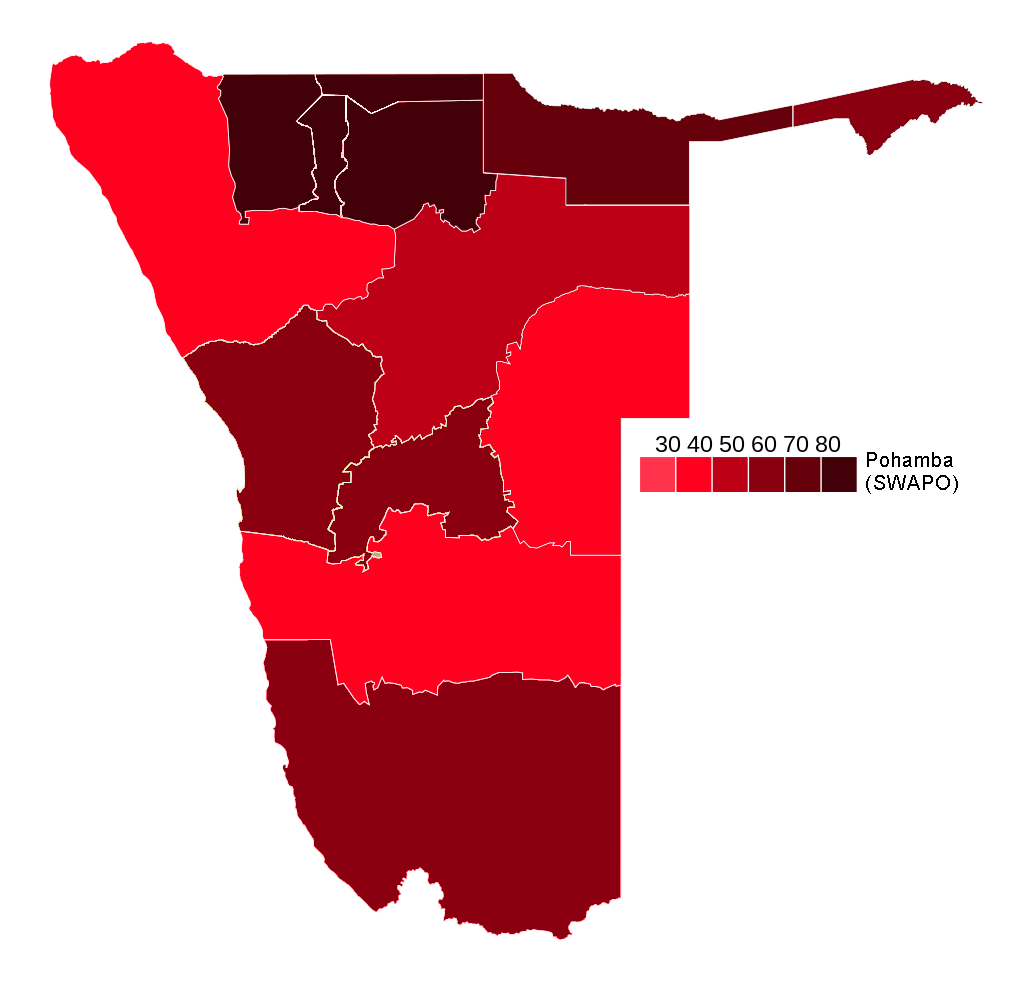
Hifikepunye Pohamba was re-elected as President of Namibia with 611,241 votes, more than six times as many as Hamutenya, his nearest rival, received.
Final results were announced on 4 December, the longest delay between voting and the publication of results of any Namibian election (6 days). The Electoral Commission of Namibia (ECN) blamed the delay on a recent amendment to the Electoral Act which had caused "logistical nightmares [they had] never experienced before" and a "cumbersome" verification process. The ECN had received criticism from political parties, civil societies and the general public for the delay. Following publication of the results, 8 of the 13 opposition parties stated that they did not accept the results and were instructing their lawyers to challenge the ECN in court "for contravening the electoral law of the country". Electoral observers have pronounced the polls to be free and fair but recommended that the ECN speed up the counting process and free up access to the media for all parties.
Hub AI
2009 Namibian general election AI simulator
(@2009 Namibian general election_simulator)
2009 Namibian general election
General elections were held in Namibia on 27–28 November 2009. They were the fourth general elections since independence and the fifth democratic elections. Voting ended on 28 November and official election results, released on 4 December, showed that Hifikepunye Pohamba and his SWAPO Party were re-elected, each with over 75% of the vote. Prior to the election, the South West Africa People's Organization (SWAPO) was widely expected to score a landslide victory, with the Rally for Democracy and Progress (RDP) considered SWAPO's biggest challenger. Fourteen political parties competed for seats in the National Assembly of Namibia, and twelve candidates ran for the presidency.
The ruling SWAPO party set a goal of winning all 72 seats in the National Assembly and controlling the NA "until the second coming of Jesus Christ". At the SWAPO party congress in November 2007, the incumbent president Hifikepunye Pohamba was elected president of SWAPO and also received the party's nomination for president in 2009. SWAPO ended up winning 54 seats, a one-seat loss from the third National Assembly.
This was the first general election for the Rally for Democracy and Progress. The party's nominee for president was Hidipo Hamutenya, a former government minister of SWAPO. The RDP was considered the main opposition to the ruling SWAPO. It gained eight seats in the National Assembly and became the Official Opposition.
On 16 October 2009, the National Unity Democratic Organisation (NUDO) was the first political party to officially submit their candidate, Kuaima Riruako, for president.
The National Society for Human Rights' observer status was withdrawn by the electoral commission, which said it was "not impartial". The organisation said it would approach the High Court to contest the decision; the court later ordered the commission to reinstate the organisation.
Though the country planned to buy electronic voting machines from India sometime in 2009, the Electoral Commission assured the National Assembly that they would not be used in the 2009 elections.
Hifikepunye Pohamba was re-elected as President of Namibia with 611,241 votes, more than six times as many as Hamutenya, his nearest rival, received.
Final results were announced on 4 December, the longest delay between voting and the publication of results of any Namibian election (6 days). The Electoral Commission of Namibia (ECN) blamed the delay on a recent amendment to the Electoral Act which had caused "logistical nightmares [they had] never experienced before" and a "cumbersome" verification process. The ECN had received criticism from political parties, civil societies and the general public for the delay. Following publication of the results, 8 of the 13 opposition parties stated that they did not accept the results and were instructing their lawyers to challenge the ECN in court "for contravening the electoral law of the country". Electoral observers have pronounced the polls to be free and fair but recommended that the ECN speed up the counting process and free up access to the media for all parties.
Recent media